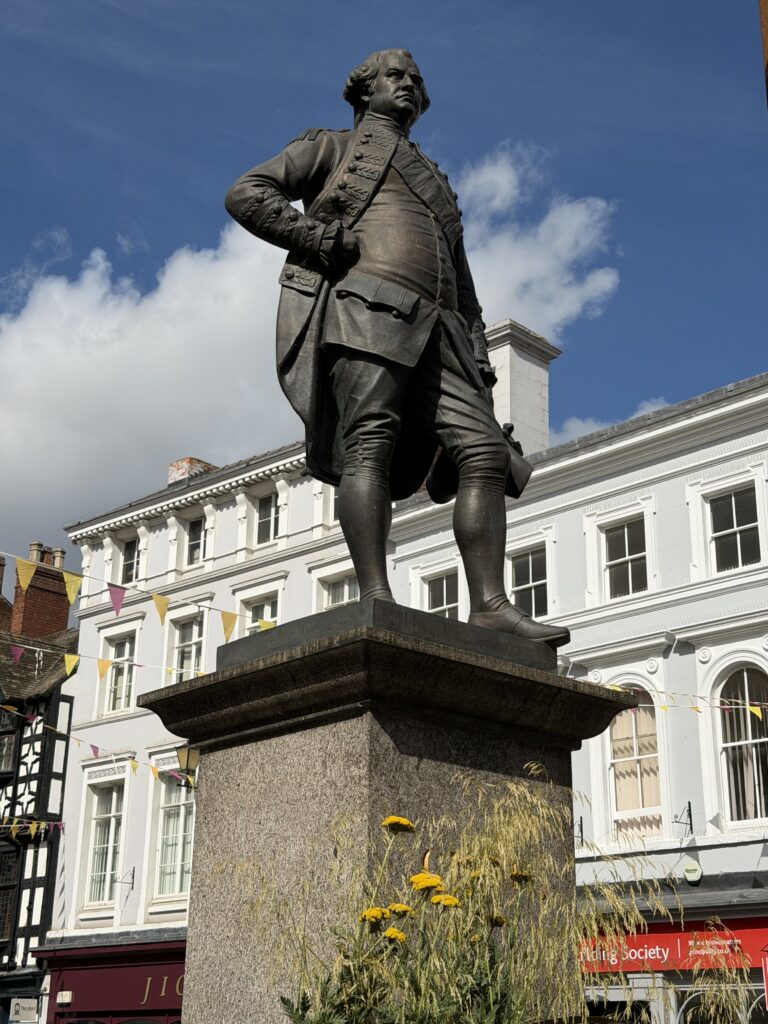
In the centre of Shrewsbury, just in front of the historic market hall, is a statue of Robert Clive – more popularly known as Clive of India. The statue stands on a tall pedestal and Clive is depicted dressed in military regalia with one hand on his hip and the other clasping his tricorne hat. He stares imperiously down at the shoppers and tourists passing by. Clive was a brilliant military strategist and is perhaps the most renowned figure in the British colonial conquest of India. Shrewsbury is not alone, most town and cities across the UK have prominent statues of the men involved in the brutal spread of the British Empire. However, in recent years these statues of the men1 and the colonial project that they represent have rightly been re-assessed. Individuals like Clive were not heroes, but responsible for atrocities that were an integral part of Britain’s military, political and economic global dominance from the late 16th century to the mid 20th century.
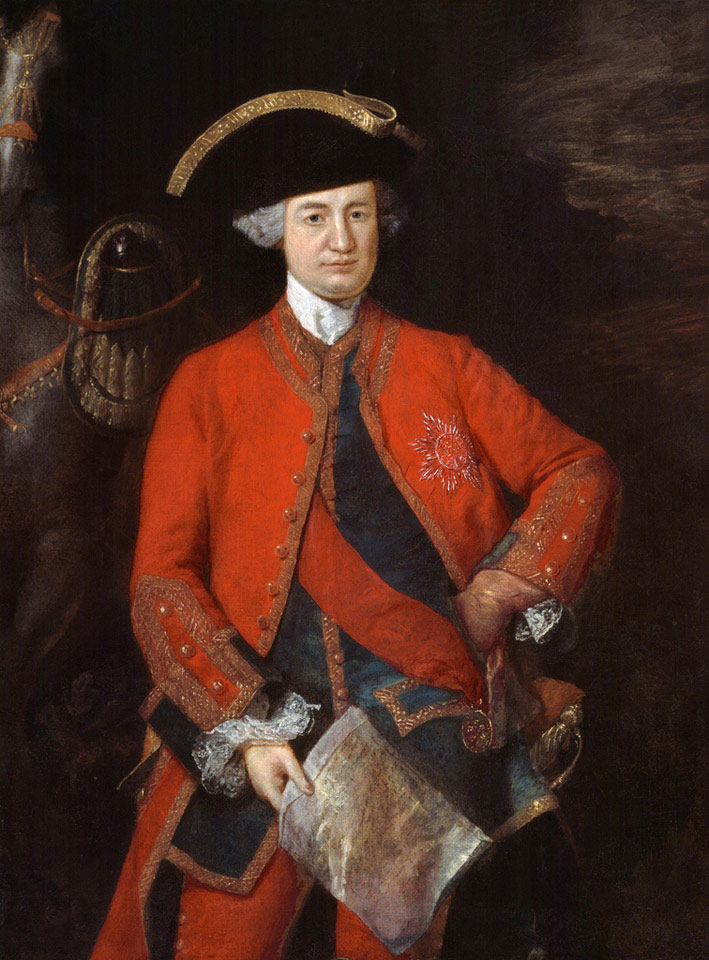
Image from The National Army Museum
I recall learning about Robert Clive in history at secondary school. He was represented as a hero who brought civilisation and culture to a barbaric country. However, Clive was little more than a robber baron who became incredibly rich by pillaging India. William Dalrymple, in his excellent book on The East India Company (EIC) The Anarchy, describes Clive as ‘a violent, utterly ruthless and intermittently mentally unstable, corporate predator’ (Dalrymple 2020, xxxi). In his teenage years in Shropshire, Clive was a terror who ran a protection racket around Market Drayton: ‘levying blackmail on anxious shopkeepers trembling for the security of their windows’ (cited in Dalrymple 2020: 65).
Like many young men with few prospects, Clive joined the East India Company in 1742. His early career was unremarkable, and by all accounts he hated India. By the early 1750s he began to make a name for himself as a daring and successful military strategists and began to rise through the ranks of the EIC’s army.
In 1757 Clive victoriously led the EIC’s army in the Battle of Plassey against the Nawab of Bengal and his French allies. This victory effectively transformed the EIC from a commercial company to being the dominant political and military force on the subcontinent. It earned the EIC incredible riches and also made Clive one the wealthiest men in Britain. Dalrymple notes that the strategic victory at Plassey ‘initiated a period of unbounded looting and asset-stripping by the Company, which the British themselves described as “the shaking of the pagoda tree”’ (Dalrymple 2020: 134). It also provided the resources for the EIC to sweep through the Indian subcontinent, and ultimately to defeat the Mughals in 1803. Much of Clive’s plunder can now be seen in a special collection at Powis Castle.2
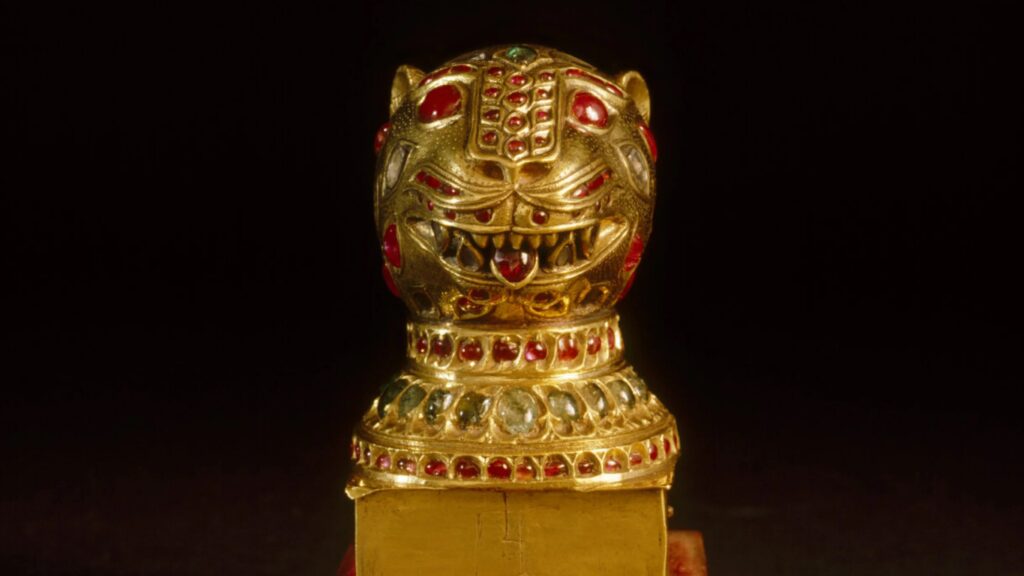
Image from The National Trust
Should larcenous individuals, such as Clive, who ravaged India and other parts of the Empire for their own personal gain at great cost to the native populations continue to be celebrated? The prominence of Clive’s statue in the centre of Shrewsbury needs to be questioned. He, like many other men of the colonial period can no longer be represented as heroes, yet their statues still dominate towns and cities across the UK.

There is also a statue of Clive standing proud and victorious with one hand clutching the pommel of a sword and the other holding a scroll of papers outside the Foreign Office in London. The Labour Peer Thangam Debbonaire argues that the statue of Clive does not reflect the reality of colonial rule in India and is potentially offensive to the South Asian diaspora and visiting dignitaries from the subcontinent. Lady Debbonaire has called for the statue of Clive to be removed.3 However, some have argued that the removal of these colonial statues is a denial of history, a manifestation of cancel culture and vandalism of British heritage.
There are a range of responses to these statues commemorating the colonial past. I call these types of responses:
- Preserve
- Retain and explain
- Reconfigure
- Remove
Preserve
The renowned historian Mary Beard, in response to the campaign to remove the statue of Cecil Rhodes, another ruthless man who made a fortune from the merciless conquests of the British Empire, from Oriel College Oxford stated:
[It is] a dangerous attempt to erase the past … history can’t be unwritten or hidden away, or erased when we change our minds.4
Beard does not deny that Rhodes was a racist, but her point is that the past cannot be denied.
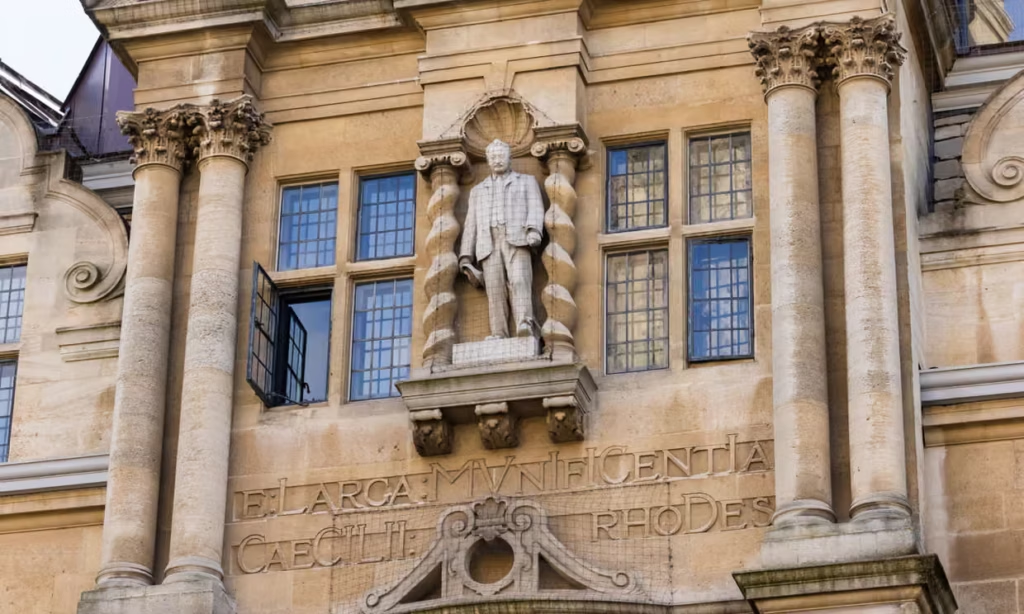
Image from The Guardian
A further argument for the preservation of these monuments is that Clive and Rhodes were simply men of their time, and we cannot retrospectively judge these men by the values of today.
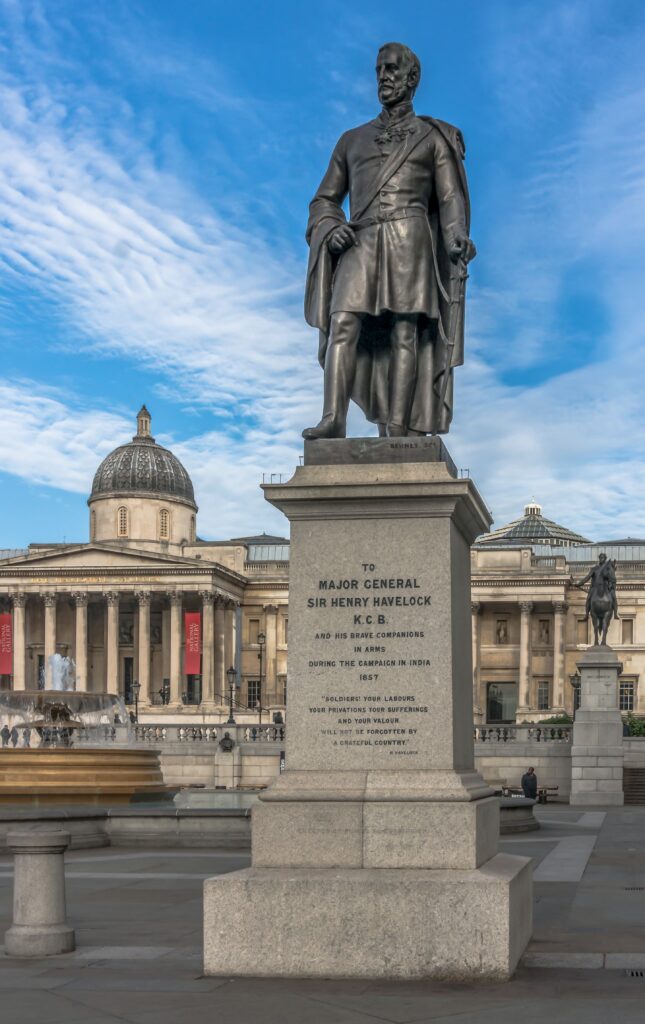
Image from Wikipedia
.jpg)
The argument for preservation of these colonial monuments neglects two interrelated points:
- These statues in our town and city centres glorify and exalt a particular version of the past. This narrative suggests that the Colonial Project was inherently benign and these “great white men” represent a force for good, and not the rapacious individuals they actually were.
- History is inherently a story, and a partial one at that. By emphasising this triumphal colonial version of the past, it marginalises and silences native and subaltern5 voices and subdues other accounts of the past.
Dan Hicks argues that the persistence of these colonial monuments is ‘part of the apparatus through which culture endures’ (Hicks 2026: 21). In other words, they perpetuate the colonial myth that disparages subaltern groups.
These statues have what is called ‘representational power’ and, as Vanessa Whittington indicates, represent not simply the ‘residue of the age of imperialism, but rather an ongoing structural, cultural, social and economic feature of global dynamics’ (Whittington 2021: 253). Richard Drayton argues that ‘they do not just obliterate the losers, they rehearse permanently the violence of domination’ (Drayton 2019: 653)
Retain and Explain
In recent years there has been some acknowledgement of the devastating impact that the colonial project had on other parts of the world. For example, the UK agreed to compensate Kenyans tortured by the British after the Mau Mau uprising. Consequently, there is a suggestion that there is a need to provide some contextual information about the statues that celebrate these men.
Shrewsbury Council has recently placed a small plaque on the side of Clive’s plinth which points out that Clive and the actions of the EIC were controversial at best, part of which explains:
Lord Clive’s actions on behalf of the East India Company and the profits extracted by him and the Company resulted in the plundering of India and inflicted famine, poverty and other atrocities upon the people of India.
A few years ago, I visited the South Asian Collection at Powis Castle much of which is Clive’s loot, but also contains pieces collected by his son Edward and daughter in-law Henrietta. I was appalled that the National Trust, the custodians of Powis Castle, provided absolutely no context to this collection of pieces looted, stolen, bought by or gifted to the Clive family. There was almost no explanation of the objects themselves, how they came into the possession of Powis or the consequences of Colonialism that made the acquisition of these artefacts possible
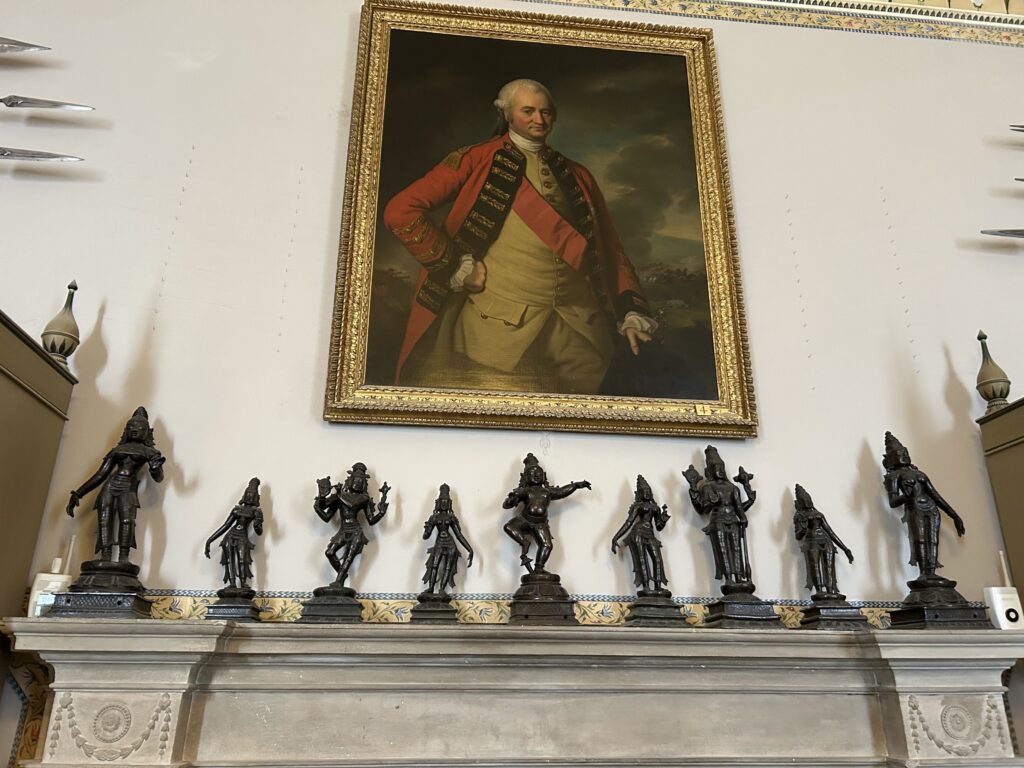
Image from Mainly Museums
However, in a more recent visit, I was pleased to see that the National Trust had begun to make some effort to contextualise the collection. They have, at long last, acknowledged that the collection:
Remains a symbol of Britain’s colonial past and represents the ongoing impacts of colonial and imperial legacies in the twenty-first century.6
There is also an excellent audio guide that provides a far more nuanced and balanced perspective on the collection. However, when I was there most people did not avail themselves of the audio guide and seemed to just engage with the pieces as exotic and aesthetic objects. Similarly, I have rarely seen people read the plaque on the pedestal of Clive’s statue in the centre of Shrewsbury. Consequently, I think that retain and explain does not go far enough in addressing the crimes of the colonial past and its continued impact on culture, attitudes and politics.
Reconfigure
To some extent the National Trust has tried to reconfigure some of the South Asian Collection at Powis. There is now a new display case which contains three objects from the South Asian collection, plus an earthenware jug and cup promoting Robert’s brother William Clive as candidate in the 1792 election. The brochure explains:
Rather than presenting objects as isolated curiosities, this approach places them in dialogue with contemporary concerns: power, resistance, artistry and cultural memory.
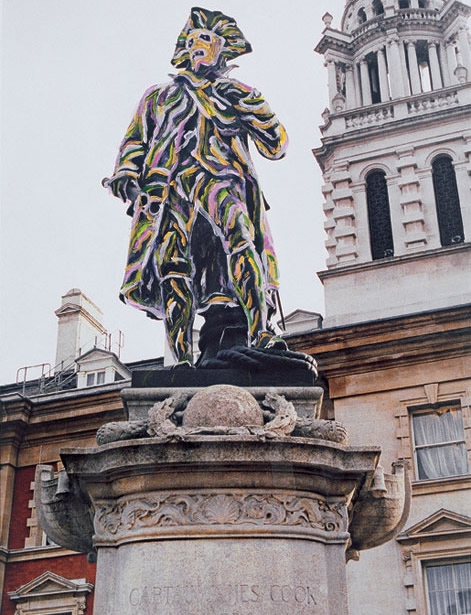
Image from Hew Locke
The artist Hew Locke in an ongoing project from 2005 called Natives and Colonials painted photographs of colonial statues. Initially Locke had hoped to actually dress the colonial monuments in a way that reframes the images and encourages a different way of seeing these statues. Locke stated:
It started as a proposal to get a statue-dressing project off the ground in London. Nobody was willing to take this project up, so the ‘impossible proposals’ – the painted photographs – became the artwork.7
He extended this project with a series of photographs of statues in Bristol in 2006 called Restoration. Locke calls this process ‘mindful vandalism’. He explains:
You get a photograph, you print it up, you mount it onto aluminium and MDF – you spend a lot of money doing this – and then you take a drill, drill holes into it and drill stuff onto it and just dangle and fix stuff all over it. It’s about attacking the preciousness of the photograph as well as the preciousness of the object that I’m actually proposing to cover.8
I think that there is an argument for this ‘mindful vandalism’ of the actual statues themselves. People regularly pass by these statues oblivious to what they actually represent. Mindful vandalism has the potential to draw attention to the realities of the colonial past and its impact on the present.
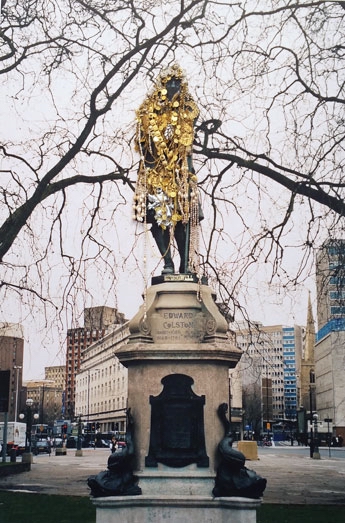
Image from Hew Locke
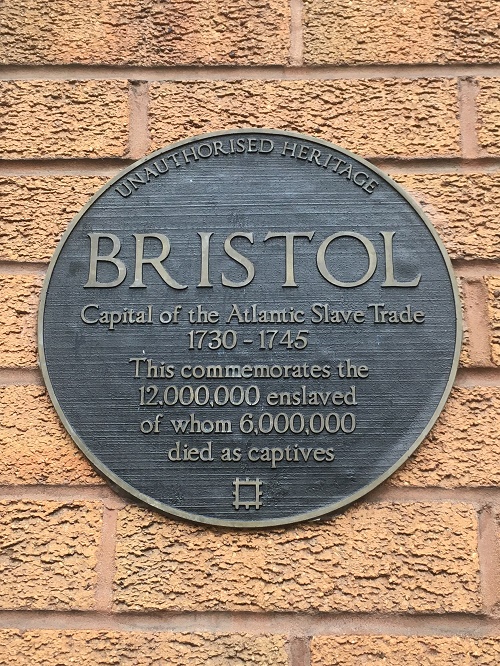
A good example of this mindful vandalism is the installation of an unofficial heritage plaque on the plinth of the statue of Edward Colston (1636–1721), who was celebrated as a philanthropist. This unofficial plaque emphasises that Colston’s enormous wealth was gained through the slave trade. Colston’s statue was part of Locke’s project Restoration. However, Locke, himself said that he would have loved to have actually redressed the statue ‘perhaps wearing a balaclava’.9 I think that there is strong case for asking artists, to reconfigure these colonial statues in a way that encourages us to reflect on the colonial past and its legacy, particularly the celebration of white male privilege.
Remove
The statue of Edward Colston became infamous when, inspired by the murder of George Floyd and the Black Lives Matter movement in the US, about 15,000 people gathered in Bristol and marched to his statue. The statue of Colston was toppled from its pedestal, kicked by the protestors, sprayed with graffiti and dumped into the nearby harbour.
Philip Schwyzer states that with the iconoclastic act of tearing down ‘the statue moves from an excess of invisibility to an excess of visibility’ (Schwyzer 2025:71). I suspect that, like the statue of Clive in Shrewsbury, most passers paid little heed Colston’s statue. The spectacular toppling and humiliation of the statue emphasises the passing of an anachronistic old order and elicits important discussions, such as the consequences of colonialism and the role of public art.
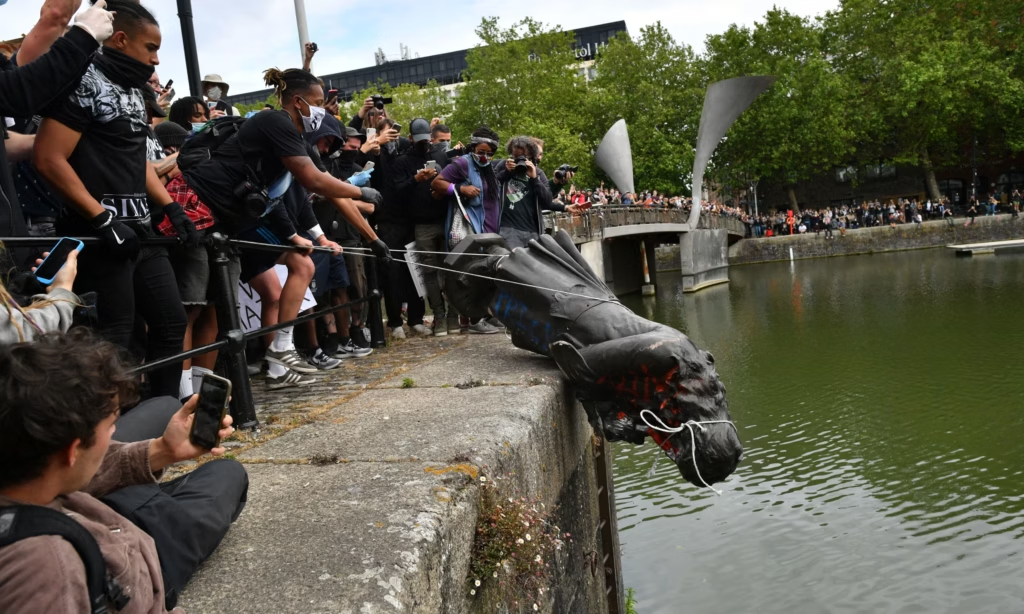
Image from The Guardian
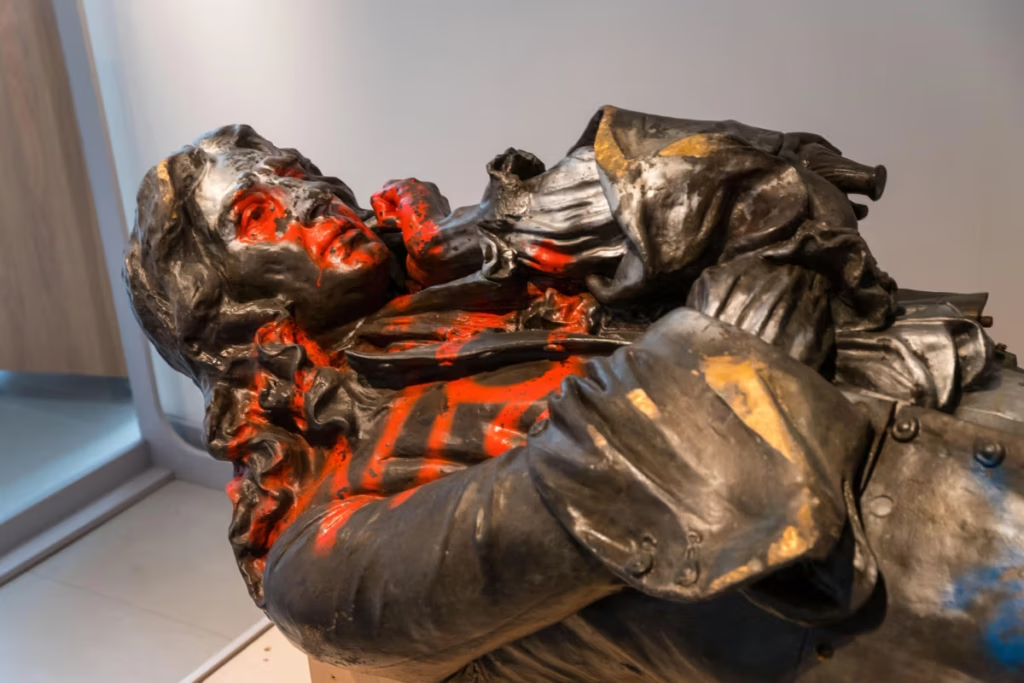
Image from The Art Newspaper
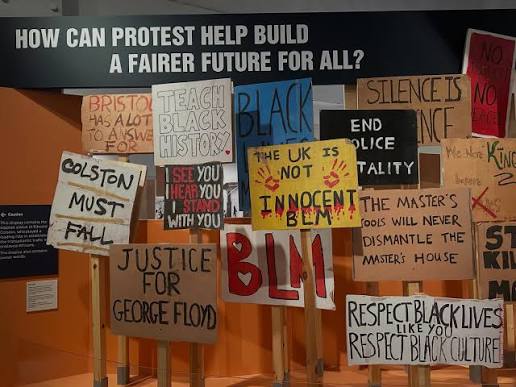
Image from Instagram
This raised the dilemma of what to do with the disgraced monument10 and the empty plinth. The statue of Colston was eventually retrieved from the harbour. Locke felt that the retrieval of Colston’s image from its watery grave was a ‘huge anti-climax’.
I know that he would have to come up again – that’s the way things go – but leave him down for a little while please.
The council, in consultation with the public, have placed the statue of Colston in the Bristol Museum the M Shed. The statue lies prone on its back, still daubed with graffiti, alongside some of the placards used in the protest. This display of the battered statue of Colston transforms it into ‘a very different kind of heritage object’ (Schwyzer 2025: 67). The prone and graffiti daubed statue in the M Shed transforms an object that celebrates white men and colonial conquest to an abject thing.
Initially the artist Mark Quinn installed an image of a defiant Black Live’s Matter protestor Jen Reid on the empty plinth. This proved highly controversial. Quinn, a very successful white artist, was accused of hijacking the BLM movement. The black artist Thomas J Price accused Quinn of capitalising on the experience of black pain. Others felt empowered by this different image. Nonetheless, the mayor, a descendent of black slaves, made the decision to remove Quinn’s statue of Jen Reid. He argued ‘An empty plinth at this time is one of the best expressions of where we are’.11
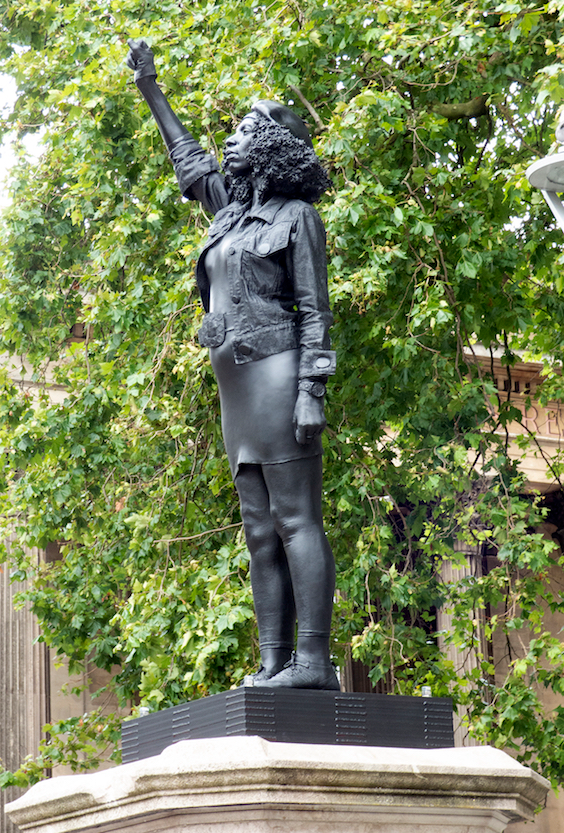
Image from Art Forum
Conclusion
I agree with Dan Hick’s premise in his book Every Monument Must Fall, that these statues represent memory and not a fixed history. The continued presence of these statues in our cities and towns perpetuates a colonial memory. The journalist Gary Younge in a polemical article in The Guardian observes:
We seek to petrify historical discourse, lather it in cement, hoist it high and insist on it as a permanent statement of fact, culture, truth and tradition that can never be questioned, touched, removed or recast. This statue obsession mistakes adulation for history, history for heritage and heritage for memory.
Younge 2021
Our understanding of the past changes, but colonial statues are anachronistic, they no longer represent our current attitudes. As Dan Hicks argues ‘new forms of public memory and immortality are always possible’ (Hicks 2026: 32)
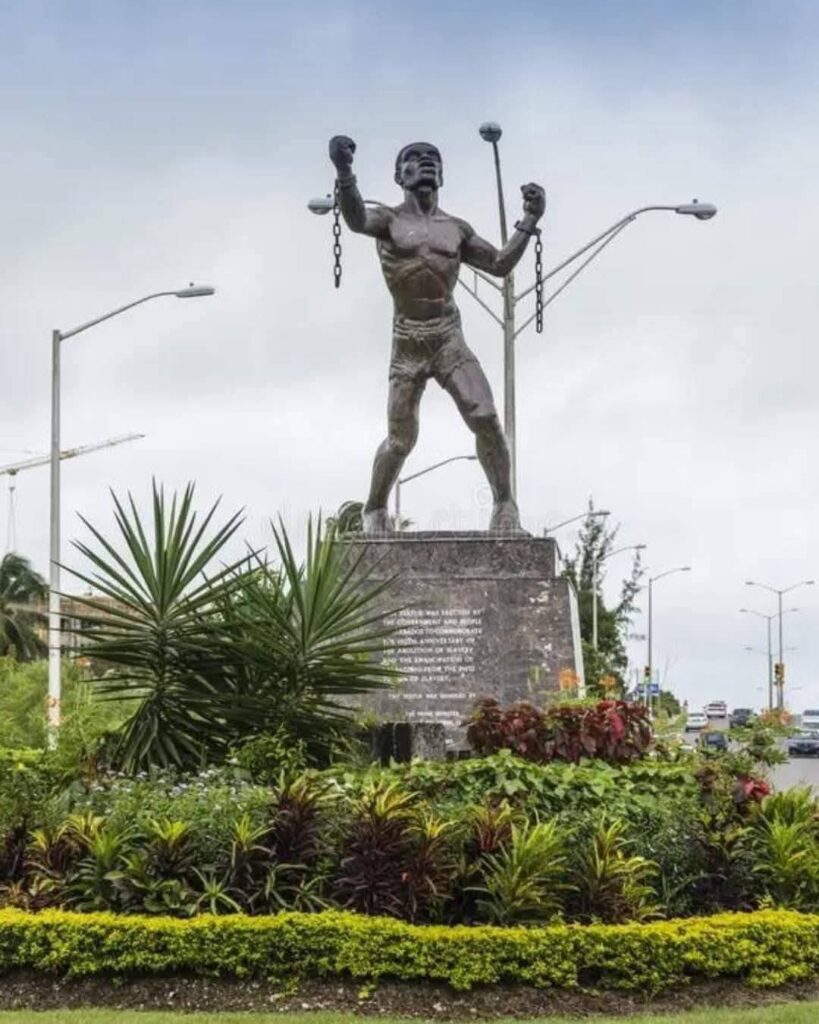
Image from Black History Studies FB Page
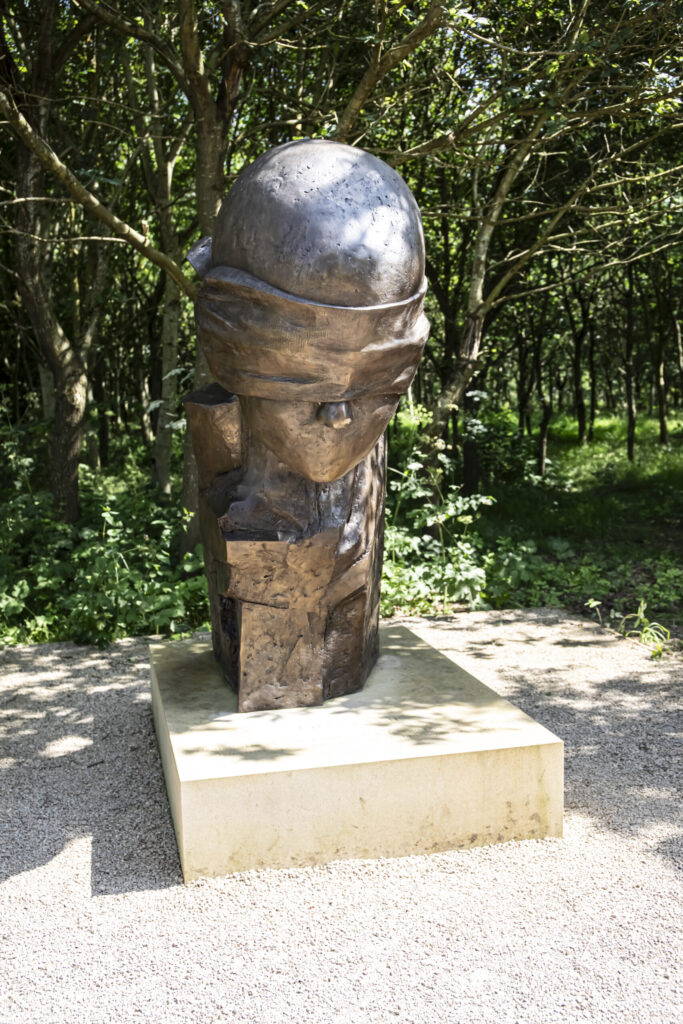
Image from Peter Walker Sculptor
I say tear them all down and dump these statues in various states of abjection. It is important not to forget the atrocities of the malign twins slavery and colonialism, but they should never be memorialised. Place them in prone and supine in museums, like Colston’s statue in the M Shed or banish them to waste grounds like the graveyards to the former heroes of the Soviet Era in Eastern Europe. In their place put images such as Karl Broodhagen’s Emancipation Statue or Peter Walker’s Pity of War, ‘which honours the unknown, nameless, and voiceless civilian victims of war and conflict throughout the world’. We should remember the invisible, silent and oppressed and not monumentalise the oppressors.
Sources
Dalrymple, W. (2020) The Anarchy: The Relentless Rise of the East India Company. London: Bloomsbury.
Drayton, R. (2019) Rhodes Must Not Fall? Statues, Postcolonial ‘Heritage’ and Temporality. Third Text. 33(4–5), 651–666.
Hicks, D. (2026) Every Monument Will Fall: A Story of Remembering and Forgetting. London: Penguin.
Schwyzer, P. (2025) The Curation of Iconoclasm, from the English Reformation to the Statue of Edward Colston. Acta ad
Archaeologiam et Artium Historiam Perinentia 25(38)
Whittington, V. (2021) Decolonising the Museum? Dilemmas, Possibilities, Alternatives. Culture Unbound. 13(2) 250–274.
Younge, G. (2021) Why Every Statue Should Come Down. The Guardian. 1 June 2021
- It is invariably white men with the only exception being Queen Victoria. ↩︎
- Clive never lived at Powis. Robert Clive’s eldest son Edward married Henrietta Herbert, the daughter of the Earl of Powis. This provided financial security to Powis and an aristocratic prestige to the Clive name. ↩︎
- ‘Labour Peer Calls for Removal of Clive of India Statue from Outside the Foreign Office’ The Guardian 11 August 2025 https://www.theguardian.com/world/2025/aug/11/labour-peer-calls-for-removal-robert-clive-of-india-statue-foreign-office ↩︎
- ‘Mary Beard says drive to remove Cecil Rhodes statue from Oxford University is a “dangerous attempt to erase the past” The Independent 22 December 2015 https://www.independent.co.uk/news/education/education-news/mary-beard-says-drive-to-remove-cecil-rhodes-statue-from-oxford-university-is-a-dangerous-attempt-to-erase-the-past-a6783306.html ↩︎
- Subaltern is a term coined by the Italian Marxist Antonio Gramsci to indicate social groups, particularly populations who live under the yoke of colonial rule, who are both oppressed and excluded from political and socio-economic institutions. The term is now utilised to include not only colonised subjects but also other subordinated classes such as women, the working class, Dalits, the LGBTQ community and BAME groups. ↩︎
- https://www.nationaltrust.org.uk/visit/wales/powis-castle-and-garden/the-clive-museum-collection-at-powis-castle ↩︎
- https://hewlocke.net/artwork/natives-colonials/ ↩︎
- https://hewlocke.net/artwork/restoration/ ↩︎
- https://archiveofdestruction.com/artwork/restoration/ ↩︎
- A term coined by the film makes Laura Mulvey and Mark Lewis in their documentary on the fall of USSR and the toppling of Soviet monuments. The film can be seen here https://vk.com/video-136471876_456244924 ↩︎
- https://archiveofdestruction.com/artwork/restoration/
↩︎