
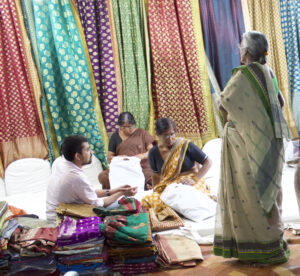
This post is inspired by the excellent exhibition The Offbeat Sari at the Design Museum in London. When we think of the sari, we tend to think of it as a very traditional mode of dress. However, The Offbeat Sari showed that the sari is ‘in the throes of reinvention’ (Khanchandani 2023: 8). This exhibition got me thinking about dress more generally in India – not only the elegance of the sari, but also the sartorial style of contemporary Hindu gurus and the significance of (un)dress in Gandhi’s opposition to colonial rule.
Clothing and Culture
Clothing is both practical and cultural. Practically clothing protects us against the elements. Culturally clothing is very complex.
Choice and Individuality.
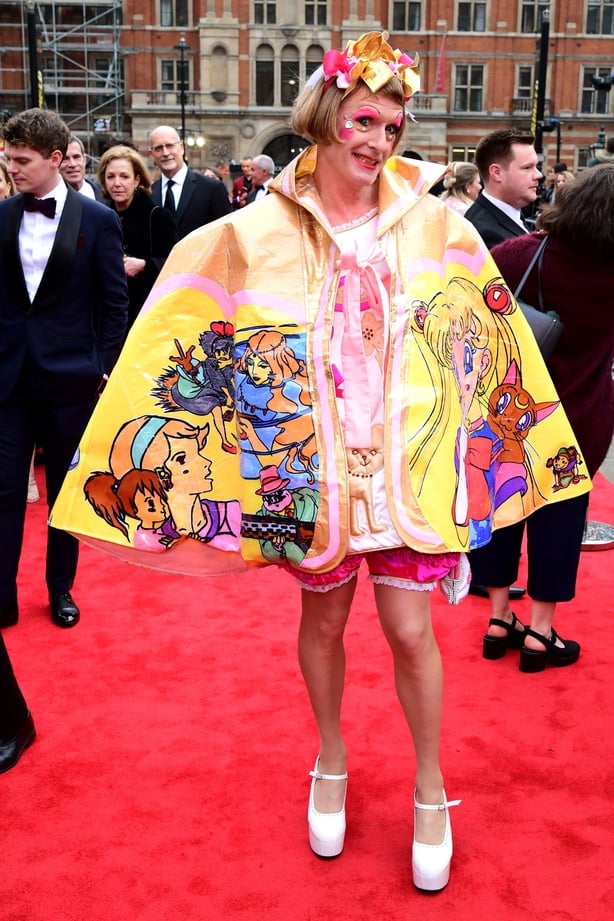
In today’s world we associate what we wear with personal choice. However, choice is always inevitably constrained by cultural conventions. Most of us want to assert our individuality through our choice of what to wear, but at the same time do not wish to appear too far removed from sartorial norms. Few of us want to stand out like Grayson Perry and, unless our work demands it, we are also averse to wearing a uniform or dressing exactly like others. In our style of clothing, we try and strike a balance between homogeneity and eccentricity.

Modesty
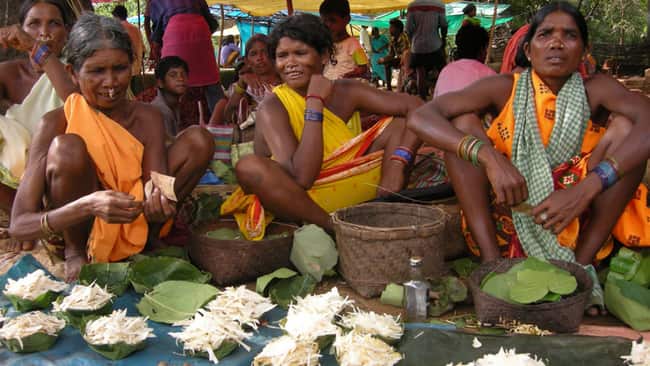
Image from https://www.traveltourguru.in/blog/tribes-in-orissa/
Clothing styles are often associated with modesty. Clothes are about concealing parts of the body that are deemed inappropriate to expose in public. Not only do different cultures, have very different evaluations of what is decent dress, but ideas of modesty change over time.
Emma Tarlow discusses the traditional attire of Juáng women, a tribe from Odisha in Eastern India, in her excellent book Clothing Matters. Juáng women traditionally went topless and wore little other than a very scanty girdle and beads. This skimpy dress offended the colonial sense of decency. However, by supplying the tribeswomen with saris, a more decorous style of clothing in the British view, colonial officials claimed that they were bringing a more civilised culture to the Juáng. It is of note that the colonial powers imposed the wearing of saris, and not a more Western style of dress. As Tarlow points out:
[The British] felt it their duty to civilise barbaric natives … It was with such notions in mind that Captain Johnstone clothed the ‘naked savages’ of the Juang hills. But on the other hand the British did not want these natives to be too civilised.
Tarlow 1996: 39
In other words, in the colonial view, clothing choices can signify barbarity and primitiveness or civilisation and progress.
Identity
Whilst clothing is intended to conceal parts of the body, it is at the same time intended to reveal something about a person’s sense of identity. Although we can also utilise clothing to disguise who we are. Choice of clothing can indicate a range of cultural identities such as ethnicity, nationality, religion, class, gender, age and status.
In his important book, first published in 1959, The Presentation of the Self in Everyday Life, Erving Goffman argues that we perform roles in social contexts. This performance is for the benefit of others. He uses the metaphor of a ‘front’ to describe ‘the individual’s performance which regularly functions to define the situation for those who observe the performance’ (Goffman 1990: 32). Goffman suggests that whilst performances can be intentionally utilised to deceive, for the most part our performances in everyday life are unwitting. Performances of the self are not ad hoc but are ‘socialized, moulded, and modified to fit into the understanding and expectations of the society in which it is presented (Goffman 1990: 44). An important aspect of our everyday performances is our choices of what to wear.
How we dress will influence how other people will respond to us. Carol Delaney cites research which suggests:
Dressing a newborn in blue begins a sequence of interaction that is different from the one experienced by a baby dressed in pink … The colour acts as a cue or stimulus that influences how people behave toward the child
Stone 1995 in Delaney 2004: 330


Some aspects of dress conventions in India, particularly for women, are influenced by life cycle, caste status and religion. For example, the anthropologist Ann Grodzin Gold decided to wear a salwar kameez – a combination of light cotton trousers and a long shirt – when she arrived to do her research at a Rajasthani village. She comments that this mode of dress ‘marks the wearer as a Muslim village woman or as an unmarried college girl in the towns. Neither of these categories was appropriate for me’. (Gold 1990: 13).
Context
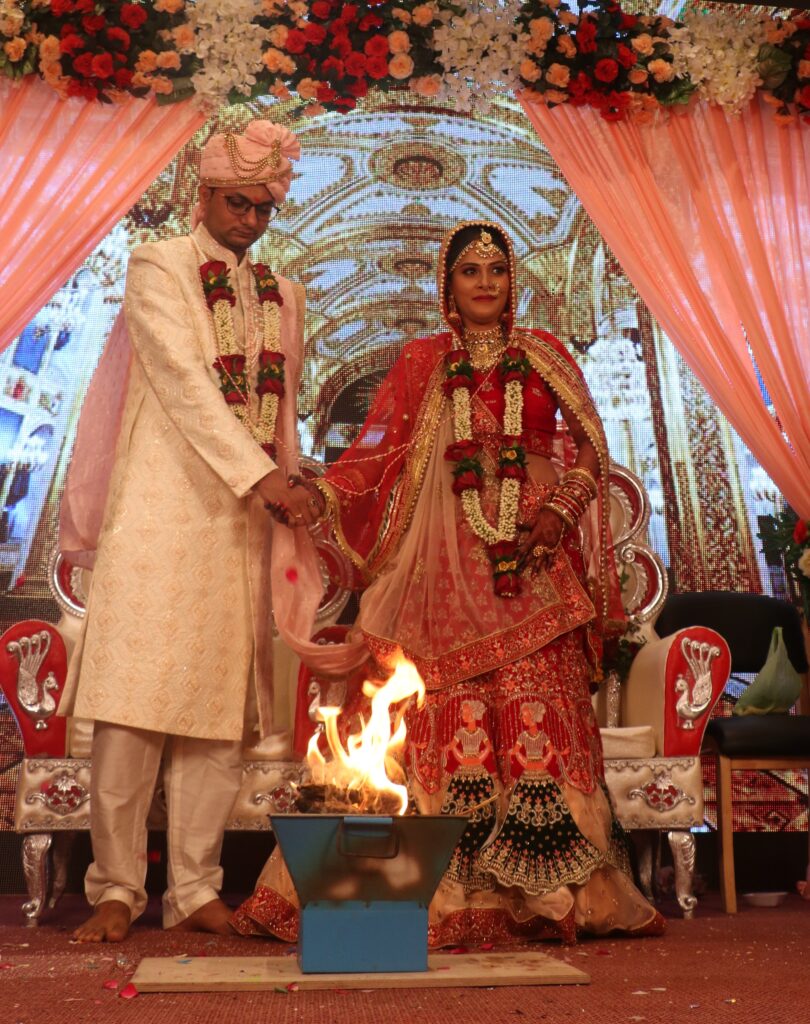
A Hindu wedding
We perform multiple roles in our everyday life, and therefore how we perform is at least in part determined by the context of performance. For example, leisure and work are often different types of performance, and therefore demand a different sartorial style. There is also often an expectancy to dress in a particular way for special occasions, such as weddings and funerals
The Syntax of Dress
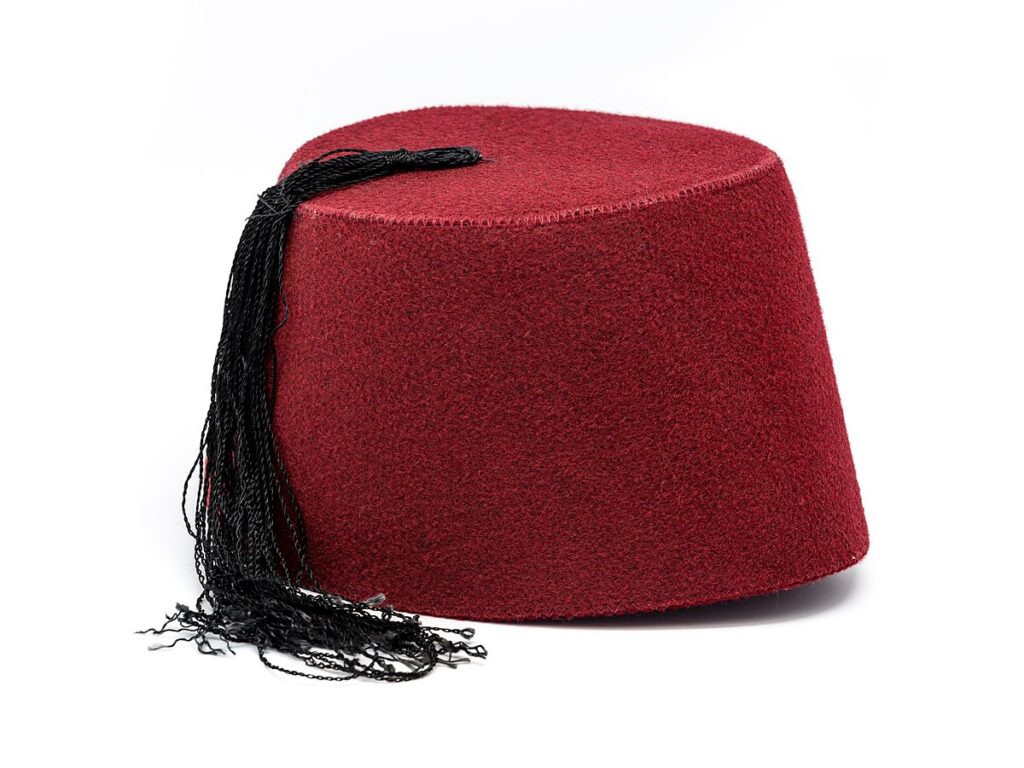
Dress is always an ensemble. A combination of particular items of clothing creates an outfit. What items combine to create an acceptable ensemble is in part determined by social norms of dress. There is no reason why I should not wear military boots, floral shorts, a dinner jacket, and a fez. This combination would conform to society’s ideas of decency, but would not be regarded as a coherent outfit, and would be considered as rather eccentric. In other words, dress has a sort of syntax, which makes clothing choices intelligible to others.



Conformity and Resistance
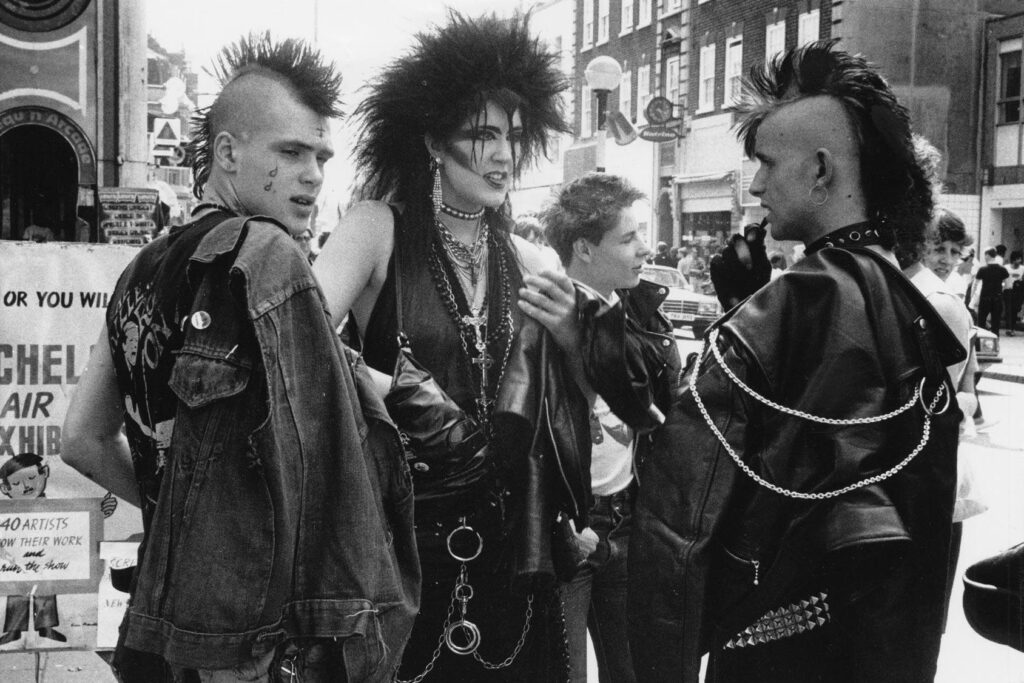

Whilst most of us conform to the cultural norms, varying these norms slightly to assert a sense of individuality, others flout the conventions of dress as a form of resistance. The flouting of dress conventions is often associated with subcultures, such as punk. Dick Hebdige writes:
The meaning of subculture is, then, always in dispute, and style is the area in which the opposing definitions clash with most dramatic force.
Hebdige 1988: 3
This dramatic clash is most apparent in in subcultural choices of dress and are visual statements of resistance to prevailing norms. On the other hand, traditional modes of dress are associated with conformity with the status quo.
The Sari
Perhaps more than any other item of clothing, the sari is categorised as being a traditional mode of dress. The term tradition derives from the Latin ‘tradere’ which means to ‘hand down’. The implications are that traditions are passed from one generation to the next, they remain unchanged, and signify a respect for the past.
The sari has a long history. There is evidence that the sari’s origin can traced back to the Indus Valley Civilisation – a culture that flourished between 2,600 and 1,900 BCE in the northwest of the South Asian subcontinent. The sari is essentially a long piece, of unstitched cloth. It can be anywhere 3.2 metres (3.5 yards) and 8.2 metres (9 yards).
It is easy to conceive of the sari as an unchanging and relatively homogenous mode of dress in comparison to the dynamic and diverse stitched couture of European cultures. However, Mukulika Banerjee and Daniel Miller assert that the sari is primarily a ‘lived garment’.
The sari is not some antique or folk costume, but is instead a living and effective alternative to the stitched clothing of the West.
Banerjee and Miller 2003:3
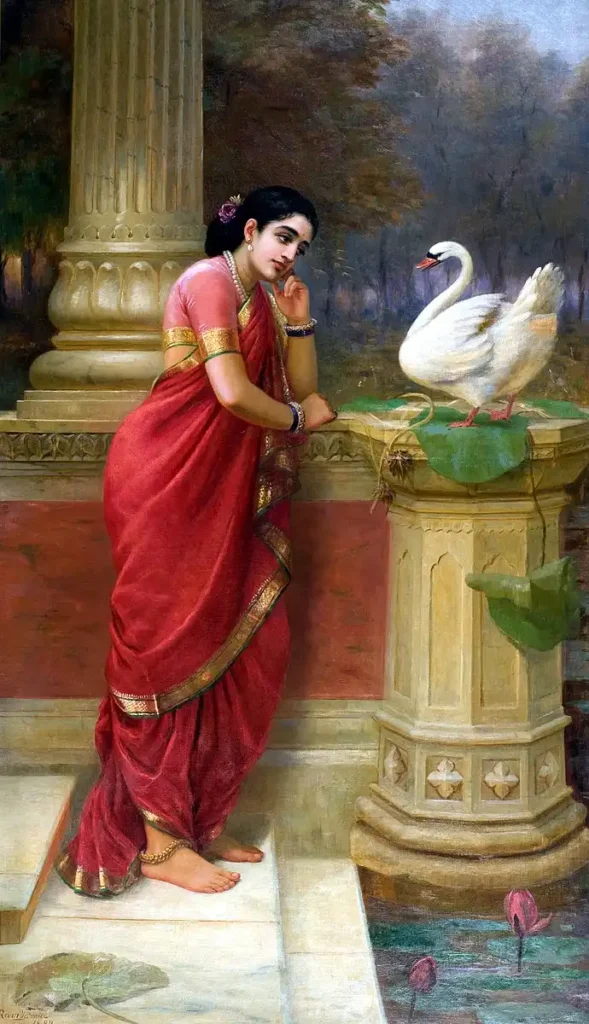
Image from Artwale
Diversity
The sari is an incredibly diverse mode of clothing, and can express a sense of individuality.
The malleability of the sari makes it the perfect vehicle for asserting individuality. To drape the sari to complement your body is to express your identity and your emotions – and to fit it around what you want it to be, what you want to do.
Agarwal 2023:95
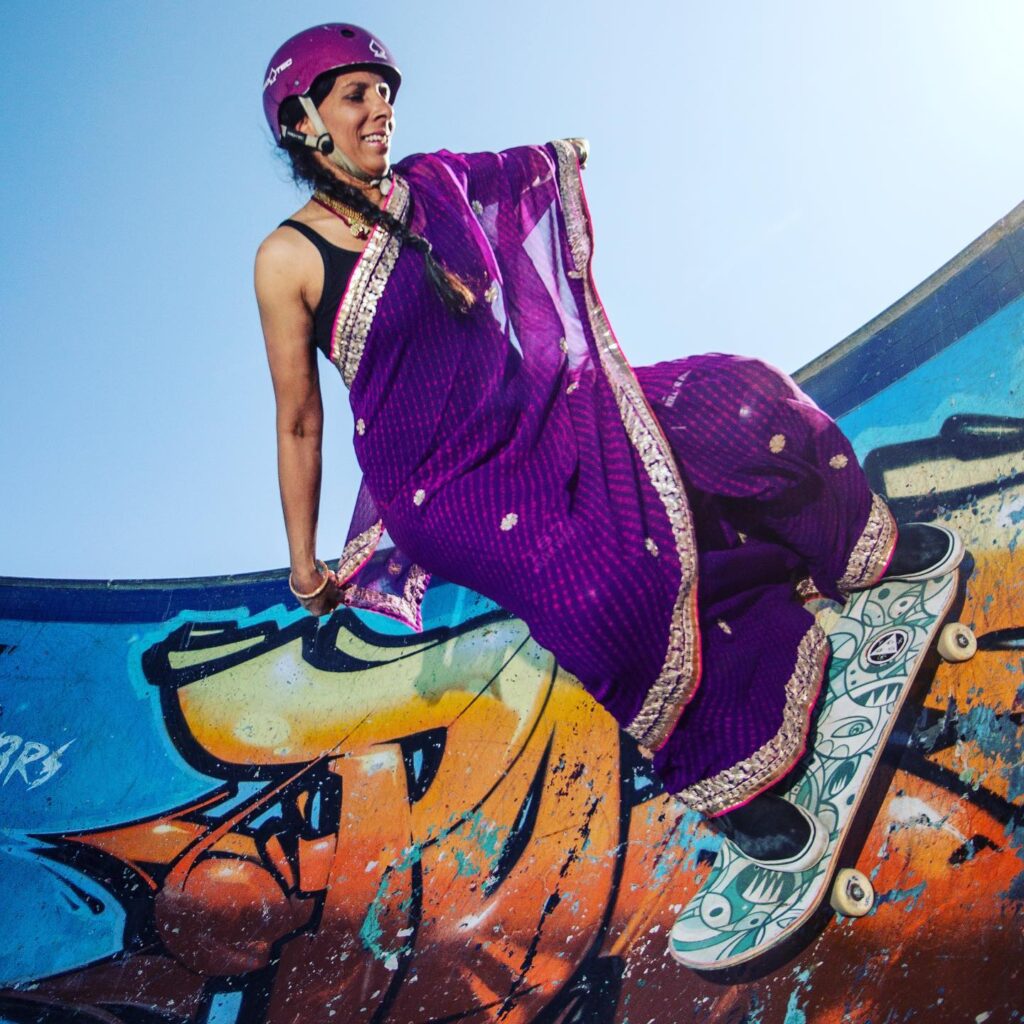
A good example of this potential to express a sense of individuality is Aunty Skates. Oorbee Roy – a Toronto based mother of two started skateboarding at the age of 43. She started posting images of herself skateboarding in a sari on TikTok.
When I get on a skateboard, it is the most liberating feeling I’ve ever experienced … And when I get in a sari and I start flying in the bowl, it’s just really fun. I feel very lucky that I found skateboarding.
Roy cited in Stump 2021
There are many different ways to drape the sari. Different draping styles are often associated with different regions of the subcontinent. However, what is referred to as the Nivi style is now the most widely used. It is pleated at the front and draped over the left shoulder. This style is attributed to Jyananda Nandini (1850–1941), the sister-in-law of the Nobel Prize winner Rabindranath Tagore. Coming from a privileged and liberal background Nandini would sometimes accompany her husband in public including attending gatherings at British homes.
Most draping styles of the sari exposed too much flesh for colonial perceptions of decency, and although many men adopted European modes of dress, women tended to retain Indian styles of clothing. Nandini developed the Nivi style of drape to be acceptable to the colonial powers and yet be distinctly Indian. Many of the women who became involved in the Independence movement, were seen on public platforms and often appeared in press coverage adopted the Nivi style. This style has come to be regarded as the national dress for Indian women.
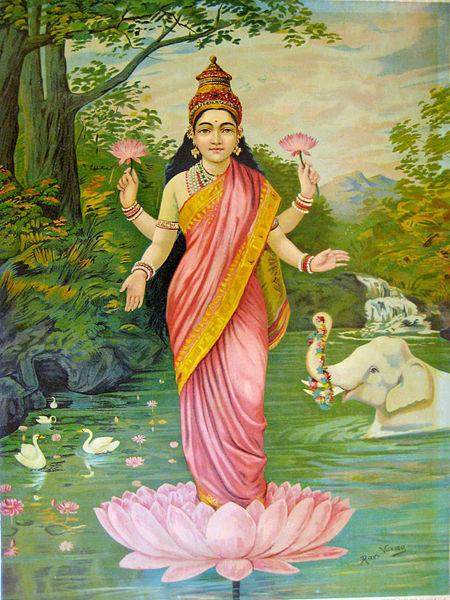
By the end of the 19th century cheap lithographs of the Hindu deities were becoming popular. The artist Ravi Varma (1848–1906), whose paintings were reproduced in print and widely circulated, depicted the Hindu goddesses, including Mother India, wearing saris in the Nivi style
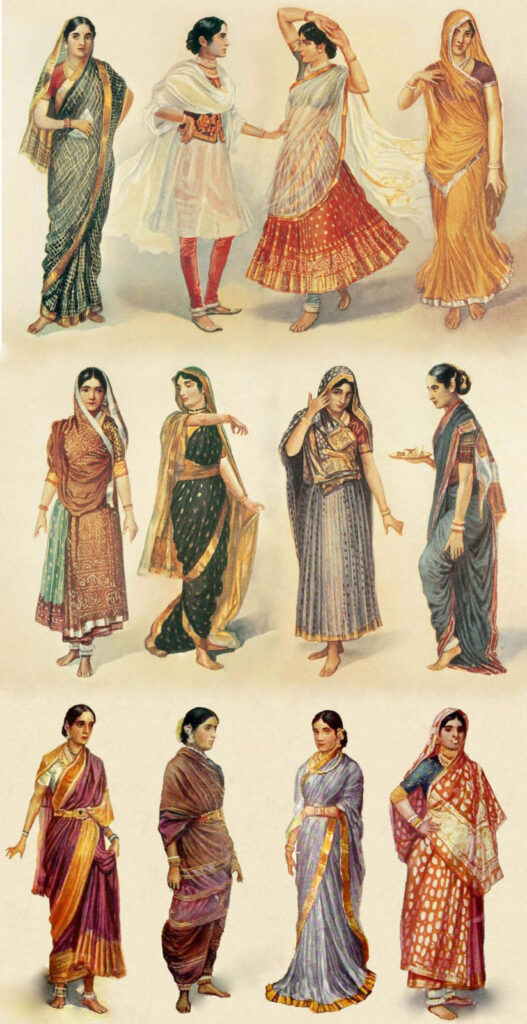
There are more than a hundred ways to drape a sari and, in this sense, the sari becomes the person wearing it
Agarwal 2023: 92
As well as different draping styles, saris are made in a wide variety of fabrics, colours patterns and weaves. Often these distinct styles are associated with particular regions of India. Perhaps the most famous and sought after saris are from the town of Banaras (also called Vārānasī). Banarasi saris are hand woven in silk with gold threads and have a distinctive border.
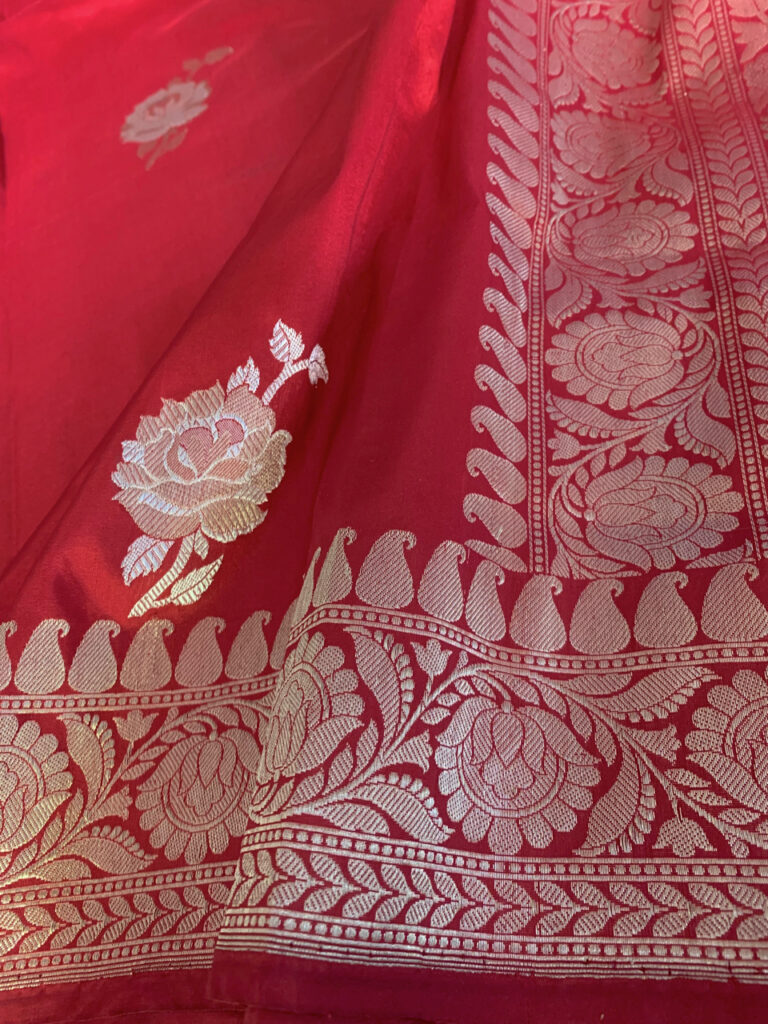
Increasingly machine looms are taking over from handlooms and are often made with artificial fabrics such as nylon or polyester. This has enabled brighter and more flamboyant patterns to be produced cheaply. It has also led to the mass production of imitations of traditional styles, such as the Banarasi sari, many of which are now manufactured in China.
Modesty and Eroticism
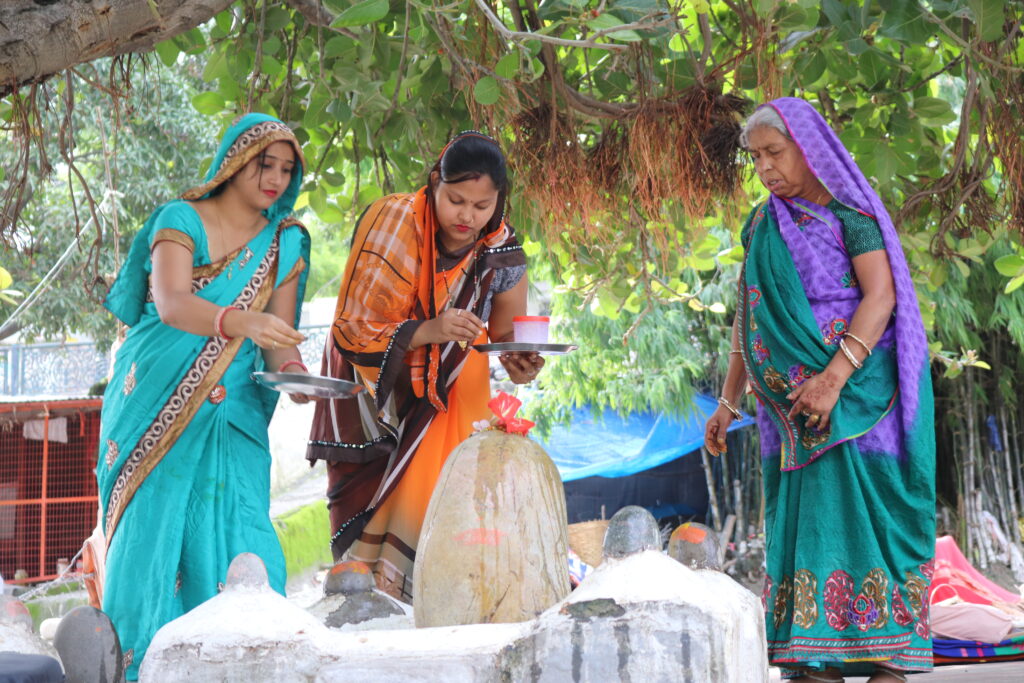
The sari is an incredibly expressive form of dress, not only as an ensemble but in the way that it is worn. The sari is normally associated with modesty and social mores that determine what is considered appropriate mode of dress in public spaces. For example, many women will pull the pallu, the long loose end of the sari normally draped over the shoulder, over their heads when in public. The pallu can also be used to veil the face to hide emotions etc.
However, the sari is an ambiguous mode of dress. It can be utilised as a display of decorum and can also signify eroticism.
The sari is the perfect garment to accentuate this body, its drape drawing attention to the ‘acceptable’ erotic zones of the breast, waist and hips even while covering them
Dwyer 2000: 150
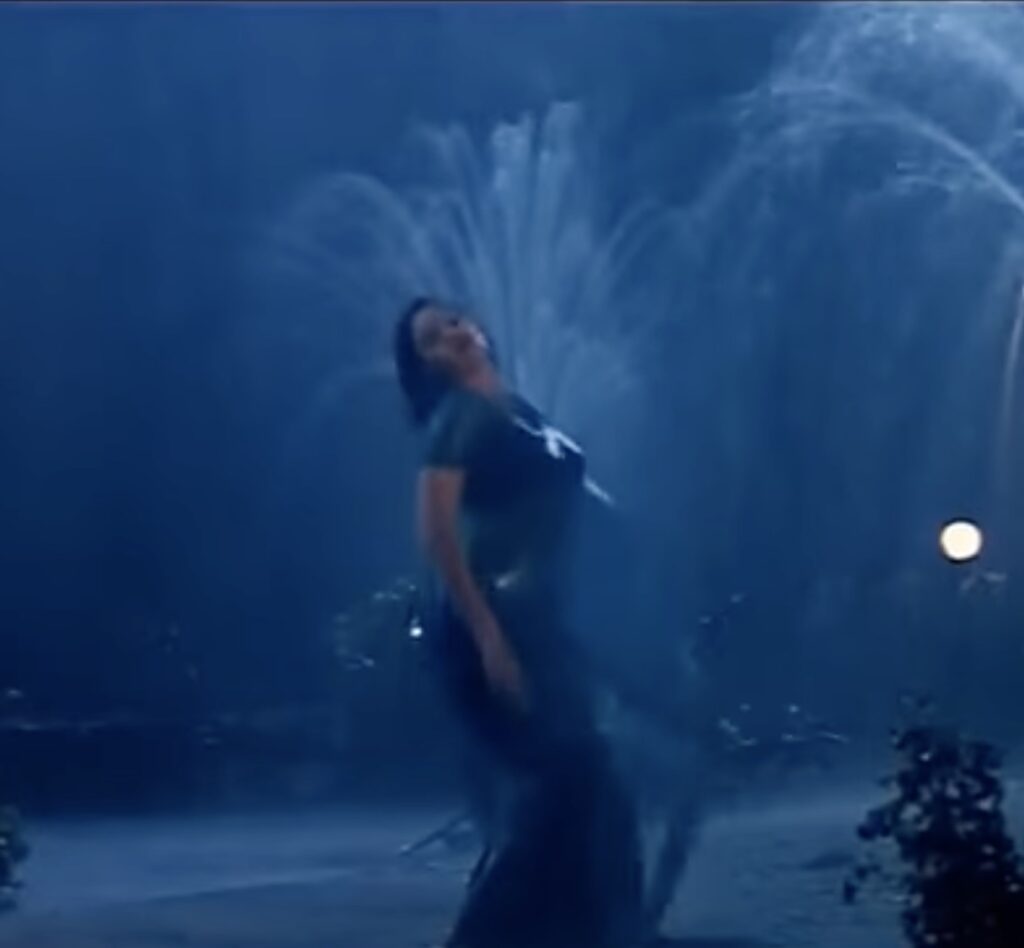
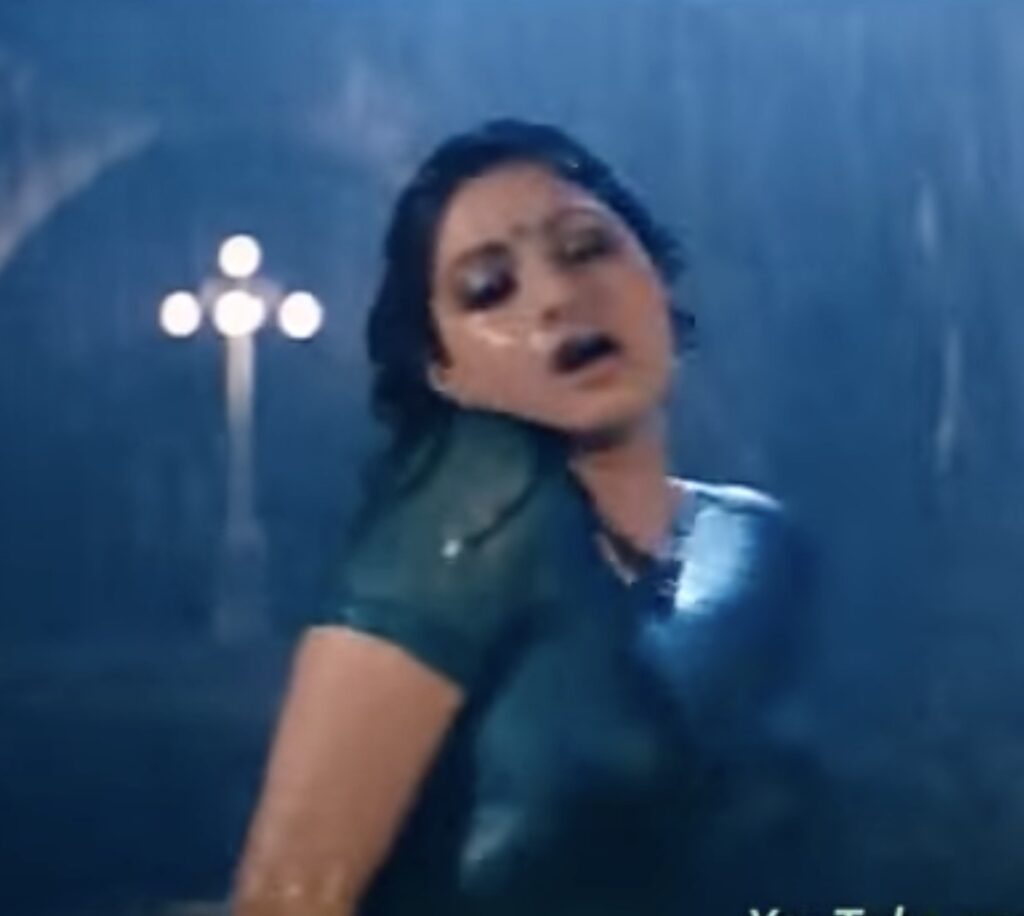
This erotic potential of the sari is most obvious in Bollywood films. Particularly in the wet sari sequence in which the erotic body is fully clothed, but totally sensualised. A good example of this is in the song and dance sequence I Love You in Shekhar Kapur’s 1987 film Mr India

Glamour and Fashion
It is often assumed that fashion and tradition are diametrically opposed. Traditional clothing is identified with the past, is regarded as unchanging and is often thought to be associated with older generations. Fashion is represented as the new, is identified with the present, associated with the young and regarded as exciting and changing.
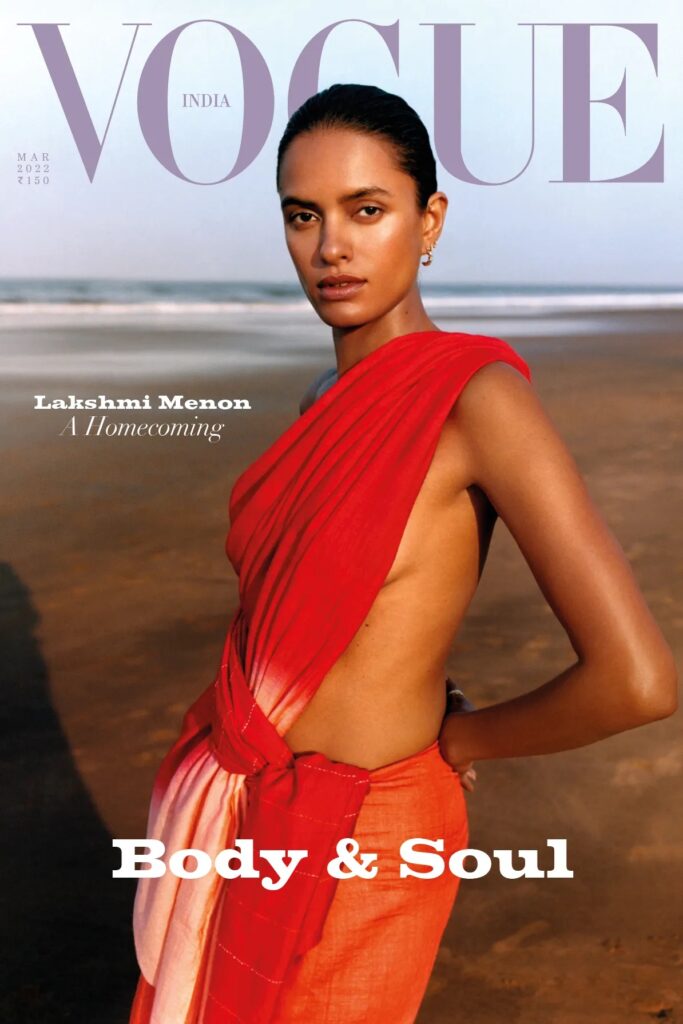
It is sometimes suggested that jeans are more modern than the salwar kameez which is more progressive than the sari. However, the sari is, as Rachel Dwer (2000: 146) observes, ‘always a fashion item’.
The March 2022 cover of Vogue India featured the model Laksmi Vernon wearing a bright red sari. Inside the magazine there is an article entitled ‘The Sari Holds Our Secrets’ illustrated with photographs of Vernon wearing a variety of different saris.
There is a renewed interest among designers seeking to move the sari beyond its staid form and reimagine it for a younger, urban female wearer
Malhotra 2023: 22
Gender
The sari is regarded as primarily a mode of dress for women. Donning a sari for the first time is a rite of passage from girl to woman. Pragya Agarwal reflects that:
I was fourteen years old when I wore a sari for the first time. It signified stepping into womanhood, coming of age
Agarwal 2023: 90
Many Indian men since the colonial period have tended to adopt western style . Himanshu Verma, who founded the Sari Festival makes the interesting point that the British tended suggest that Indian men ‘were not manly enough, and they responded to it by changing their mode of dress and behaviour’ (cited in Khanchandini 2023: 97).
Traditional clothing for Indian men is also unstitched.
It is not uncommon to see men wearing a lungi or a dhoti, particularly in rural areas, both of which are unstitched cloths. The lungi is normally about 80 inches (200cm) and is often coloured and patterned, whereas the dhoti is normally about 15 ft (4.5) metres and is generally white, although it often has a narrow border. The lungi tends to be a more casual item of clothing and the dhoti is more often used in ritual contexts. Whilst there is no absolute prohibition on stitched clothing, it is often accepted that unstitched clothing is more ritually pure. Consequently, often Brahmin priests will wear dhotis in temples..
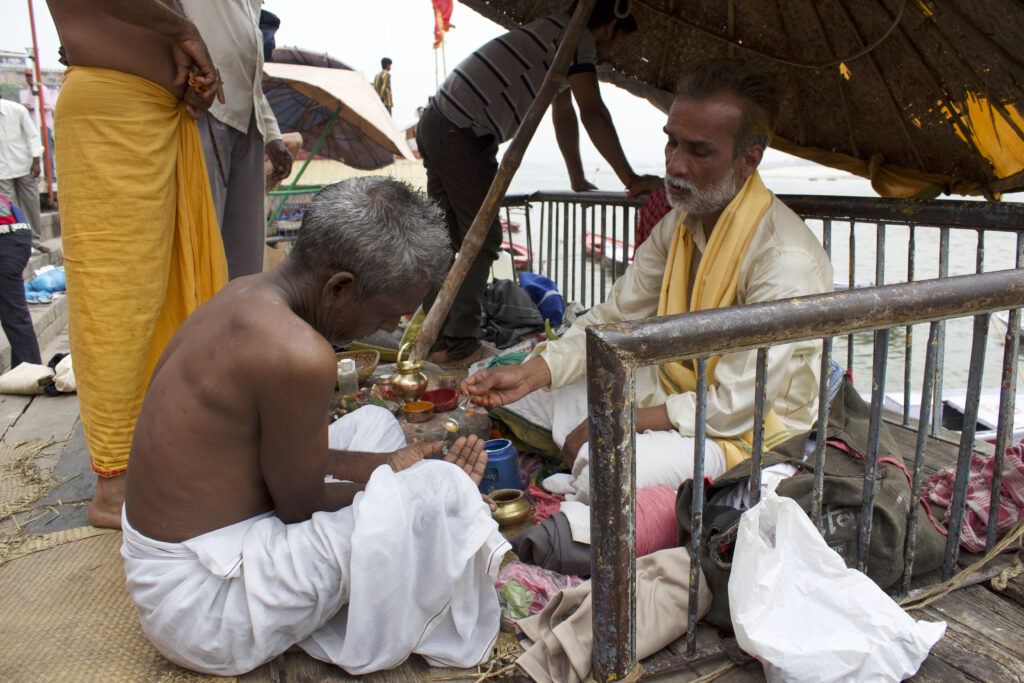
A brahmin priest performing a ritual blessing on the banks of the Ganga at Banaras. (My photo)
There is also a tradition of gender nonconforming individuals who are born male but choose to dress in traditional feminine ways. This group, known as hijras, regard themselves as a third gender. Whilst there are some references to gender fluidity in ancient Hindu texts, the culture of hijra probably developed from the 13th century. Hijras form their own communities and traditionally will bless new-born babies and weddings
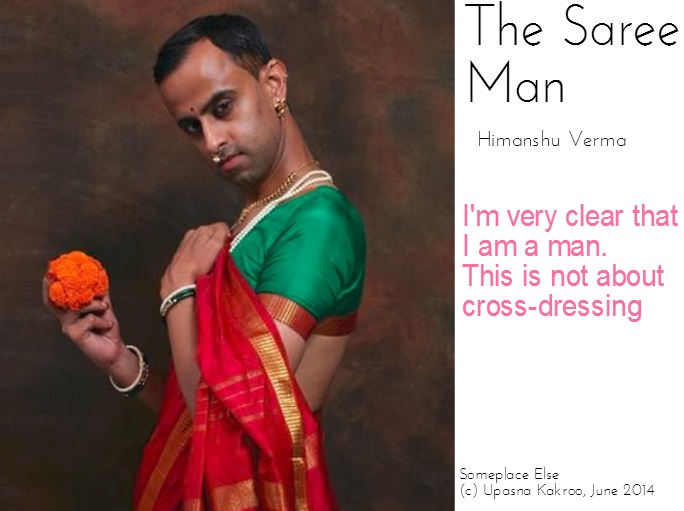
Gender identity is increasingly accepted as fluid and non-binary across most parts of the world, including India. In 2016 the Facebook group Transgender India published a series of photographs of gender nonconforming individuals, many of them dressed in saris, with the title ‘I am not a hijra’.
Himanshu Verma, who identifies as a man but also wears saris suggests:
The sari goes beyond gender. In some ways, the sari is also beyond politics – at least for me. It’s a garment of self-expression and aesthetic pleasure that allows me to engage with India’s textile history.
Verma cited in Khanchandini 2023: 97
Conformity and Resistance
Wearing a sari tends to be viewed as apolitical and signifying that the wearer conforms to cultural and social mores. However, wearing a sari also has the potential to be political and indicating resistance to dominant norms. The sari, often made from khadi, the hand spun cotton popularised by Gandhi, and draped in the Nivi style was associated with the Independence movement.
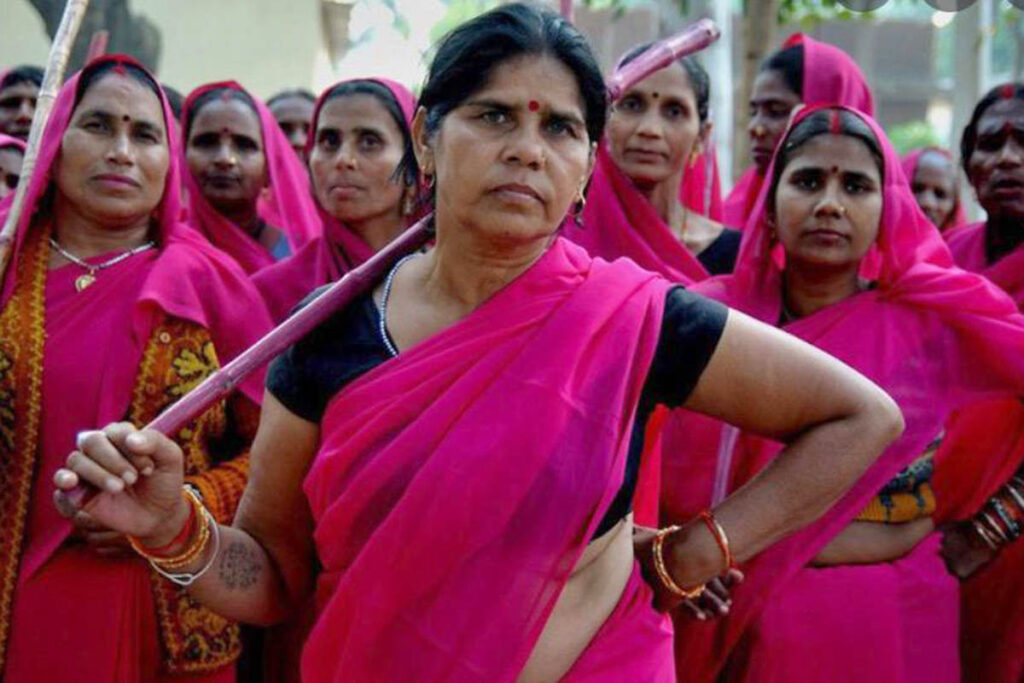
More recently the Gulabi Gang (The Pink Gang), a group of women formed in 2006 by Sampat Pal Devi in Uttar Pradesh all wear pink saris and are often pictured carrying bamboo staves. The gang was initially formed to combat domestic violence when Pal witnessed a man beating his wife, but now campaigns on wider issues of social justice.
Pal’s decision to dress herself and her fellow gang members in saris made a difference to how they were perceived. In those who had reason to be afraid, the Gulabi Gang inspired fear – but as news of the gang spread across India, the image of the women in their saris, with bamboo sticks in hand and ferocious expressions stamped on their faces, inspired sympathy and admiration
Faleiro 2023: 118
Conclusion
Clothing choices can tell us a great deal about individuals, cultures and attitudes to the body. India has a complex sartorial history and culture, exemplified by the sari. The sari is not simply a long strip of unstitched cloth but is an incredibly fluid and expressive item of clothing. It can be used to express a wide range of cultural identities. The sari can signify tradition and glamour, conventionality and individuality, conformity and resistance.
References
Agarwal, P. (2023) Ways of Embodying. In Khanchandani, P. (ed.) The Offbeat Sari. London: Design Museum Publishing.
Banerjee, M. & Miller, D. (2003) The Sari. Oxford: Berg.
Delaney, C. (2004) Investigating Culture. Oxford: Blackwell.
Dwyer, R. (2000) The Erotics of the Wet Sari in Hindi Films. South Asia 23( 1) pp. 143–159.
Faleiro, S. (2023) Radical Disobedience. In Khanchandani, P. (ed.) The Offbeat Sari. London: Design Museum Publishing.
Goffman, E. (1990) The Presentation of Self in Everyday Life. London: Penguin.
Gold, A.G. (1990) Fruitful Journeys: The Way of Rajasthani Pilgrims. Berkley: University of California Press.
Hebdige, D. (1988) Subculture: The Meaning of Style. London: Routledge.
Khanchandani, P. (2023) Introduction. In Khanchandani, P. (ed.) The Offbeat Sari. London:Design Museum Publishing.
Malhotra, A. (2023) New Aesthetic Fundamentals. In Khanchandani, P. (ed.) The Offbeat Sari. London: Design Museum
Publishing.
Stump, S. (2021) Aunty Skates Aims to Defy Stereotypes While Skateboarding in a Sari. Today. Available at
https://www.today.com/tmrw/aunty-skates-aims-defy-stereotypes-while-skateboarding-sari-t227848
Tarlow, E. 1996) Clothing Matters: Dress and Identity in India. London: Hurst and Company.
Other Sources.
Meet The Sari Weavers Keeping A 16th Century Craft Alive: A fascinating video on making handloom Banarasi Saris
The Sari Series: Includes a seies of videos on how to drape the sari and three independent short films that explore the
sari’s past, present and future.
The Gulabi Gang: The official website of the Gulabi Gang