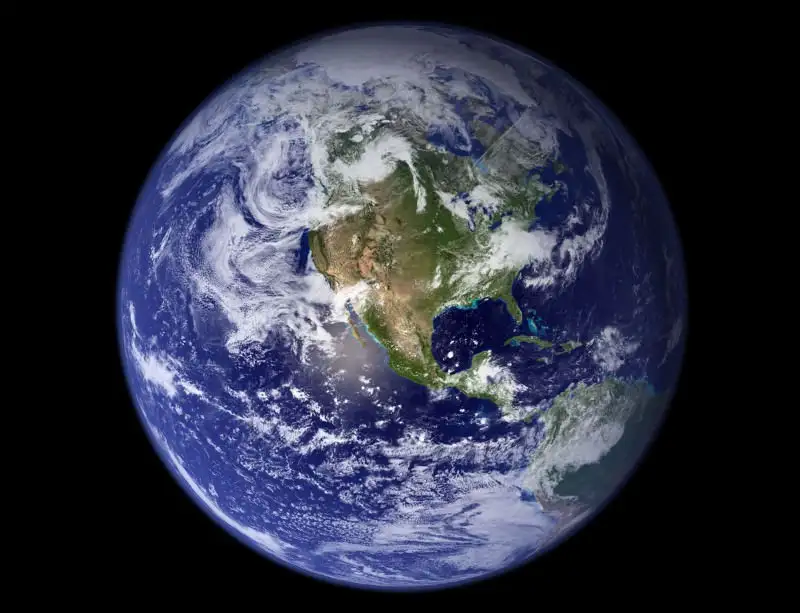
The Science of Gaia.
One of the most influential ideas that informs environmental thinking is James Lovelock’s theory of Gaia. Lovelock suggests that the ‘the entire surface of the Earth, including life is a self-regulating system and this is what I mean by Gaia’ (Lovelock 2016, p. xv). Lovelock was a scientist, and initially his idea of the planet earth as a self-regulating system was a scientific hypothesis. However, the Gaia hypothesis also has an implicit, and often explicit ethical aspect. It has also been interpreted as a religious/ spiritual idea.
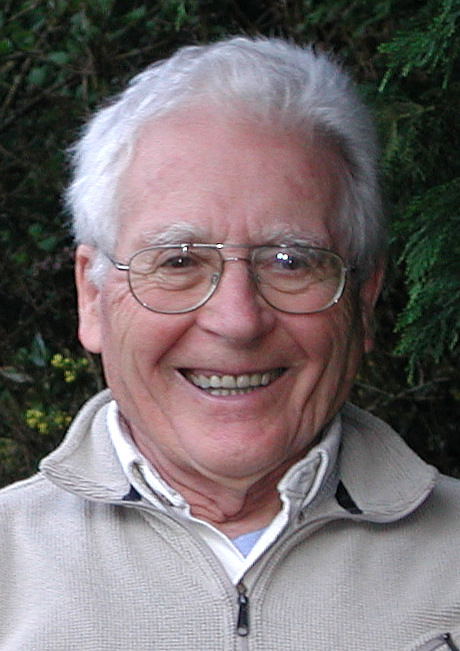
Image from Wikipedia
In 1961 Lovelock was employed by NASA to contribute to the project looking for life on Mars and other planets. Lovelock, in his own term had ‘a flash of enlightenment’ that led him to conceive of the Earth as a self-regulating system (Lovelock 2016 vii). His starting point was to propose that the atmospheres of Mars and Venus were totally incapable of supporting life. The atmosphere of these planets is almost entirely comprised of carbon dioxide (CO2) with less than 1% nitrogen and oxygen. The atmosphere of these planets is in equilibrium and therefore inert, or in Lovelock’s term in a state of ‘entropy’.
Lovelock observed that the earth’s atmosphere is comprised of a variety of gases that are in disequilibrium, and it is this variety and disequilibrium of gases that has enabled life to flourish. However, there are limits to how far this disequilibrium can tip before life can no longer be sustained. Too much or too little oxygen or any of the other gases in the earth’s atmosphere would be inimical to life. Lovelock describes the earth’s atmosphere as ‘a curious mixture of reactive gases forever in flux and chemical disarray yet never losing their balance (Lovelock 2016:60).
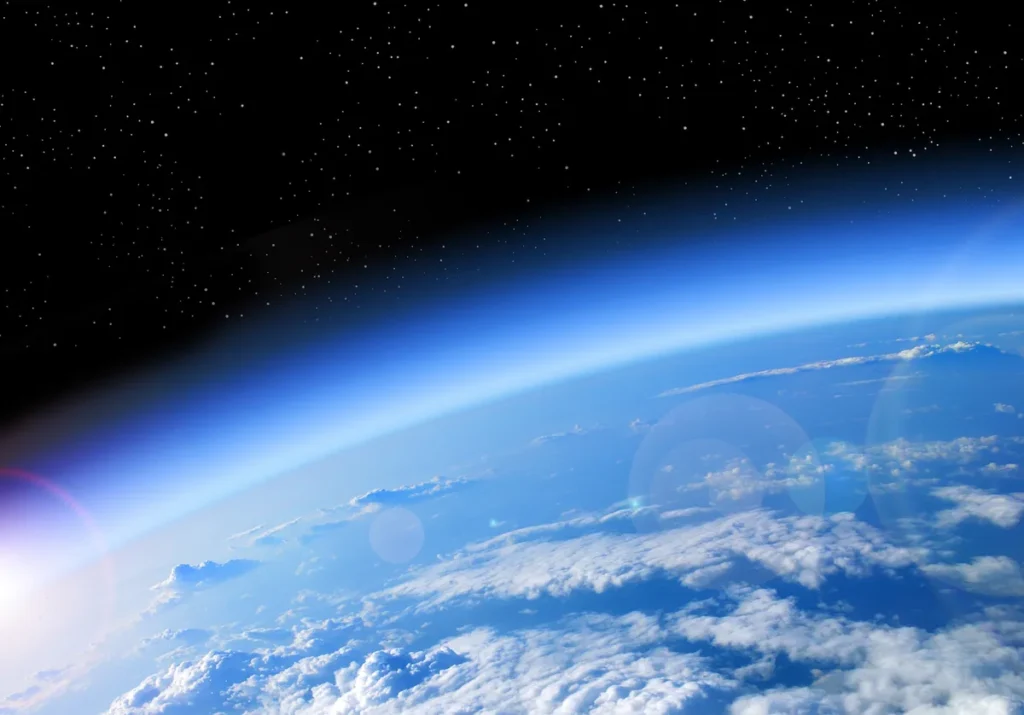
Lovelock’s suggested that this state of balance is not merely the product of luck.
The Earth’s atmosphere was so curious and incompatible a mixture that it could not have arisen by chance’ (Lovelock 2016: 62).
If this improbable mixture of atmospheric gases has enabled life to flourish, then the question is how is this balance achieved and maintained. Lovelock’s conclusion was startling. He concluded that life itself created the conditions for life.
The only feasible explanation of the Earth’s highly improbable atmosphere was that it was being manipulated on a day-to-day basis from the surface, and that manipulator was life itself (Lovelock 2016:6).
Lovelock then goes on to observe that life can only exist within a very narrow range of temperatures. Whilst there is some fluctuation of earth’s temperature, it remains within the parameters that support life. Furthermore, there are also limits to the salinity of the sea that will support life. Overall, Lovelock suggests that the biosphere, the region where life can be found, is in a state of balance that can support life, and it is the complex interactions between all life forms and the physical environment that maintains this balance.
He termed this active maintenance of the relative constant and improbable conditions for life homeostasis.1
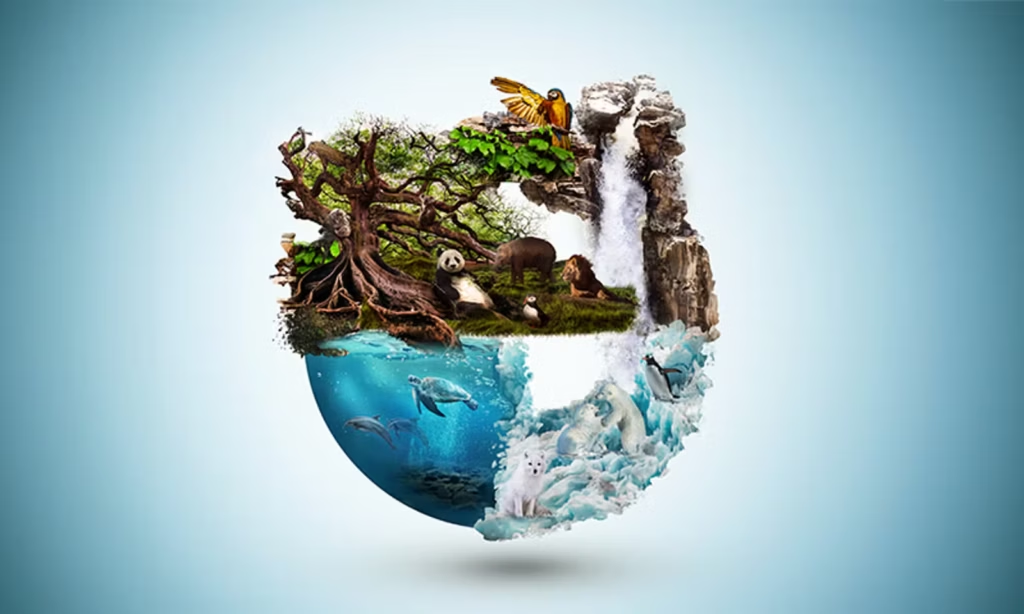
Our home planet can therefore be considered a sort of giant organism:
The entire range of living matter on Earth, from whales to viruses, and from oaks to algae, could be regarded as constituting a living entity, capable of manipulating the Earth’s atmosphere to suit its own overall needs and endowed with faculties and powers far beyond those of its constituent parts (Lovelock 2016:9).
Cybernetic Feedback
Lovelock draws on the idea of cybernetics to explain how Gaia’s self-regulating systems work. Lovelock notes that ‘cybernetic systems employ a circular logic’. To illustrate this idea Lovelock observes that electric ovens use a simple cybernetic system to maintain a constant temperature. In an analogous way the interaction between all organisms and the environment constantly inform each other in a cybernetic feedback loop that enables life to thrive
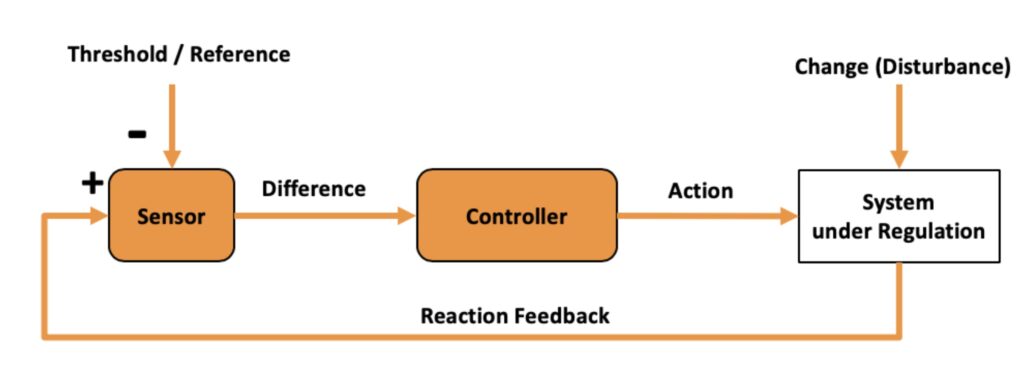
| Oven | Gaia | |
| Threshold | Set temperature | Homeostasis |
| Sensor | Thermometer | Gaia |
| Change/disturbance | Too hot/too cold | For example too much CO2 |
| Controller | Thermostat | Life |
| Action | Adjust temperature | Adjust balance of atmospheric gases |
| System | Oven | Atmosphere |
The theologian Anna Primavesi calls this cybernetic feedback autopoesis – ‘self making’. She defines this as:
The close relationship between the evolution of living organisms and the evolution of their physical and chemical environment which constitutes a single evolutionary process (Primavesi 2000:3)
The scientific community was initially very critical of Lovelock’s ideas, and he found it almost impossible to get published in any academic journals. He stated that ‘Until 1995 it was nearly impossible for a scientist anywhere to publish a paper on Gaia, unless to disprove or disparage it’ (Lovelock 2016:xvii).
There were three main reasons why the scientific community were, at least initially, sceptical of Lovelock’s hypothesis.
- He had no substantial evidence for his hypothesis.
As a scientist Lovelock was aware that he needed to find evidence for his surprising hypothesis. Consequently, Lovelock and his student Andrew Watson produced a digital model called Daisyworld. This model seemed to substantiate Lovelock’s hypothesis, and he consequently started to refer to the idea as a theory, rather than a hypothesis. - The idea of the Earth as a self-regulating system crossed over a range of different scientific disciplines.
At the time of publishing Gaia: A New Look at Life on Earth in 1979, science tended to be divided by clearly defined discipline. Lovelock suggested that for most scientists:
Broad ideas like Gaia are an anathema to them. They see Gaia as metascience, something like a religious faith and therefore from their deeply held materialistic beliefs, something to be rejected (Lovelock 2016, xviii).
- Lovelock deliberately minimised his use of scientific jargon.
In his first book Gaia: A New Look at Life on Earth Lovelock purposefully did not adhere to the conventions of scientific academic publications. Like Rachel Carson Lovelock wanted to make his ideas accessible. Gaia also became a best seller, and this made it vulnerable to accusations of being populist, and therefore not serious science. Consequently, in 1988 Lovelock published The Ages of Gaia that was aimed more specifically at scientists.
The name of his hypothesis did not help either. Gaia is the name of the Greek goddess of the Earth. The name was suggested to Lovelock by his friend the famous novelist William Golding. Lovelock was immediately taken by Golding’s suggestion as ‘It was a real four-lettered word that would thus forestall the creation of barbarous acronyms such as Biocentric Universal System Tendency/Homeostasis’ (Lovelock 2016:10).
However, as the name has religious connotations it was problematic to some in the scientific community. Lovelock acknowledged that the wording of his early writing on Gaia was ‘sometimes poetic rather than scientific’. Consequently, Lovelock coined the term geophysiology as a transdisciplinary project that would conceive our planet as though it were a living organism (Lovelock 1989).
Earth System Science
In 1980 Eric Barron coined the term Earth System Science (ESS). This responded to a growing awareness that a multi-disciplinary perspective was necessary it to understand the complex interactions of global phenomena. A 1986 NASA report defined ESS:
Understanding of the entire Earth System on a global scale by describing how its component parts and their interactions have evolved, how they function, and how they may be expected to continue to evolve on all timescales. (NASA 1986)
ESS is regarded as a genuine science. It has made a major contribution to our understanding of the climate emergency. ESS has also supported Lovelock’s theory. Although Lovelock was somewhat critical of ESS as he indicated that it ‘fails to convey the sense that the Earth is a live planet’ (Lovelock 2016: ix).
Gaia as Religion
Bron Taylor argues that the idea of Gaia can be categorised as a dark green religion. Taylor distinguishes between green religion and dark green religion.
Green Religion
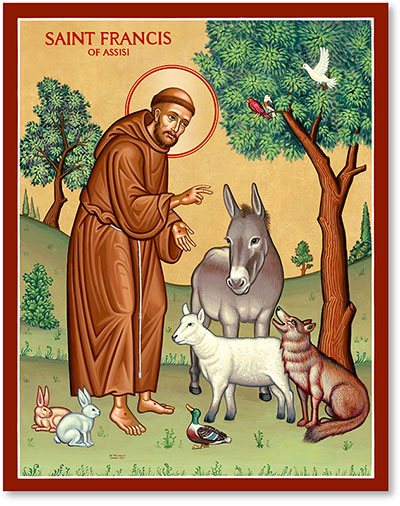
Taylor suggests that green religion refers to individuals or groups within a particular faith community who interpret their beliefs to include environmental concerns. Today almost all religious communities express a concern with the environmental crisis that threatens our planet. For example, in 2015 Pope Francis issued an encyclical entitled Laudato Si (Praise Be to You) – Care for Our Common Home, in which Francis exhorts Catholics to be mindful of the environmental harms caused by human activity. He suggests that there is a religious imperative to take care of our planet. The encyclical begins:
Saint Francis of Assisi reminds us that our common home is like a sister with whom we share our life and a beautiful mother who opens her arms to embrace us. “Praise be to you, my Lord, through our Sister, Mother Earth, who sustains and governs us.
Dark Green Religion
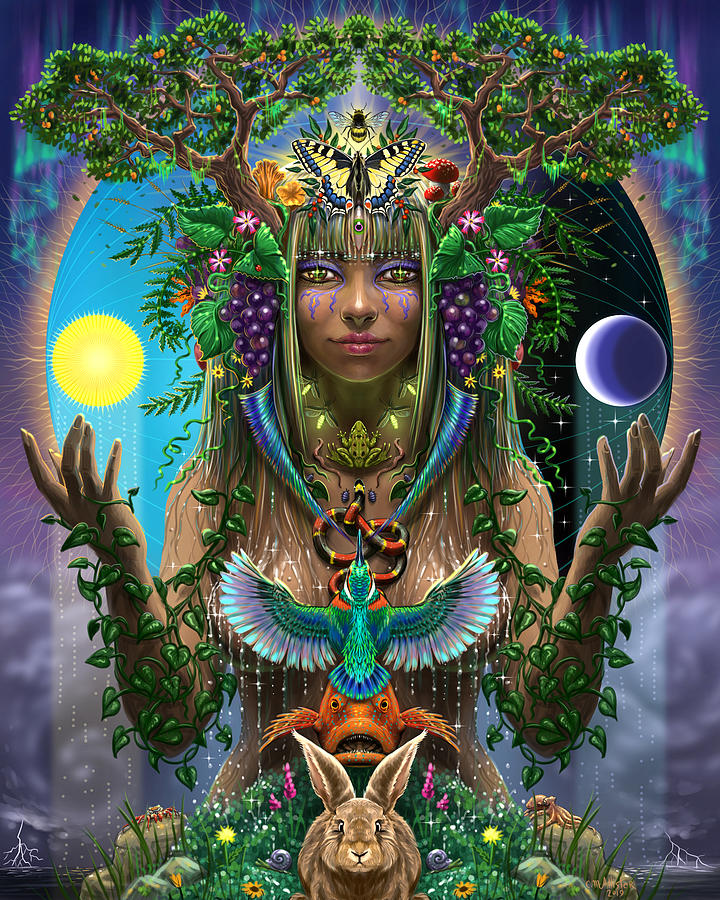
Taylor suggests that dark green religion views nature as sacred and having intrinsic value, and is ‘therefore due reverent care’ (Taylor 2010:10). Dark green religion:
[Flows] from a deep sense of belonging to and connectedness to nature, while perceiving the earth and living systems to be sacred and interconnected (Taylor 2010: 13).
Intrinsic to dark green religion are:
- A kinship with all life.
- A sense of humility that humans are not morally superior to other beings.
- A metaphysics of interconnection and interdependence.
(Taylor 2010: 13)
These three aspects are clearly identifiable in Lovelock’s ideas for example he writes:
I began to see us all as a part of the community of living things that unconsciously keep the Earth a comfortable home, and that we humans have no special rights only obligations to the community of Gaia (Lovelock 2016: xv)
Taylor suggests there are four types of dark green religion that he sets out in a table:
| Animism | Gaian Earth Religion | |
| Supernaturalism | Spiritual Animism | Gaian Spirituality |
| Naturalism | Naturalistic Animism | Gaian Naturalism |
By supernaturalism Taylor means a belief in some transcendent aspect, as opposed to naturalism which does not. The term ‘animism’ derives from the Latin anima, meaning life or soul. This is the belief that non-human beings have personhood or a soul. I will look at this idea in more detail in a later post, as it is the column on Gaian Earth Religion that I am more concerned with in this post.
Gaian Naturalism
Lovelock’s theory is clearly consistent with Taylor’s conception of Gaian Naturalism. As noted above, Lovelock perceives that humans are part of the self-regulating system of Gaia, intrinsically connected to the planet as a whole, and just one member of a community of beings.
Although Lovelock represents Gaia as alive, he states: ‘Do not assume that I am thinking of the Earth as alive in a sentient way’. (Lovelock 2006:16). Lovelock emphasised that his idea of Gaia was inherently metaphorical. He notes that the idea of the Earth as a living organism ‘has never been more than a metaphor – an aide pensée, no more serious than the thoughts of a sailor who refers to his ship as ‘she’. (Lovelock 2006:16). However, he also suggested that it is perhaps impossible to understand the complexity of the planetary self-regulating systems without resorting to religious metaphors.
Lovelock is rather ambivalent about religion. On the one hand he asserts that religion has failed to address the environmental crises that Gaia is now facing. On the other hand, he is also highly critical of reductionist science that fails to perceive the planet as somehow alive. In his personal view at the end of his book The Revenge of Gaia Lovelock states:
Just as the metaphor, a living Earth, used to explain Gaia, was wrongly rejected by reductionist scientists, so might it be wrong of them also to reject the metaphors and fables of the sacred texts (Lovelock 2006: 139).
He also noted:
There is a deep need in all of us for trust in something larger than ourselves, and I put my trust in Gaia.
Lovelock 2006: 148
Gaian Spirituality
Many people have understood Gaia as not only sentient but also sacred. Taylor observes that in contrast to the Gaian naturalism of Lovelock, Gaian spirituality is not metaphorical it is:
Avowedly supernaturalistic, perceiving the superorganism – whether the biosphere or the entire universe – to have consciousness, whether this is understood as an expression or part of God, Brahman, the Great Mystery, or whatever name one uses to symbolize a divine cosmos (Taylor 2010:16)
There are many books with titles such as Conversations with Gaia: The Soul of the Earth. (Moore & Kopas 2025)
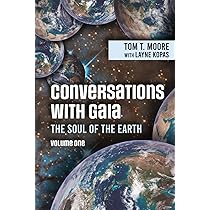

There is a trend that has deified Gaia which is sometimes referred to as Gaianism.
Put simply Gaianism is a religious philosophy that grants the living Earth (Gaia) its rightful place at the center. Humans are not the pinnacle of evolution but just a small (and not necessarily essential) part of the living Earth. (Gaian Way)
Gaian spirituality often asserts that the scientific theory of Gaia vindicates ancient religious teachings. For example, Talde Lucan asserts:
In 1952, German physicist Winifred Otto Schumann confirmed what mystics had known for millennia: the space between the Earth’s surface and the ionosphere carries an electromagnetic pulse, a standing wave. This pulse, vibrating at an average of 7.83 Hz, became known as the Schumann Resonance – the scientific name for what the ancients might simply call the song of Gaia. This is the heartbeat of the Earth
Gaia: The Sacred Spirit of the Earth (Lucan 2025)
Conclusion
The concept of Gaia can be considered as a spectrum of ideas. At one end of the spectrum you can identify the inherently scientific idea of ESS. As Tim Lenton notes: ‘Earth system science is thus a deeply interdisciplinary field, which synthesizes elements of geology, biology, chemistry, physics and mathematics (Lenton 2016:1). On the other end of the spectrum Gaininism represents Gaia as an inherently sacred phenomenon, often deifying our planet as Mother Earth. In between these two poles is Gaian naturalism exemplified by Lovelock’s ideas.
All Gaian perspectives adopt a holistic view. Consequently the idea of Gaia – the scientific, the naturalistic and the religious – emphasises the inherent interconnectedness of life on Earth. I agree with Lovelock, that the idea of Gaia, whether taken literally or metaphorically, can help us think about how we can live on our home planet in a more sustainable and ethical way.
Glossary
Autopoesis: Literally ‘self-creation’. A system that creates and maintains itself.
Biosphere: The region, including both the atmosphere and the Earth’s surface where life can be found.
Cybernetic feedback: The continuous cycle of information and adjustment that maintains systemic stability.
Earth System Science: The interdisciplinary science that acknowledges the interdependence between all life and the
environment.
Entropy: A state in which all components in a system are in complete equilibrium and therefore the system is inherently inert.
Geophysiology: A term coined by Lovelock, that he hoped would be more acceptable than the term ‘Gaia’ to the scientific
community. It draws on disciplines from both Earth and life sciences to investigate the interdependence between all life forms
and the environment.
Holism. The idea that all the components within a system are interconnected and that the whole is greater than the sum of its parts. See also my post on Land Ethic and Deep Ecology.
Homeostasis: A relatively dynamic, bit nonetheless stable balance between interdependent components of a system.
Sources
Gaian Way (2026) What Is Gaianism. Available at https://gaianway.org/what-is-gaianism/
Lenton, T (2016) Earth System Science: A Very Short Introduction. Oxford University Press.
Lovelock 1989 Geophysiology: The Science of Gaia. Available at: https://www.jameslovelock.org/geophysiology-the-
science-of-gaia.
Lovelock, J. (2006) The Revenge of Gaia. London: Allen Lane.
Lovelock, J. (2016) Gaia: A New Look at Life on Earth. Oxford: Oxford University Press (first published in 1979)
Lucan, T. (2025) Gaia: The Sacred Spirit of the Earth. Independently Published.
Moore, T.T. & Kopas, L. (2025) Conversations With Gaia. Topeka Ka: Flint Hill Publishing.
NASA, Earth Systems Sciences Committee (1986) Earth System Science Overview. Available
at: https://babel.hathitrust.org/cgi/pt?id=uiug.30112104410706&view=1up&seq=3.
Pope Francis (2015) Laudato Si of the Holy Father Francis: On Care for our Common Home. Available at:
https://www.vatican.va/content/francesco/en/encyclicals/documents/papa-francesco_20150524_enciclica-laudato-
si.html.
Primavesi, A. (2000) Sacred Gaia: Holistic Theology and Earth System Science. London: Routledge.
- In his earlier publications Lovelock was quite optimistic of the ability of Gaia to maintain the homeostatic balance that enables life to thrive. However in his 2006 publication The Revenge of Gaia, he suggests that human activity has almost reached a tipping point that could irretrievably upset homeostasis ↩︎