
Introduction
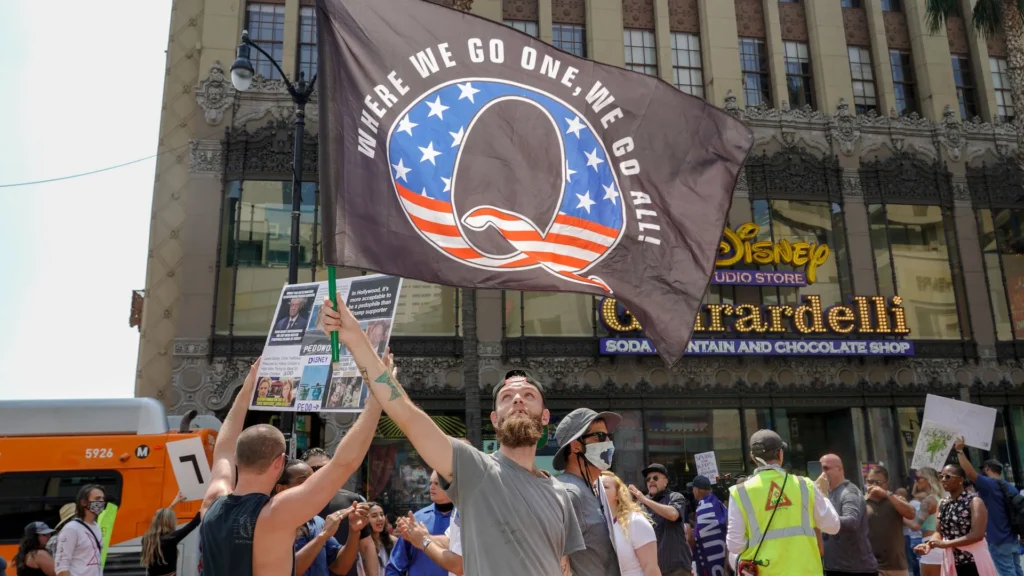
My wife Judith and I were taking a taxi to the airport recently. Somehow the conversation with the driver got on to President Trump, who he thought was a great President. This quickly became a diatribe about the Obamas and the Clintons in particular. The driver claimed that Michelle Obama was in fact a man, and Barrack was gay. He suggested that the Clintons were involved in children smuggling, paedophilia and cannibalism. I had come across QAnon1 and other conspiracy theories in academic literature and the media such as the BBC Radio 4 show Marianna in Conspiracy Land. However, a direct encounter with someone, who seemed to be a decent and friendly person, but who sincerely believed these conspiracy theories was really disturbing for both Judith and I. Judith very politely said that she would have to disagree with his views, and I asked him where he got his evidence from. He replied with the name of a website, which unfortunately I did not make a note of.
This encounter left me wondering two things:
- How do people come to hold what seems to me to be such extreme, abhorrent and implausible views?
- How can we effectively communicate with people who have a worldview that is not only antithetical to our own worldview, but also feel is destructive, divisive and hateful?
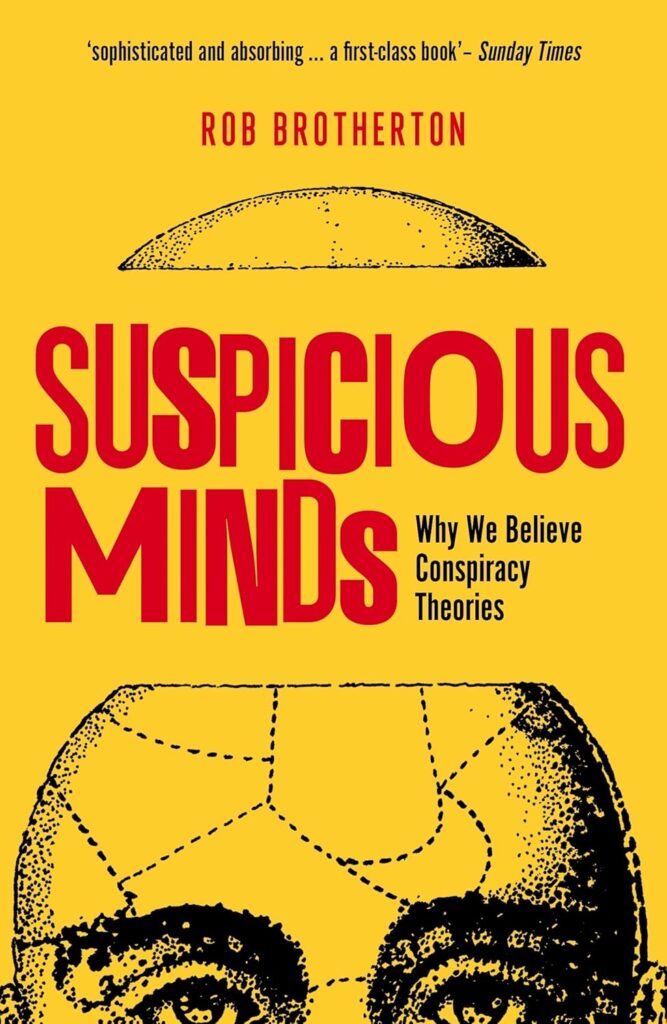
There are numerous ideas about how people come to hold such seemingly implausible views that are epitomised by QAnon. Many people link the appeal of these ideas to social media. These views are sometimes referred to as conspiracy theories. So before, I discuss the reason why people might be drawn to these worldviews, I just want to say a little about what I mean by conspiracy theories. For this I will largely draw on Rob Brotherton’s excellent book Suspicious Minds.
What is a Conspiracy Theory?
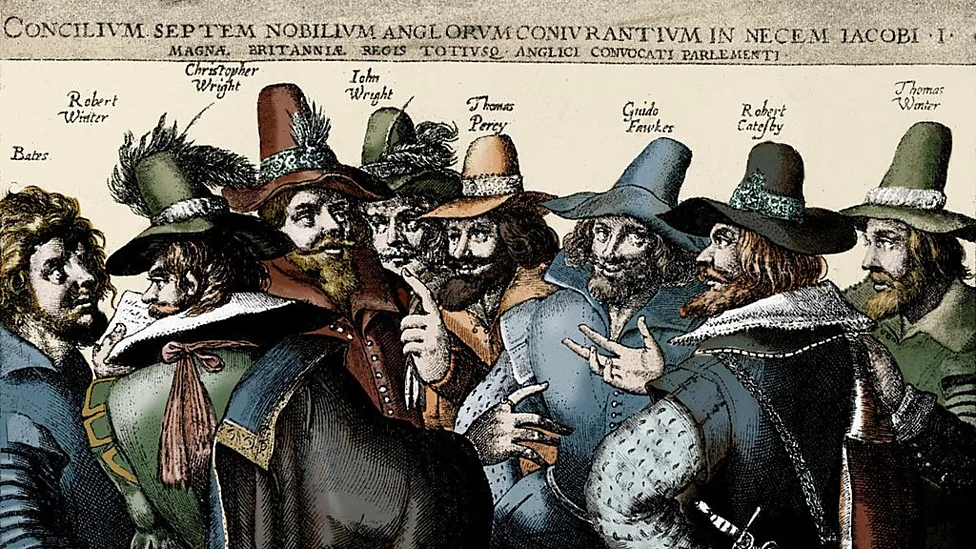
We have to differentiate between a conspiracy and a conspiracy theory. The Shorter Oxford Dictionary defines a conspiracy as a ‘combination of people for an unlawful or a reprehensible purpose’. An exemplar of this would be The Gunpowder Plot. Whilst conspiring to overthrow the government is always unlawful, it is not necessarily reprehensible. If there is an oppressive political regime, then a conspiracy to instigate a revolution could be justifiable. Of course, the evaluation of whether a government is unjust, and therefore the conspiracy to overthrow its authority is merited, is subjective. This subjective evaluation becomes significant when it comes to conspiracy theories.
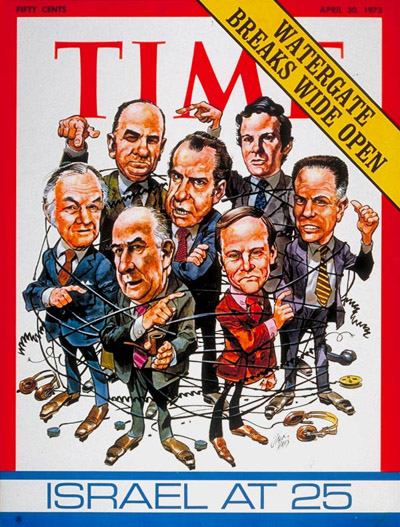
Whilst conspiracy theorists might claim that there is evidence to corroborate their point of view, there tends to be a lack of tangible proof. Brotherton argues that unlike conspiracies, ‘conspiracy theories are unproven by design’ (Brotherton 2016: 65). He gives the example of the Watergate Affair. There was a proven conspiracy in which associates of Nixon broke into the Democratic Party Headquarters to plant listening devices. Nixon himself was involved in covering up this, which led to his impeachment.
However, conspiracy theorists have suggested that the Watergate Scandal was in fact a nefarious plot that involved Henry Kissinger and Nelson Rockefeller to oust Nixon from the White House. There is absolutely no evidence for this claim. This lack of evidence is counterintuitively a strength, and I will discuss this more below, as it makes responding to these conspiracy theories nigh on impossible.
There are three other important characteristics of conspiracy theories.
- There is a malicious secret world order that has the real power.
- We the public are being lied to about some aspect of reality that enables this hidden order to maintain its power and control over society.
- This concealed power is often associated with an identifiable group for example, Jews, alien lizards2, the UN, Big Pharma, Masons, senior members of the Democratic Party and so on.
What is the appeal of conspiracy theories?
There are two common misconceptions about conspiracy theories:
- They are relatively new and primarily emerge in the context of an ever-increasing complexity of modern societies and the rise of social media
- The people who believe in conspiracy theories are ‘a lunatic fringe’ and/or are almost exclusively from the lowest and unthinking stratum of society.
However, conspiracy theories are neither new nor confined to a mindless plebeian class or a lunatic fringe
The Illuminati
There is nothing new about conspiracy theories. For example, during the 18th century there was a widespread belief in a secret organisation known as the Illuminati. The Order of the Illuminati did actually exist. It was founded by Adam Weishaupt in Bavaria 1772. Weishaupt stated aim of the Illuminati was ‘to oppose the wicked designs in the world, to assist against the injustice suffered by the unfortunate and oppressed’ (cited in Brotheron 2016: 27). The group was never particularly popular or influential but Weishaupt penchant for secrecy was his undoing. Fearing that the group was inherently seditious, it was banned and Weishaupt fled Bavaria.
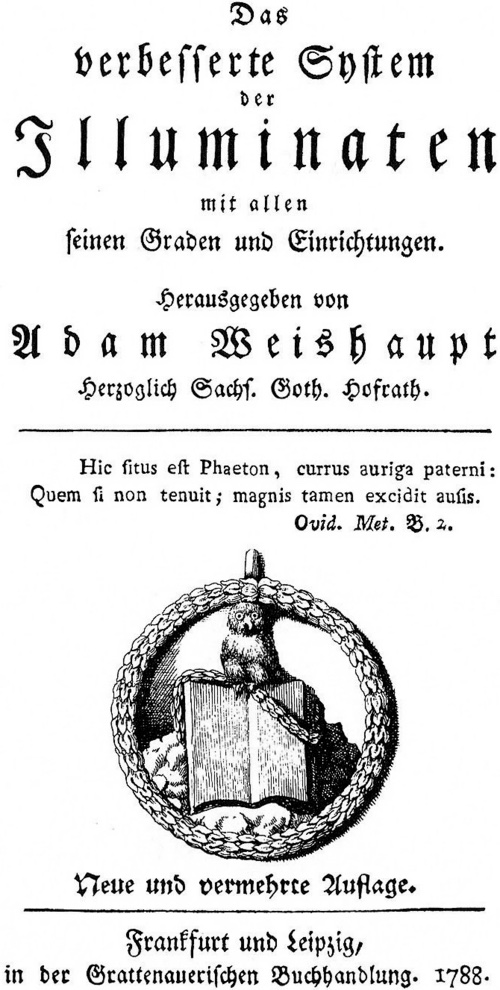
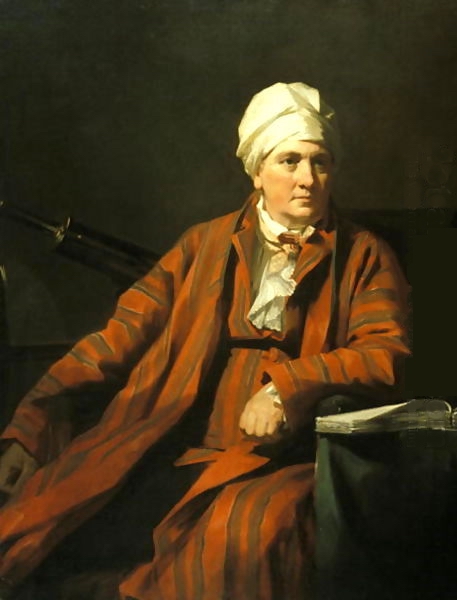
Image from Wikipedia
In 1792 The French Revolution ended the monarchy in France. In 1797 two influential books were published that accused The Illuminati of being the secret power behind the French Revolution: Memoirs Illustrating the History of Jacobism by the Jesuit priest Augustin de Barruel (1797), and the wonderfully titled Proofs of a Conspiracy Against All Religions and Governments of Europe Carried on In Secret Meetings of Free Masons, Illuminati and Reading Societies etc., Collected from Good Authorities by the Scotsman John Robison (which interestingly is still in print).
These two publications asserted that the Illuminati had:
A plan for the global subversion of church, state, and society; using an intricate system of seduction, secrecy, and hierarchy, members of the society intended to radicalize existent discontent with established systems of ecclesiastical and political government (Taylor 2014).
The conspiracy, which had instigated the French Revolution had now transformed into a conspiracy theory. The idea that a secret order known as The Illuminati are the real global power continues to have an allure, even though The Order of the Illuminati no longer exists.
In a fascinating ethnographic study Andreas Stræhr notes that a group of adolescents from Copenhagen believed that politicians and celebrities were members of the Illuminati who they considered to be a secret global power. These young people saw signs of the Illuminati conspiracy on YouTube and other social media sites, as well as in the offline world. Like many conspiracy theorists they interpreted the eye on the pyramid depicted on the back of a one dollar bill as signifying the Illuminati conspiracy. They believed that popular cultural musicians such as Lady Gaga, Rhianna, Jay Z and Kanye West were members of the Illuminati along with politicians such as Barak Obama (Stræhr 2014: 103).
What is interesting is that the theories about the Illuminati Conspiracy have transformed from the supposition of a secret cabal plotting to overthrow legitimate governments to postulating that the machinations of a covert world order are secretly in control of all our lives.
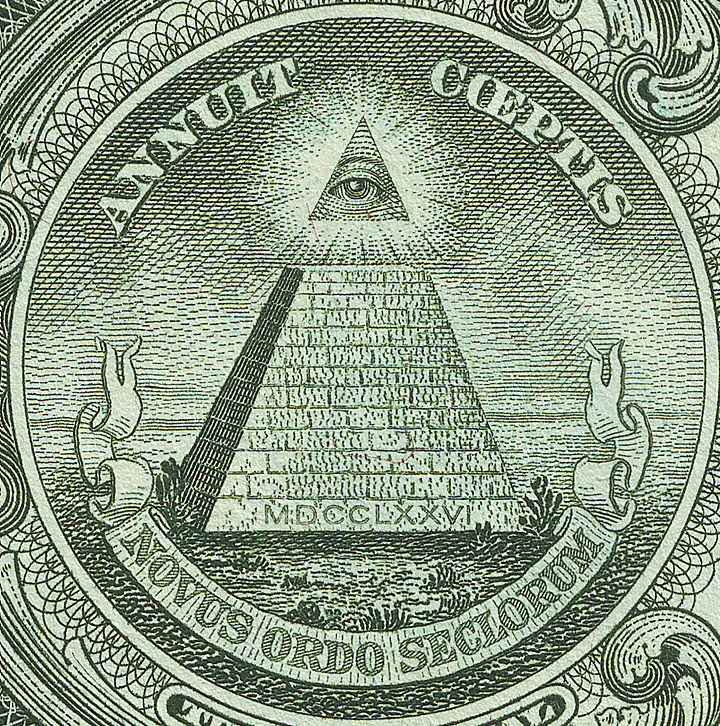
Image from Wikipedia
We Are All Conspiracy Theorists!

We seem to be entranced by conspiracy theories. Consider how many popular novels, TV series and films have some sort of conspiracy theory as a central narrative feature. Just to name a few examples:
- The X Files
- Men in Black
- The Capture.
- The Da Vinci Code
- Disclosure Day
Conspiracy theories are not only espoused by a lunatic fringe and/or an uneducated and unreflective rabble. Brotherton observes that surveys have indicted that ‘almost everybody accepted at least one conspiracy theory … We’re all conspiracy theorists, at least some of the time’ (Brotherton 2016: 107). This sounds like a ludicrous claim. However, Brotherton argues that what he calls ‘conspiracy thinking’ is a psychological disposition that we all have. Conspiracy theories are a magnification of this universal psychological disposition. I will briefly elucidate two aspects of Brotherton’s argument:
- Seeking patterns and meaning.
- Paranoia.
Patterns and Meaning

We need to make sense of the world that we live in. It is impossible to function in a world that we perceive to be chaotic, random and nonsensical. In order to survive we have to see how the various aspects of the world are connected. At the simplest level these connections are cause and effect. If I hold my hand over a candle flame for too long it will burn. There is obviously a connection between the candle flame and my pain. Brotherton calls this ‘connecting the dots’. However, in trying to make sense of the world we also connect dots that do not necessarily have any inherent association.
A brain biased toward seeing meaning rather than randomness is one of our greatest assets. The price we pay is connecting dots that don’t really belong together (Brotherton 2016: 179).
Most of the time this perception of patterns of connecting dots, even if erroneous, is innocuous. For example, the belief that Paul McCartney died in a car crash in 1966 and was replaced by a double. Those who believe this suggests that his death is confirmed by the Abbey Road album cover that depicts McCartney in bare feet and being out of step with the other Beatles.


Image from Brittanica
However, conspiracy theories become harmful and violent when the perceived conspiracy is associated with a particular group or individual. Jews have for millennium been scapegoated for the world’s ills and been maliciously accused of numerous crimes. The prejudice against the Jewish people crystallises in a pernicious document known as The Protocols of the Elders of Zion, first published in 1903, which claims to be a record of a nefarious plot by Jews to rule the world.
Our employees chosen from the goyim3-cattle must be of a type that submit to blind and servile obedience to our specialists and advisers who have been trained from childhood to rule the affairs of the world.
This despicable document has been widely circulated and has widely informed antisemitism, including that of Adolph Hitler, since the early 20th century. It is, of course, totally fake. There are no ‘Elders of Zion’. There is also evidence that the document was plagiarised from a source that had nothing to do with a Jewish conspiracy. Despite it having been proved to be a sham, this document continues to inform antisemitic conspiracy theories like QAnon.
Paranoia
Of course, others do not always act in our best interests. It would be foolishly naive to always take other people at their word and leave ourselves open to exploitation. Brotherton argues that a mild sense of paranoia is both universal and can be beneficial. Brotherton characterises this as ‘prudent paranoia’ which is ‘the minds early warning system and it can serve as a healthy defence against a genuine outside threat’. (Brotherton 2016: 112). However, as Brotherton argues it is just a short step between prudent paranoia and outrageous conspiracy theories.

I think that what Brotherton does so effectively is to demonstrate that conspiracy thinking is not so aberrant as it is sometimes portrayed to be. Connecting dots is a universal psychological mechanism for making sense of what can seem to be a chaotic and random world. Prudent paranoia can be an effective disposition in a sometimes hostile world. However, conspiracy theories magnify these inherent psychological traits. Furthermore, to simply dismiss those who believe conspiracy theories as simply an uneducated lumpen class or a lunatic fringe inevitably closes down any sort of communication. I believe that we need to open up channels of dialogues with others who hold worldviews that we consider to be an anathema, and this of course is the challenge.
Responding to Conspiracy Theories
There are, I believe, three possible types of response to conspiracy theories:
- Emotional
- Non-committal
- Rational
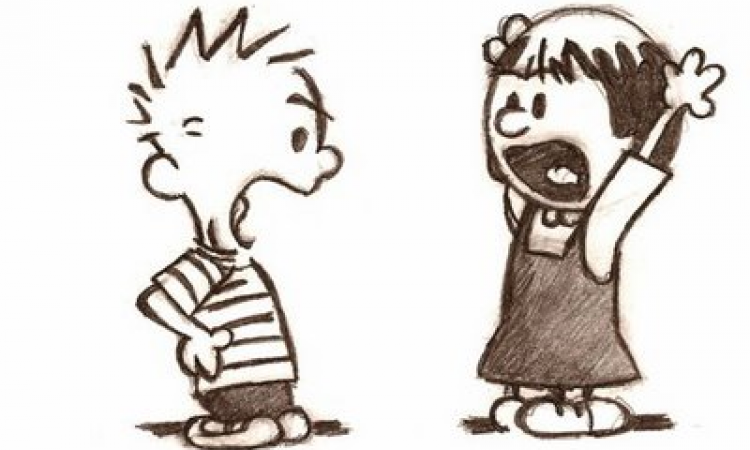
My immediate reaction to our driver was visceral and emotional. However, it would of course be counterproductive to respond with anger, no matter how enraged one feels about another person’s worldview. To some extent I think everybody’s worldviews are inherently emotional. I am sure that had we been more explicit with our leftwing liberal ideas, our taxi driver’s response could well have provoked a vehement response.
Our response to our driver was fairly non-committal. However, not engaging in any substantial way with people who are convinced about conspiracy theories achieves nothing. I believe it is critical to engage in a constructive way with conspiracy theorists.
The obvious solution would appear to be to provide safe arenas for reasonable and rational debate. However, a reasoned debate across the divide is very challenging for a number of reasons.
- Our worldviews are informed by our social and cultural backgrounds. As I indicated above, our views about the world are deeply emotional and are intrinsic to our sense of identity. Consequently, it can be counterproductive to even present a rational argument as a means to contesting other people’s worldviews.
- We generally think that we collect information about the world, which informs our ideas about how the world works. In other words, we think that theory emerges from data. However, it actually tends to work the other way around. We have ideas about the way the world works and then look for evidence to corroborate our world views. Consequently, I look at different sources of evidence to substantiate my point of view from the websites that our taxi driver engages with. We are once again at loggerheads if we start challenging the reliability of each other’s source of evidence.
- Conspiracy theorists often argue that there is no concrete evidence of a conspiracy proves that the conspiracy is effective. It is after all a secret world order that controls the world!
- Any critique, however rational, of conspiracy theories is regarded as part of the plot by the secret world order to protect themselves. When people present arguments that contradict the conspiracy theory, even with substantial evidence, this actually proves that they are either mindless dupes or actually working for the secret world order.
Both advocates of conspiracy theories and their opponents seem to dismiss each other as ignorant stooges or evil manipulators peddling misinformation. Both perspectives seem to be equally closed minded and therefore prevent any possibility of dialogue. We seem to be drifting apart into two tribes ‘the tofu eating wokerati’ and the ‘loony conspiracy theorists’. I am as guilty as everyone, being a member of The Guardian reading wokerati. Climate change deniers and anti-vaxxers make me angry, and people who believe that the world is secretly controlled by evil alien lizards just leave me totally perplexed. We have to take views that we find abhorrent seriously, after all my worldview is as much an anathema to our taxi driver as his conspiracy theories are to me.
Sources
Brotheron, R. (2016) Suspicious Minds: Why We Believe in Conspiracy Theories. London: Bloomsbury Sigma.
Stræhr, A. (2014) The Appropriation of Transcultural Flows Among Copenhagen Youth – The Case of Illuminati. Discourse,
Context and Media 4–5. 101–115.
Taylor, M. (2014) British Conservatism, The Illuminati, and the Conspiracy Theory of the French Revolution. Eighteenth
Century Studies. 47(3), 293–312.
- Named after an anonymous individual who simply identified themselves as ‘Q’, who suggested that the world is run by a cabal of Satanic child smugglers. It also suggests that Donald Trump leads the fight against this cabal. ↩︎
- The conspiracy theorist David Icke is perhaps the most famous exponent of the idea that an alien lizard-like race actually rule the world. Icke is the 7th most popular non-fiction writer and has over 775,000 followers on X. ↩︎
- A derogatory term for non-Jewish people. ↩︎

Absolutely brilliant piece. The Bricoleur’s best to date. You have researched and explained ideas I have wondered about but not known the best way of diving into.
“Conspiracy theorists often argue that there is no concrete evidence of a conspiracy proves that the conspiracy is effective. It is after all a secret world order that controls the world!” – This certainly reminds me of Heller’s Catch 22.
Am I guilty of being a conspiracy theorist for thinking the mega wealthy capitalists control politics and conventional and social media?
Hi Liz
Thanks for your comments. I am glad that you found this piece interesting. I found it very interesting, albeit somewhat scary, to research and write this post.
Yes there is definitely a Catch 22 aspect to conspiracy theories.
I would not use the term ‘guilty’ but the supposition that the mega-wealthy control politics and the media is a form of conspiracy thinking. Hence Brotherton’s argument that we are all conspiracy theorists. Nonetheless, I would agree that the mega-wealthy do have far too much power over politics.
Hi Liz
So glad that you found this piece interesting. Yes there is definitely a Catch 22 element to conspiracy theories.
I would not say ‘guilty’, but the supposition that the mega wealthy control politics and media is a kind of conspiracy thinking. Like you I think that there is a real problem with how much political power the mega wealthy have.
An excellent, lucid piece!
Brotheron’s argument that we’re all conspiracy theorists makes some sense to me, but there is a danger in seeing too much equivalence between worldviews. As you point out, so many of these theories are racist at their heart. It’s always worth asking who benefits from a specific theory. It’s often people who feel frightened at any suggestion they might in fact be privileged rather than the victims they experience themselves to be. Couple that with (at the risk of sounding like a conspiracy theorist!) the fact that many of these theories are being monetised by malign actors because it serves their financial interests and it’s easy to see how they take hold.
I guess I always want to know what the moral content is, and whether it stands up. Is the thrust care for the disenfranchised and marginalised, or is it self-serving? The major theories seem to me to be racist and self-serving. The big pharma one is complicated – as big pharma genuinely does have a track record of cynically creating addiction for its own financial gain. But when nuance is lost and suspicion spills over into anti-vaxx thought, then we’re in trouble.
I really enjoyed your piece, Steve. Beautifully, lucidly written. Your question at the end about how we talk to each other is so important.
Hi Wendy thank you so much for your very considered response to my piece. Yes, I think perhaps there is a qualitative difference between thinking that Paul McCartney died in 1966 and QAnon. Perhaps we need some different more nuanced terminology.
Yes, I think that the marketisation of everything from conspiracy theories to health is a real issue. As you point out The Sacklers and others in big pharma, whose only concern was profit were largely responsible for the opioid crisis.
The problem with anti-vaxxers seems to me that it does tend to lead people down a rabbit hole to believing in the most implausible conspiracies that often stigmatise particular groups and deny the benefits of some allopathic medicines and procedures (I have a friend that this has happened to).
I was going to write something about education and critical thinking at the end, but I am trying to keep these posts relatively short.