
Introduction
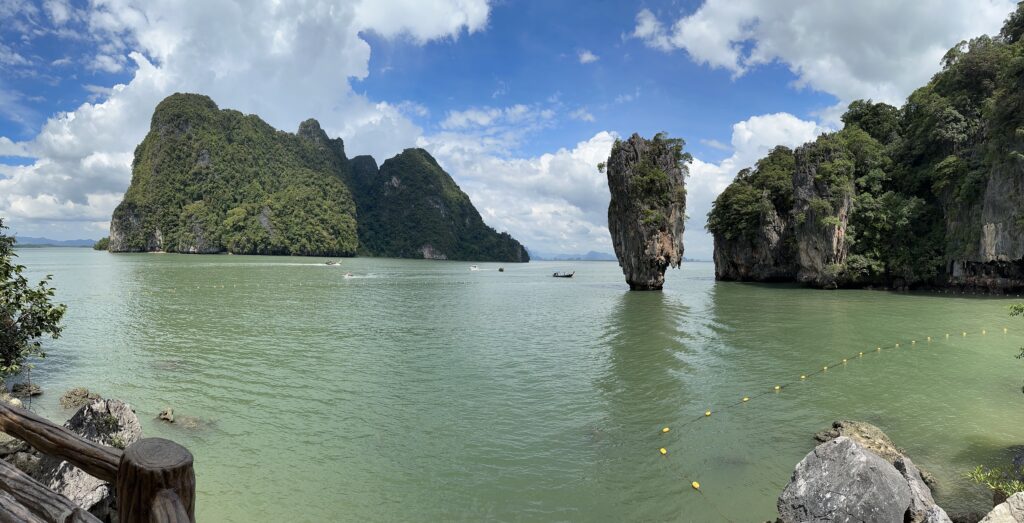
I have just returned from a fascinating trip to Cambodia and Thailand. This trip was very different to my travels to India when I was in my early twenties. On my early journeys to India, I travelled on a very limited budget to extend my time in India as long as possible. My more recent trip to Southeast Asia, was not so financially constrained and was for a much shorter time. In fact, my twenty-year-old self would have probably been quite horrified by the indulgence and brevity of my recent trip. The comparison between my early journeys to India and this later trip has led me to reflect on the nature of travel. Humans have always travelled for various reasons and there are many different types of journeys that include trade, migration, pilgrimage and tourism.
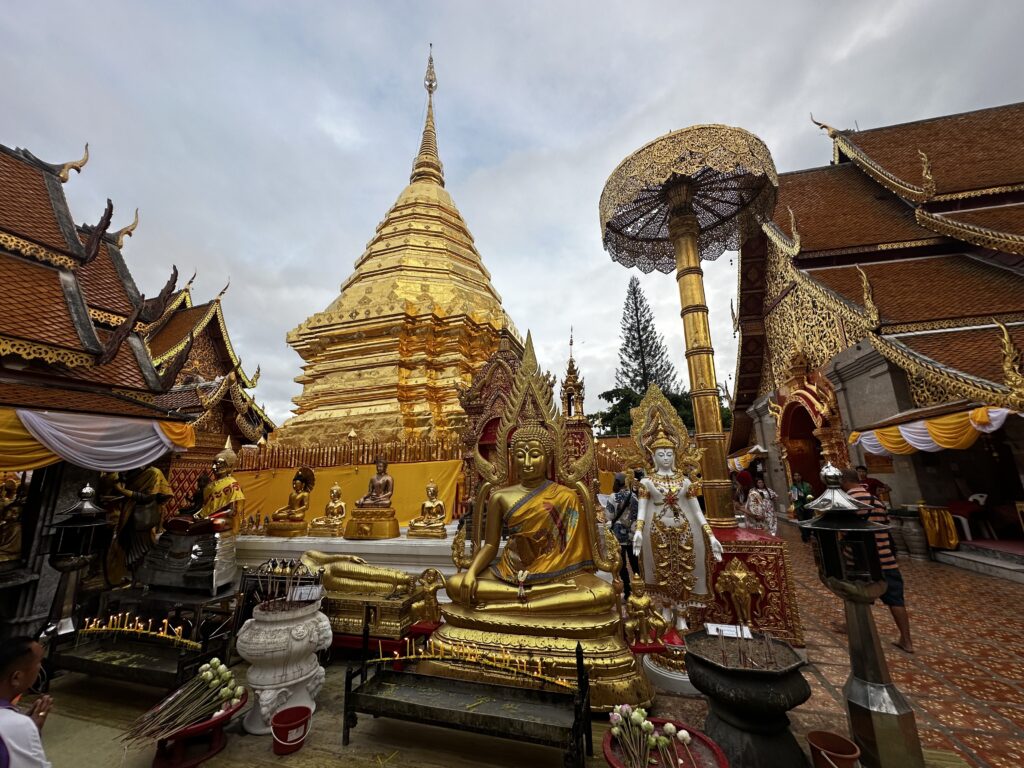
My photograph.
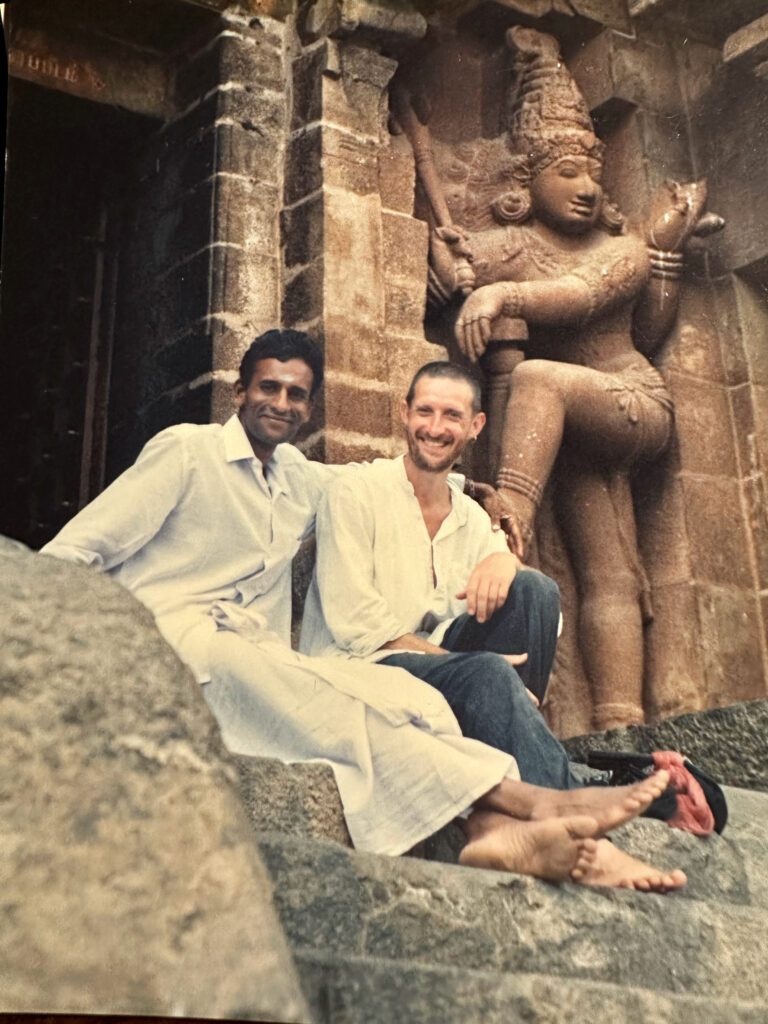
In this reflection I am mostly interested in tourism, a relatively new type of travel which is associated with leisure. When I travelled to India in my early 20s, I identified myself as a traveller, and not a tourist. Whilst there were not many tourists to India in the 1980s, I tended to disparage tourists, whose journeys I characterised as superficial. I was not alone in this attitude. Most of the people interviewed by Sharif Gemie and Brian Ireland in their publication The Hippie Trail: A History (2018) were vehement that they were travellers and not tourists. Many travellers, including myself, identified with the counterculture, and journeys to India were regarded as consistent with the hippie ethos, and tourism was regarded as part of ‘the straight world’.
On reflection I am not so sure that my travels to India were much more than extended tourism. The journeys of so-called travellers and tourists share much in common. Perhaps the most obvious aspects that travellers and tourists share are:
- Their journeys are to places that are regarded as exotic.
- These journeys to other places are regarded as a break from everyday routines
- There is always a return to a place regarded as home.
However, there are, I think, three aspects that might distinguish the tourist from the traveller:
1. Time
2. Structure
3. Authenticity
Time
In my mind travelling involved an extensive trip, whereas tourism is a short stay. I travelled around India for just over eight months on my first trip and returned two years later for eighteen months. I have returned to India many times, but often for shorter trips. This raises two interconnected questions.
- Was I traveller in my first much more extended trips to India and a tourist in my later visits?
- How much time must one spend in a place to be identified as a traveller and not a tourist?
I have spent a considerable amount of time in Rishikesh, a small pilgrimage town in north India, but much less time in other places, such as Kochi a coastal town in the state of Kerala. Does this suggest that I was a traveller in Rishikesh and a tourist in Kochi? I now consider Rishikesh as a second home and over my many visits it has become a familiar and comfortable place to be.
One of the most significant dichotomies in understanding our relationships with places is the opposition between the strange and the familiar. We characterise the place where we live and call home as being familiar. The term ‘familiar’ is etymologically related to the term family and has connotations of something that is considered ordinary and well known through a long association. Of course, there is not a simple binary opposition between the strange and the familiar. There are always aspects of places first visited that are familiar and we are always discovering new things about places that we have lived in for many years.
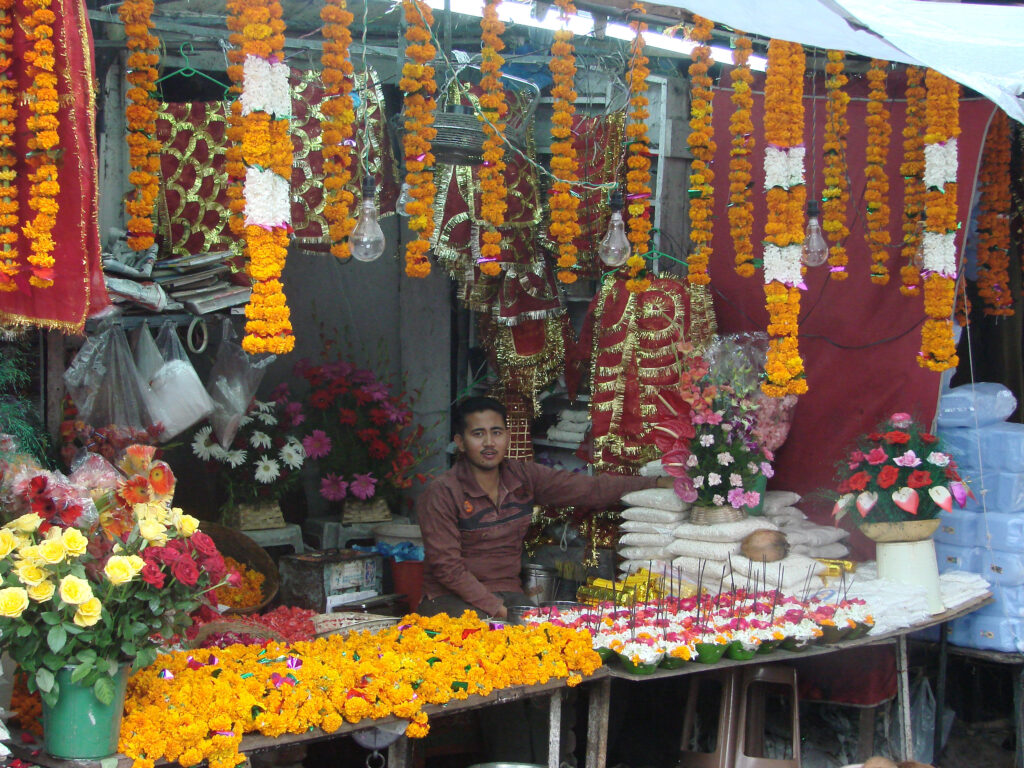

Triveni Ghat, Rishikesh
My photographs
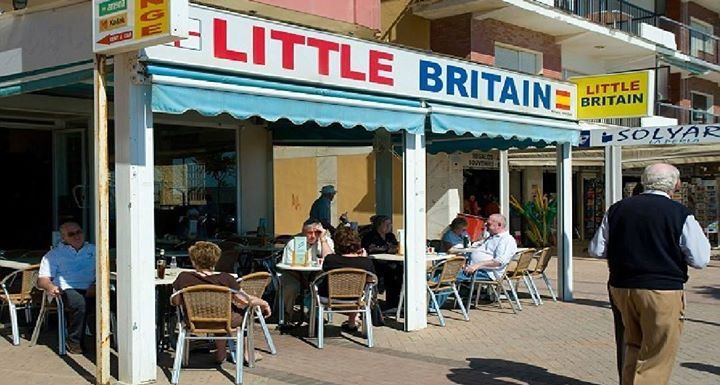
When we travel to distant locales, we wish to find a balance between the familiar and the strange. We want the places that we visit to be familiar enough so that we feel comfortable and yet unusual enough to feel exotic. Different people draw the line between the familiar and the strange in different ways. The traveller tends to be critical of the tourist because they assert that the tourist gets the balance wrong. Tourists, travellers suggest, are too concerned with the familiar and being comfortable, and consequently tend to travel in a cocoon that isolates them from the genuine experience of difference.
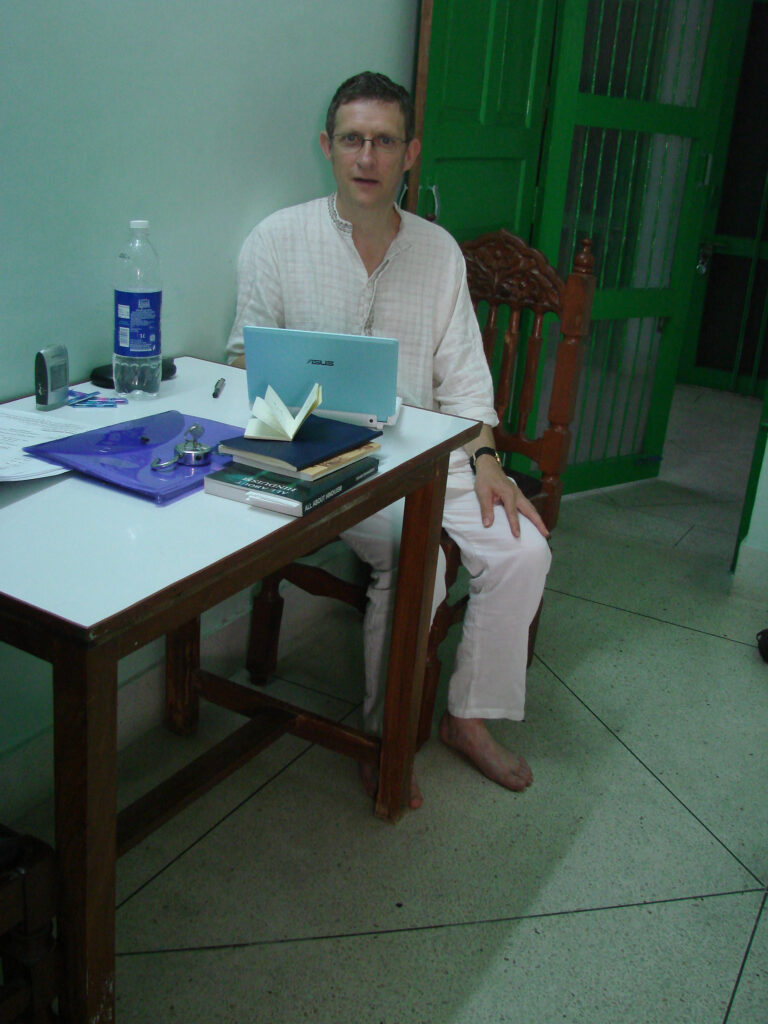
To confuse the issue further I have gone to Rishikesh several times specifically to do fieldwork for research purposes. Consequently, on these trips I could be considered as ethnographer and neither a tourist nor a traveller.
Structure

John Urry and Jonas Larsen (2011: 18) point out tourism is always ‘discursively organised’. Travel to distant places is always structured by the discourses of a variety of agents such as guidebooks, travel agents, television shows, blogs, the heritage industry and so on. This is particularly true today when it is much easier to research a geographically distant place.
When I first travelled to India, there was no internet and almost no guidebooks. The first Lonely Planet Guide to India (India a Travel Survival Kit) was published shortly after my first trip.
My first trip to India was more or less an accident. I had been travelling around Greece, and I was in Athens when I passed a small travel agency that advertised flights to India for a ridiculously low price. I recalled a friend showing me some photographs that he had taken in India. Greece had not particularly excited me, and I was not ready to return to the UK. A short time later I emerged from this travel agency with a one-way ticket to Mumbai (Bombay as it was called then). Having a one-way ticket, rather than a return flight may also differentiate the traveller from the tourist. Although some travellers insisted that to qualify for traveller status you had to travel overland.
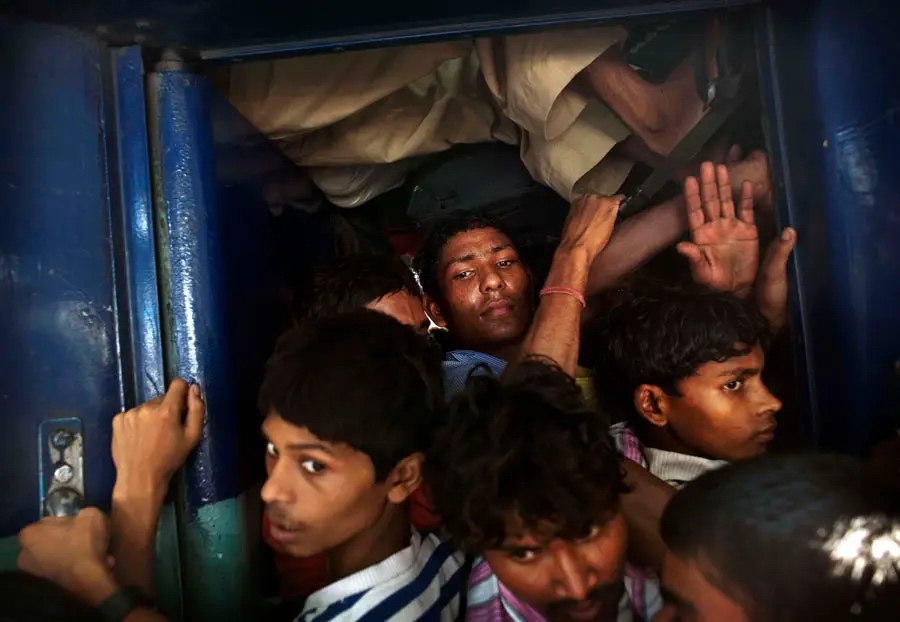
I had almost no idea how anything worked in this strange place. Driving through Mumbai in a taxi with some other travellers I decided that I did not want to stay in a large city. I recalled that one of my friends had been in Goa, so I got the taxi to drop me at the train station. At the time, I had no idea that Goa was a state, and simply thought it was a town with a beach – like Blackpool for hippies. Somehow, I managed to get a third-class unreserved ticket to Margoa, which is one of the larger cities in the state of Goa. About twelve hours later, having been squashed in a corner of a carriage, that at the time seemed not much bigger than a postage stamp, I arrived in Margoa (the first and last time I travelled unreserved third-class). I was in a state of semi-shock as in my ignorance I had assumed, for no apparent reason, that the journey would be about three hours and I had not bothered to check how long it would take.
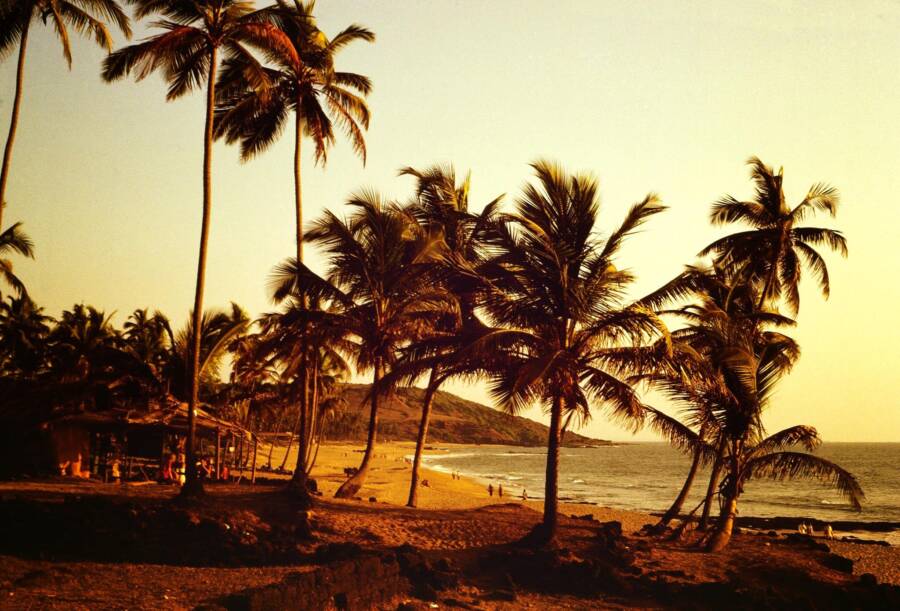
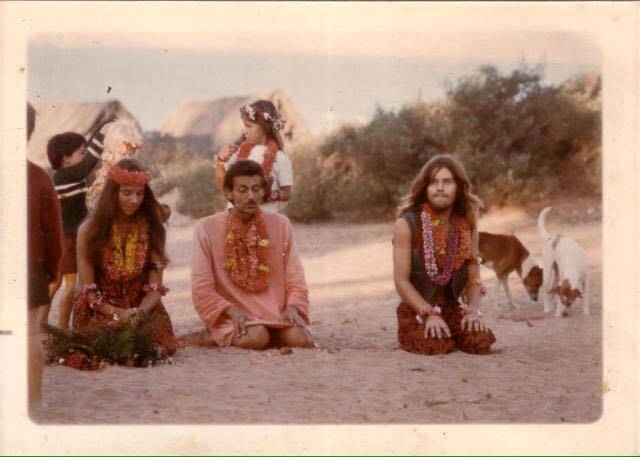
I eventually found my way from Margoa to Anjuna beach, at the time the most popular traveller beach. I very quickly discovered that my western style clothes were not particularly comfortable in the heat of the tropics, and on the advice of a more seasoned traveller went to the nearby town and bought some light cotton pyjamas and kurtas – which not only were much more physically comfortable, but felt more appropriate and somehow less conspicuous than jeans and tee shirt. Travellers tended to adopt a sartorial style, often based on local dress, that also tended to distinguish them from tourists.
My first encounter with India was very different from my recent travel to Southeast Asia. I read about Thailand and Cambodia, watched You Tube clips on Thai street food, bought a guidebook, and arranged the itinerary for our travels through a travel agent. We had also organised all the accommodation and several guided tours before we had even left the UK. My wife and I were met at the airport and driven by car to our very comfortable hotel. In other words, this later trip to Cambodia and Thailand, was not only much shorter, but it was also much more structured than my travels to India.
Travelling through India, at least for my early trips, was largely determined by chance encounters, the traveller grapevine, accidents and whim. I spent about three weeks on Anjuna Beach, staying in a small hut. Anjuna was an incredibly beautiful tropical paradise, but after a few weeks I began to feel that I had not travelled all this way just to sit on a beach with other travellers. I decided to join another traveller, who I had met in a chai shop, who was planning to go to Hampi, the ruined capital of the Vijayanagar Empire, which was also on the traveller circuit.
Somehow we managed to get on the wrong train and eventually found ourselves much further south in the city of Mysore. My travelling companion went his own way, and I stayed in Mysore having made friends with a group of young Indians. After Mysore I carried on south through the city of Madurai and I eventually arrived at Kovalam Beach in Kerala near India’s most southern tip. Kovalam was just beginning to attract some of the more adventurous travellers who were keen to get away from the more popular beaches of Goa. Kovalam is now a popular tourist destination.
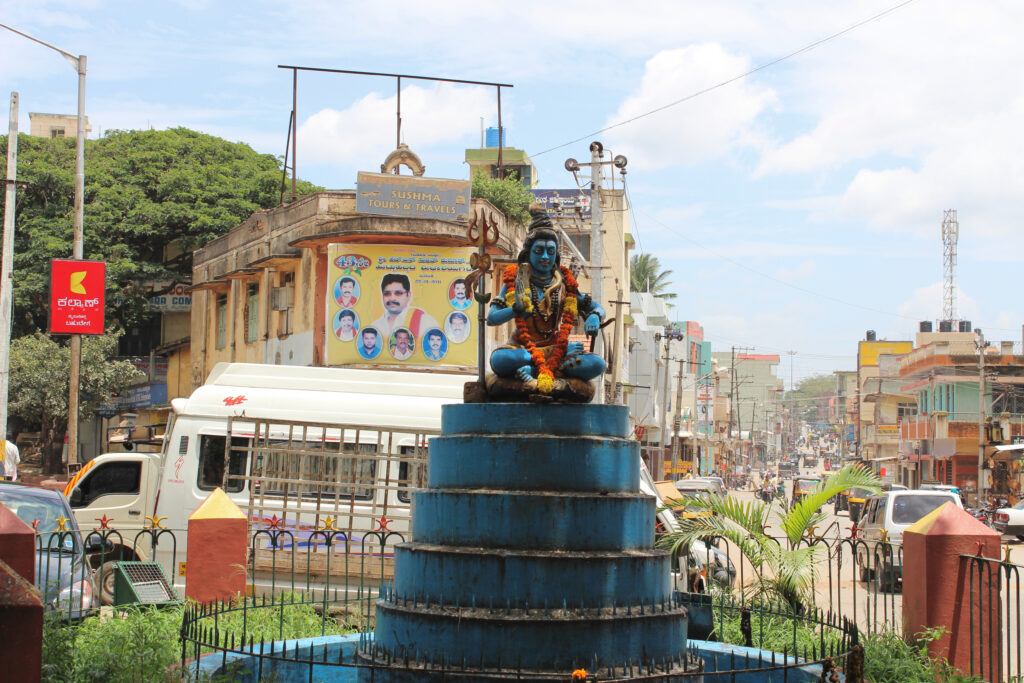

I took these photographs of Mysore on a trip about 25 years after my first visit. The photographs that I took on my first trips to India are now lost.
Most travellers, despite their rhetoric on seeking novel experiences and adventure, seemed to be remarkably conservative. The traveller grapevine tended to be almost as defined as the tourist structure. There was a definite traveller circuit, and particular places, like Kathmandu and the beaches of Goa, were very popular. There were other places, like Hampi and Kovalam that were beginning to attract some travellers, and other places such as Mysore and Madurai where there were almost no travellers. Since, my earlier trips to India things have changed considerably.
Rishikesh had a brief period of popularity when the Beatles went there to learn about Transcendental Meditation with Maharishi Mahesh Yogi in 1968. However, when I visited a few years later, there were very few western travellers or Indian tourists. There were very few amenities. I first stayed in a spare room of a local family, sleeping on a bamboo mat on the floor , and ate in the nearby chai shops.

One of the plethora of places offering yoga and meditation courses in Rishikesh – mostly aimed at the Western market
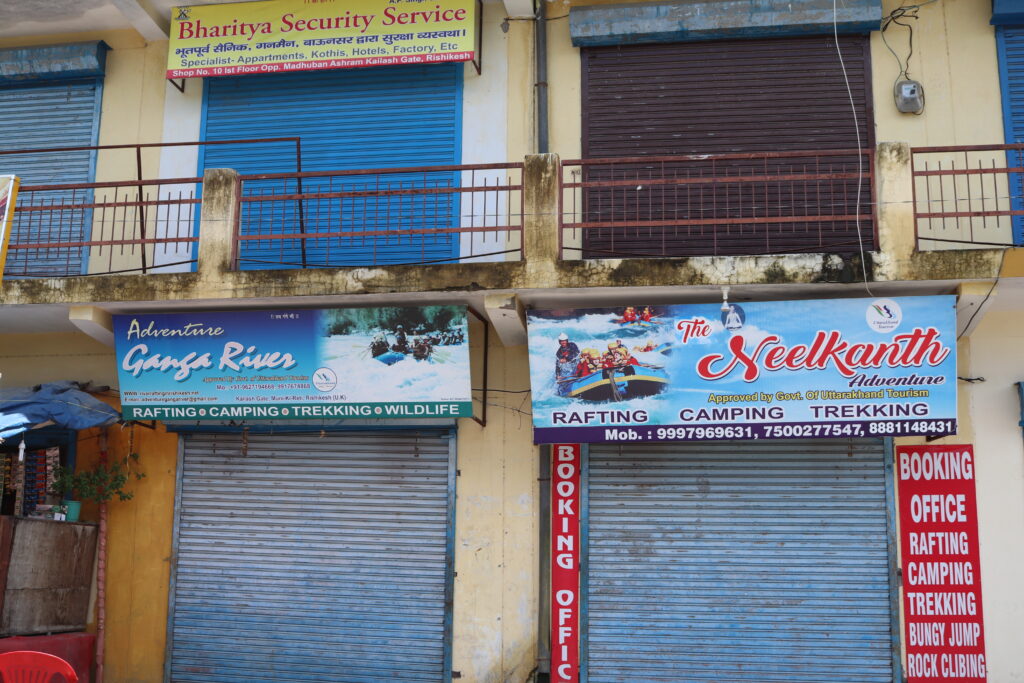
Offices offering white water rafting and other adventures – mostly for young affluent Indians from Delhi.
Since, then Rishikesh has successfully represented itself as the Yoga Capital of India for the burgeoning interest of Westerners in yoga and meditation. Transport links to Delhi have much improved, and it is now a popular destination for relatively affluent Indians from Delhi seeking a weekend away from the city and white-water rafting down the Ganges. Consequently, there has been a major property boom and there are many new restaurants and hotels catering for these new markets (for more details about this see my chapter on Rishikesh in Harvey and Takhar, 2021).
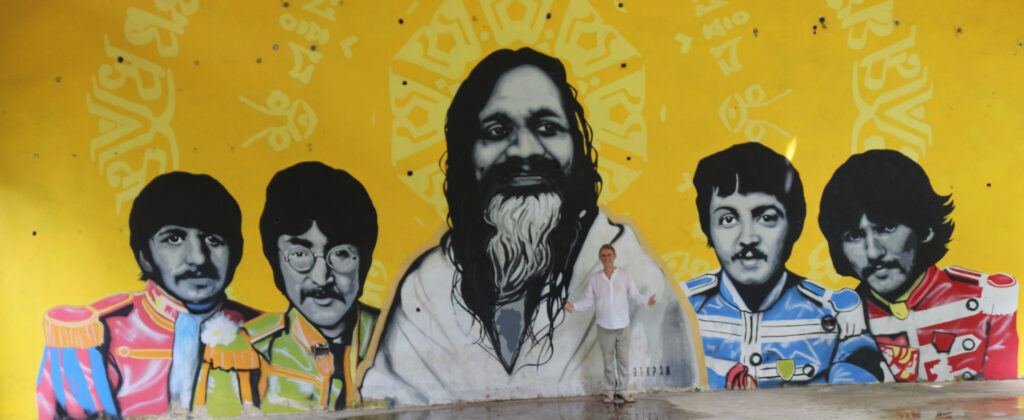
Me at the Maharashi Mahesh Yogi Ashram in 2018, now often referred to as ‘the Beatles Ashram’. After Mahesh Yogi left, the ashram was closed to all visitors. However, this semi-ruined site is now advertised as a place to visit and is decorated with large murals.
Tourism to places like India and Thailand contribute to their economy. In Rishikesh, when I first stayed with a family I directly contributed to their income. Yet tourists, including myself these days, tend to want more amenities and comfort. However, it is equivocal how much the influx of tourism actually benefits the local economy besides providing more employment opportunities for local people. Many of the hotels and restaurants that have sprung up in and around Rishikesh to service the tourist trade are owned by businesses based in Delhi, and profits are not retained in the local economy.
Tourists tend to spend more money, whereas travellers try and spread their budget as thinly as possible. Also, the tourist demand for luxury and comfort can significantly impact on an area and paradoxically detract from the original allure of a place. We are all aware of the proliferation buildings to cater for the tourist demand that have come to sully some of the most beautiful beaches in the world.
Authenticity and Transformation
Tourism is often dismissed as sightseeing. Sight, particularly now that virtually every traveller carries some sort of digital camera, is often considered to be the primary sense of the tourist. John Urry and Jonas Larsen call this the tourist gaze. They argue that, at least part of, the tourist experience ‘is to gaze upon or view different scenes, of landscapes or townscapes which are out of the ordinary’ (Urry and Larsen 2011: 1). Sight is dismissed as superficial, and the traveller suggests that the tourist merely glances at the surfaces of exotic locales from their isolated cocoon of comfort. The traveller, however, fully immerses themselves in the different culture and is a much richer sensory experience. Indeed, sometimes travelling such as a twelve-hour train journey in third-class can be very uncomfortable.
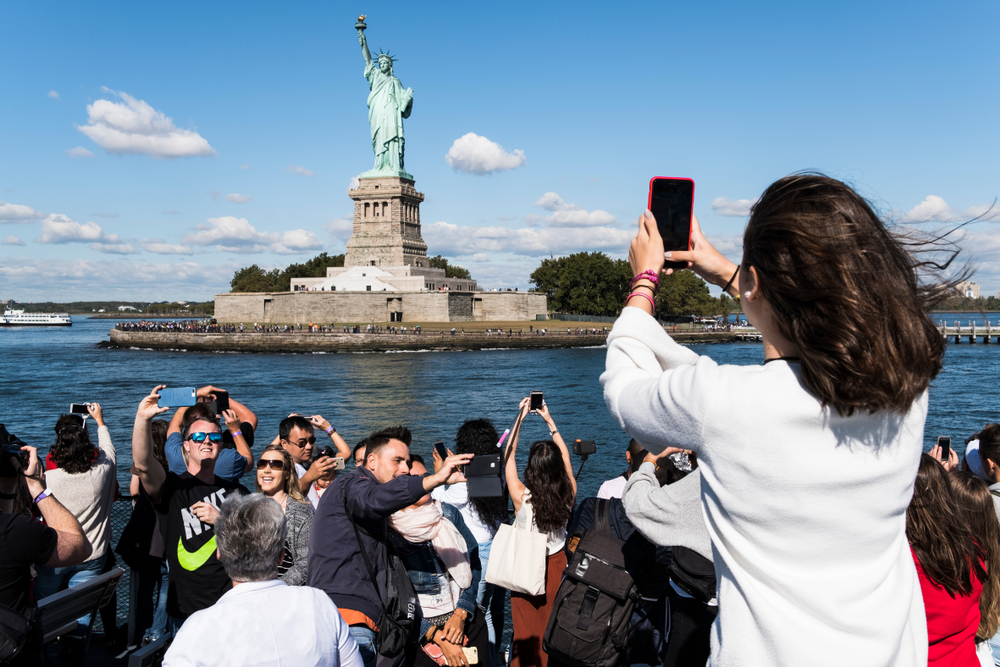
I, like many travellers, had a sense that the more uncomfortable I was the more authentic was the experience. Charles Lindholm suggests ‘travelers are stricken by an insidious fear of mistaking a manufactured act for a real interaction’ (Lindholm 2008: 41). The tourist, so the traveller asserts, only interacts with locals who are providing services, and are therefore performing a role rather than being their genuine and authentic selves. The traveller, like my younger self, suggest that the experience of third-class rail travel is more genuine than being driven in an air-conditioned private car, because the traveller is more fully immersed in the exotic culture and therefore interacts in a more authentic way with local people.
Erving Goffman, in his seminal book The Presentation of the Self in Everyday Life, first published in 1959, uses a theatrical metaphor, which suggests that we have front and back stages. Front is associated with the various roles that we perform, such as lecturer or waiter. These personal fronts, according to Goffman (1990: 34), are structured by appearance manner and context. Appearance is the way that we look, so a waiter is often differentiated from customers by what they wear. Manner is how we act – the waiter’s performance differs from that of the customer. However, the context is critical. A waiter will appear and act in a different way when they are in a social situation than when they are at work. Backstage is, where ‘the performer can relax, he can drop his front, forgo speaking his lines, and step out of character’ (Goffman 1990: 115). In other words, backstage, is a more authentic presentation of the self. The tourist, it is suggested, only encounters the presentation of people’s fronts as they only encounter locals as drivers, waiters and so on. The traveller, staying for extended periods in distant places, travelling in third-class compartment and lodging in local homes claim to have access to the authentic backstage of people’s lives. One of Gemie and Ireland’s traveller informants suggested ‘I felt mine was the real journey to the east; theirs was the Thomas Cook version’ (Gemie and Ireland 2018:105).
However, this simple dichotomy must be challenged. Many travellers were equally cocooned in their bubbles which isolated them from the authentic backstage of Indian lives. I met many travellers who were only interested in the travelling lifestyle and had almost no interest in Indian cultures. Sitting on a Goa beach, with a cheap and plentiful supply of hash, and going to full moon parties which were dominated by Western popular music was an extremely attractive lifestyle but was as equally isolated as the tourist bubble. Travellers were often simply engaging with a different set of fronts from the tourist.
There are a diversity of travellers and locals, and one must take into account a plethora of different types of interactions. For example, as I have indicated, Rishikesh has become a destination for many Western travellers interested in yoga, and this leads to a very niche style of interaction, which Gemie and Ireland suggest in analogous to a tourist ‘arriving in Britain with a keen interest in Morris-dancing’ (Gemie and Ireland 2018: 108).
My own encounter with yoga and mediation in India was quite accidental. One of my travelling companions, who I met on Kovalam, practiced yoga. I had never encountered yoga before, and this was my first engagement with the section of the travelling community that were fascinated by the perceived spiritual nature of Indian culture. We travelled together to the Auroville, the large community set up in the mid 1960s, by the Mirra Alfalsa, commonly known as the Mother, who was a follower of the spiritual teacher Sri Aurobindo. After I had parted company from my travelling companion, I found myself in Chennai (Madras as it was then called) and saw an advert in a chai shop for yoga classes and having had my interest whetted decided to give it a go.
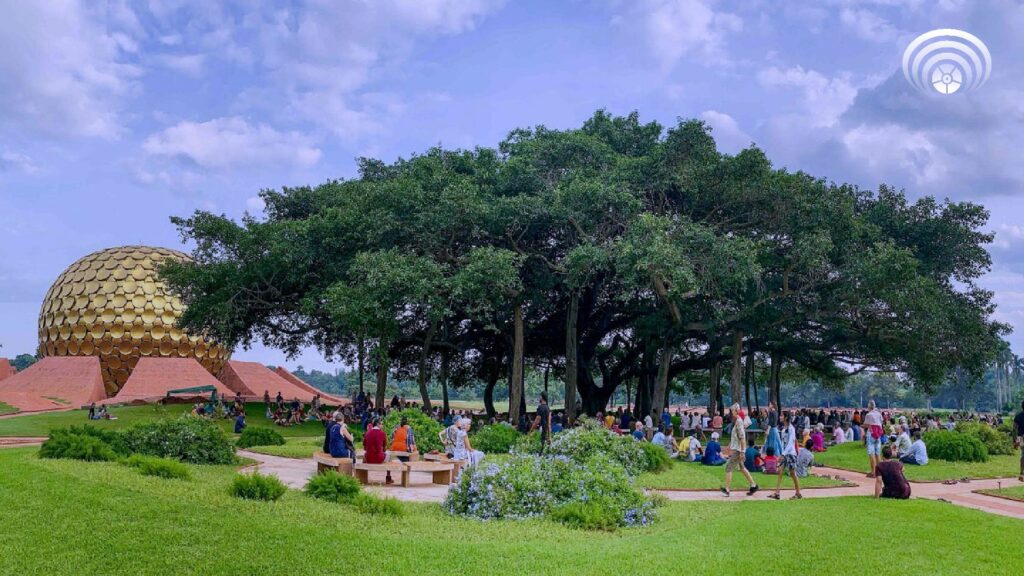
The Matrimandir (Temple to the Mother). This was not completed when I visited Auroville. Image from Aware Auroville
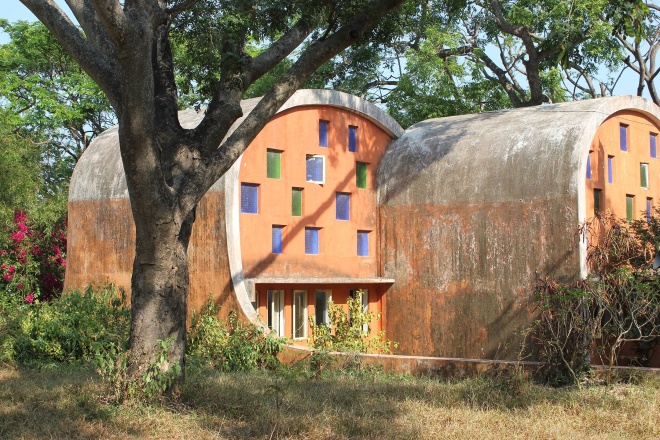
Some of the accommodation at Auroville. Image from Architectural Review
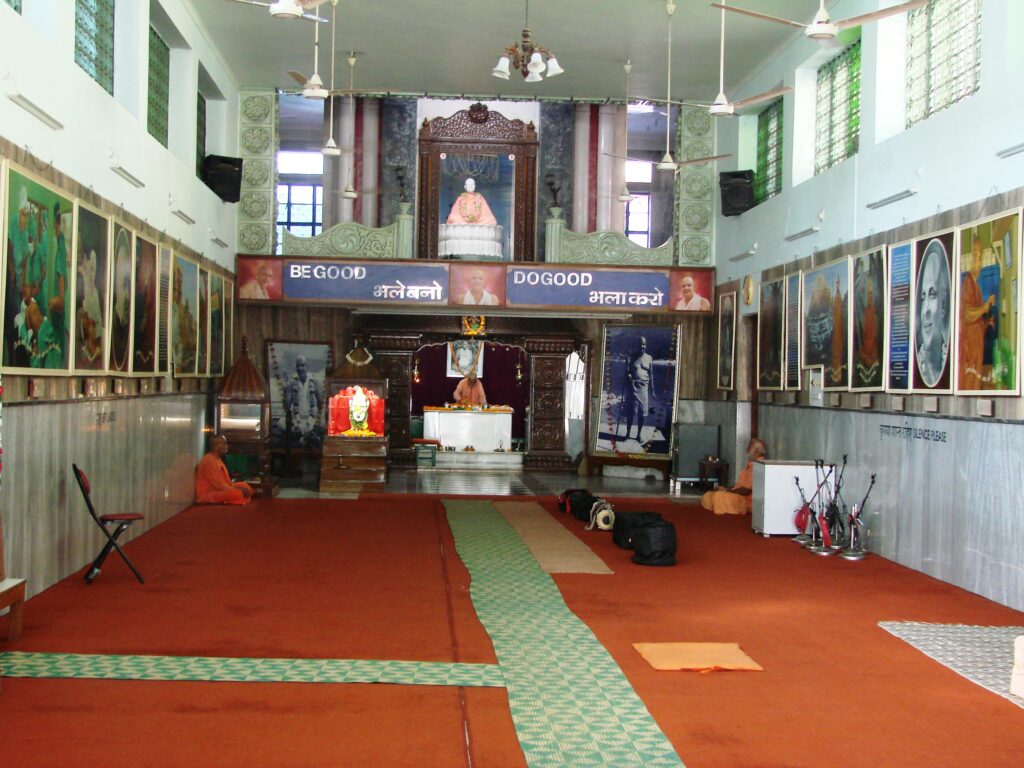
The Samahdi Shrine at Sivananda Ashram. This is the spiritual heart of the Ashram, as it is where Sivananda is buried. Every evening there is a congregation here known as satsang (literally ‘good company’).
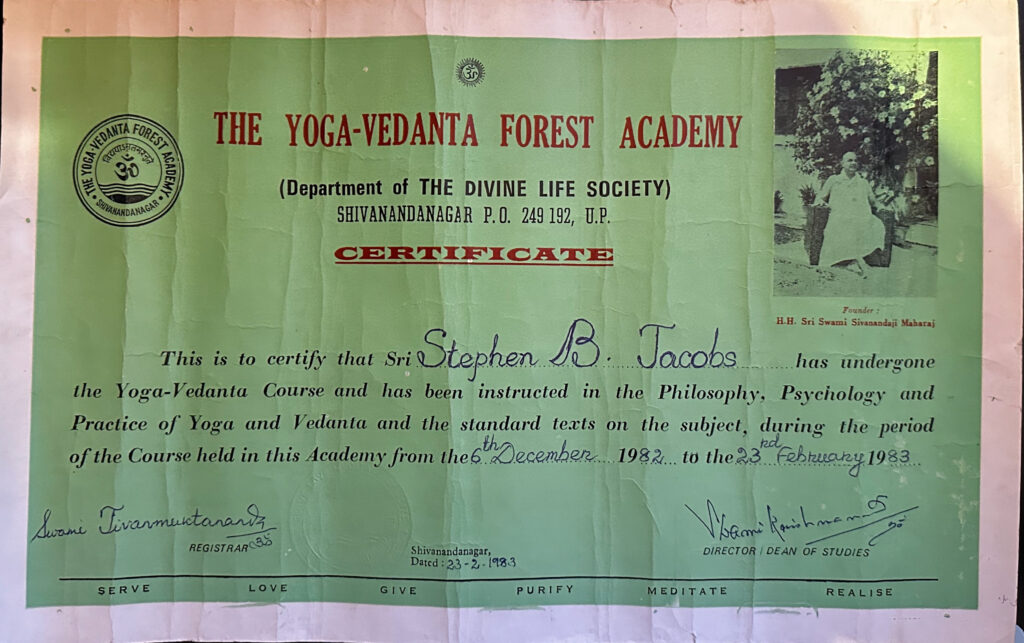
My certificate for completing the three month course at the Yoga Vedanta Forest Academy.
When I returned to India for my second trip, I was keen to find more teaching on yoga. Another traveller recommended that I go to the Sivananda Ashram in Rishikesh, and I was very fortunate to be admitted to the three- month course at the Yoga Vedanta Forest Academy. This intensive course not only taught yoga practice but also included the study of the philosophy of yoga. This was a very profound experience for me, and in many ways was a catalyst for some major changes in my life.
One of the other distinctions that could be made between the traveller and the tourist is around the idea of having a transformative experience. The tourist seeks a leisurely break from the routines of everyday life, particularly work, and hopes to return home refreshed. On the other hand, travellers seek out experiences in exotic locations that will somehow be transformative. In other words, the travelling experiences will stimulate an inner psychological and/or spiritual change, whereas the tourist remains relatively unchanged by their journey.
Every life experience changes us in some way, but not every experience is transformative. One of the reasons that I left Anjuna beach was that, albeit it was an amazing location and being there was great fun, I felt that I was not really doing anything much different to what I would have been doing at home. In contrast the very intensive three months I spent at Sivananda Ashram did have a major impact on me. I learned a great deal about Hindu philosophy, which for me is a very different understanding of the world than the ideas developed in the West. It also sparked my academic interest in Indian religions and culture, that inspired me to take a degree in Religious Studies at the University of Wales, and ultimately to swap from being a chef to an academic career.
Conclusion
Most of us really enjoy travelling to exotic locations. I have been extremely fortunate and privileged to have been able to have had some incredible experiences on my travels around India and more recently in Southeast Asia. It is clear that my recent trip to Cambodia and Thailand was very different in many ways to my earlier travels around India. Nonetheless, I am reluctant to assert that my travels to India were somehow richer, and more authentic than my trip to Southeast Asia. I certainly learned a great deal about the religions, histories and cultures of Cambodia and Thailand. I think that what is important, is not whether we consider ourselves to be travellers, tourists or indeed ethnographers, but our attitudes and demeanour when we travel to different places.
My first travels to India
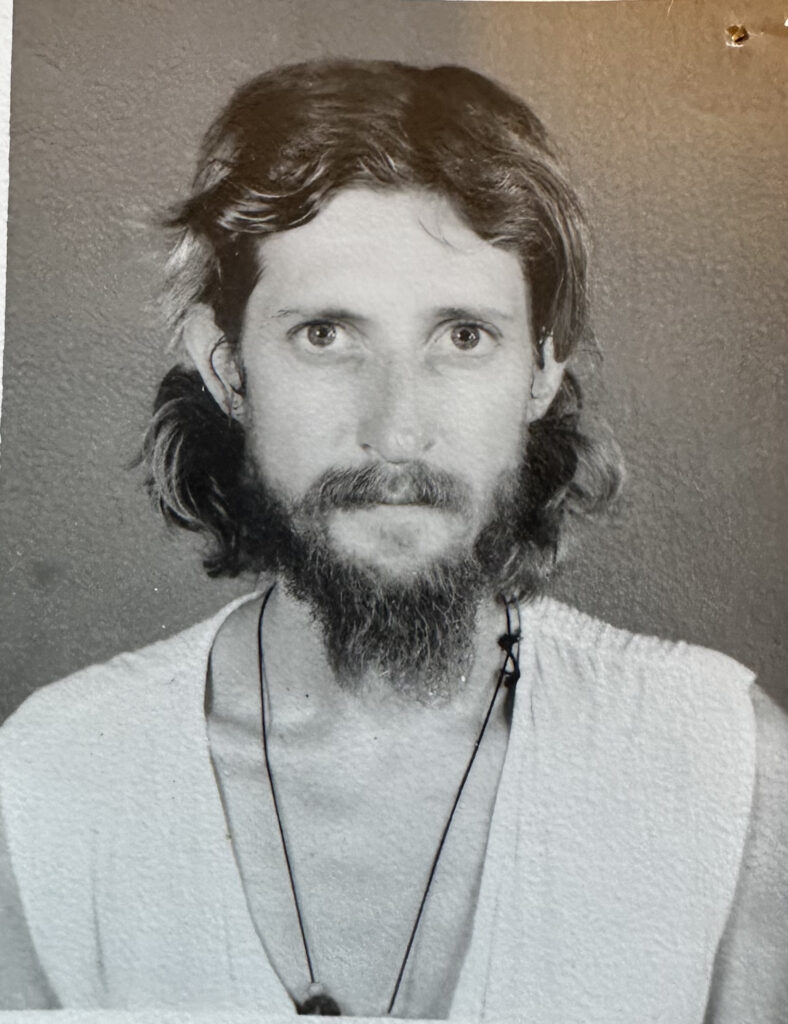
on my second trip, when I needed
to replace my passport, which was stolen.

- I flew into Bombay and made my way down to Margoa by train.
- I stayed on Anjuna beach – the most popular beach traveller beach.
- Having mistakenly got on the wrong train I found myself in the city of Mysore, where I stayed for a number of weeks.
- I then travelled on my own to temple town of Madurai – where I again stayed for some weeks.
- I travelled to Ramaswaram and took the ferry to Sri Lanka. I travelled around Sri Lanka for about 6 weeks, before flying to Trivandrum in South India.
- I stayed for a couple of weeks on Kovalam beach, just south of Trivandrum, where I met 5 other travellers.
- We all travelled together on the backwaters of Kerala by boat between Quilon and Allepey. We all then celebrated Christmas and New Year in a forest bungalow in the middle of Periyar Wild Life Sanctuary.
- We then split up and myself and one of my companions made our way to Pondicherry on the east coast and stayed on Auroville for a couple of weeks.
- I made my way to Madras (Chennai) and studied yoga. I also briefly stayed at the Sri Ramana Ashram, just outside Tiruvannanmalai, and at Mahabalipuram.
- I found myself running out of money, so I took a 36 hour train journey to Delhi, where I bought a flight back to the UK.
- I was away travelling for approximately eight months.
Sources
Gemie, S. and Ireland, B. (2018) The Hippie Trail. New Delhi: Aleph.
Goffman, E. (1990) The Presentation. Of Self in Everyday Life. London: Penguin (first published in 1959).
Jacobs, S. (2021) Clouds Drifting Through a Landscape: Glimpses of Rishikesh in Harvey, G. and Takhar, O.K. (eds.)
Religion and Senses of Place. Sheffield: Equinox, pp. 32–59.
Lindholm, C. (2008) Culture and Authenticity. Oxford: Blackwell.
Urry, J. and Larsen, J. (2011) The Tourist Gaze 3.0. London: Sage.

It was great to read this, Steve, and I like the discussion of traveller versus tourist and preconceptions about terminology used for such journeys.
One thing I was confronted by in India was being a woman and I was envious of the freedom male travellers seemed to have in comparison. If we were walking down a road, we were constantly accosted, we had to cover up from neck to heel or the harassment might have gone up ten-fold. The male gaze was constant and sometimes disrespectful, with female traveller I was with being groped on a train. A travelling companion who was married was constantly berated for travelling without her husband (and women were shocked she had left her children behind!).
Thanks Suzanne for flagging the issue of gender, it is really important to acknowledge this issue. I think that many male travellers/tourists, including myself, did not really understand how different women traveller experiences in India were.
As a long standing friend I have to say how much I enjoyed reading this. I enjoyed some wonderful travels in my younger days, but I have to admit that I verged on the tourist a lot. I loved the geography of my travels though, and I have many strong memories of the places I went too, and the people I met. Yes I regarded myself as a Traveller rather than a Tourist, but I certainly enjoyed a good beach. I think that the even as a Tourist we stayed in local owned and run places and we ate at street stalls and local restaurants. I think our money reached local people, and that is important. I’m definitely a Tourist now though, at our age a degree of comfort is required.
Hi John.
Thanks for your comment – much appreciated. Yes travelling (whether as tourist or traveller) certainly creates some fantastic memories. I might write something on comfort and convenience sometime
I very much enjoyed reading this.
Glad that you enjoyed this.