Introduction
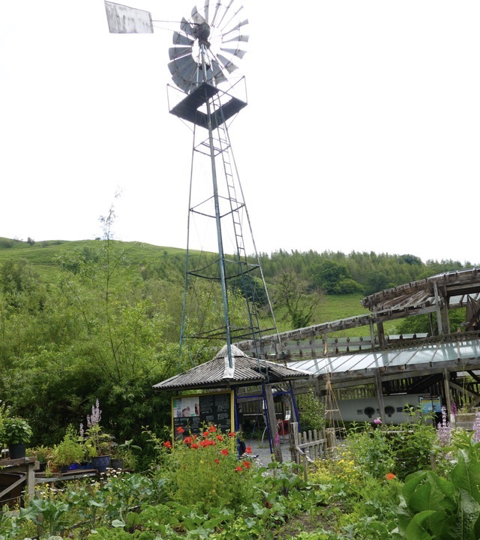
I was fortunate to work at the Centre for Alternative Technology (CAT), running their vegetarian restaurant, in the early 1980s. In this post, I focus on CAT as a case study of one organisation that emerged during the early days of the age of ecology. Whilst CAT still exists it is, for a variety of reasons, a very different organisation today. CAT in its first decades was both an experiment in sustainable living and an educational project.
Whilst everyone thinks of either Friends of the Earth (FoE) or Greenpeace as the most important environmental NGOs, there were also significant organisations like CAT who, although they did not have such a high profile, have been equally important for the age of ecology. In this post I focus on CAT’s early days, ideas of environmental justice and the underlying philosophy ‘small is beautiful’ advocated by the economist E.F. Schumacher.
The Beginning
CAT was founded by Gerard Morgan-Grenville in 1973 in a disused slate quarry just outside of Machynlleth in mid-Wales. In his autobiography Morgan-Grenville stated that he had been influenced by three things:
- Reading Rachel Carson’s Silent Spring
- Reporting of environmental issues by journalists such as Gerald Leach
- A trip that he made to the United States, where he encountered the counterculture.
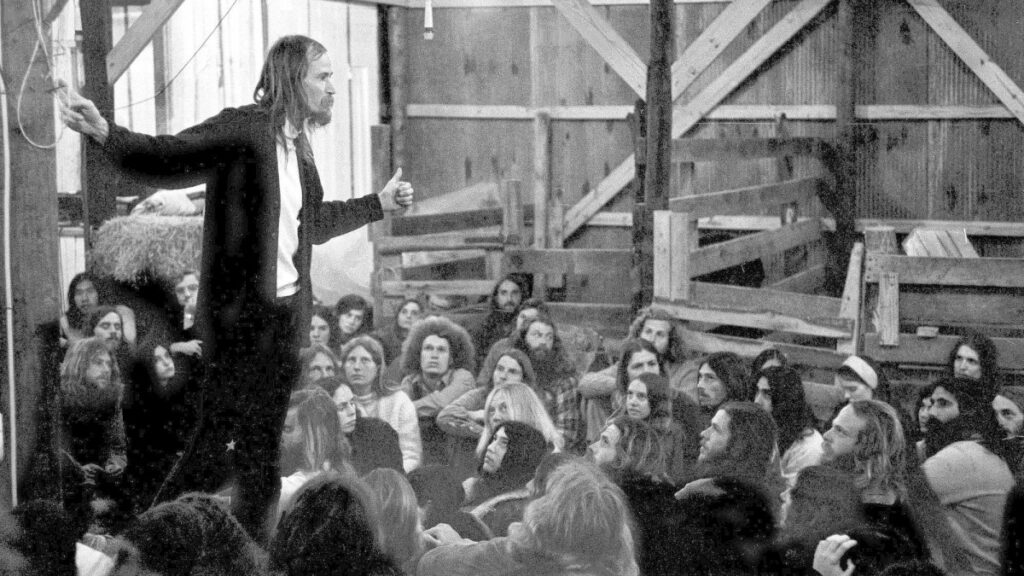
Image from Dickinson College
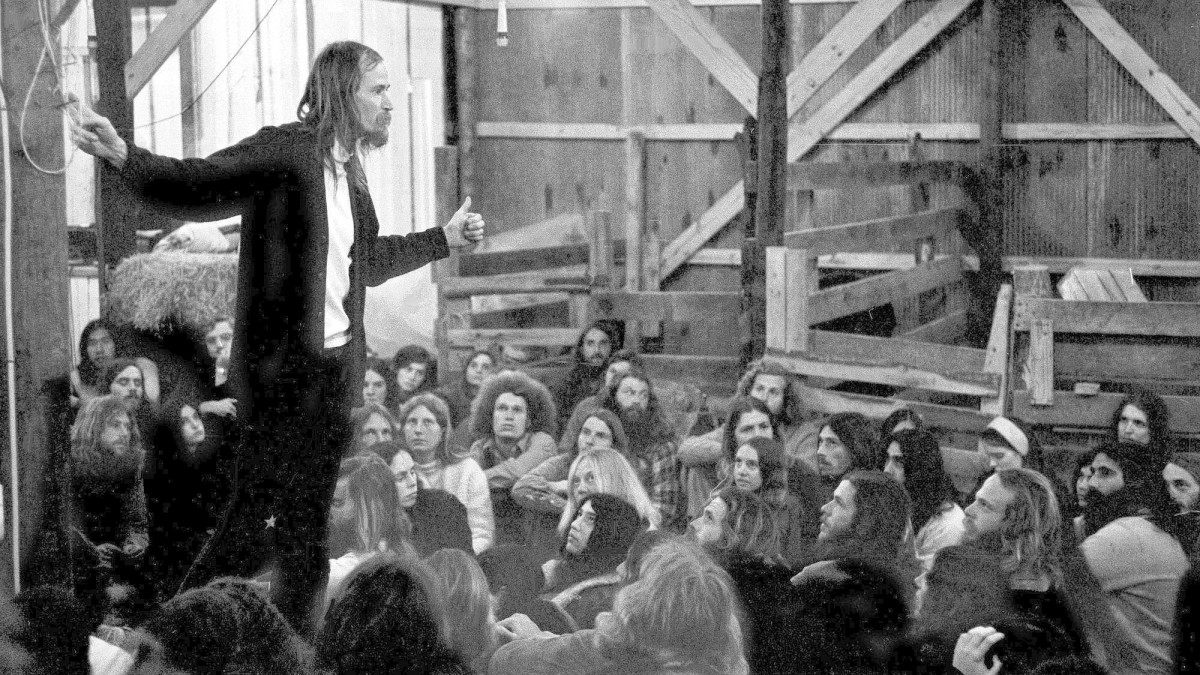
Morgan -Grenville reflected on his encounter with the counterculture in the US:
They were mostly muddled and disorganised, fragile. Most failed, but the important thing was that they had opted out of the mainstream life in order to find a way of living which respected the environment in which they lived. They also rejected Authority in principle. I found myself in sympathy with both aims (Morgan-Grenville cited in Centre for Alternative Technology 1995: 4).
There were two other contextual factors in the early age of ecology that inspired Morgan-Grenville: an apocalyptic sensibility and the concept of self-sufficiency.
An Apocalyptic Sensibility.
As I indicated in my earlier post, there was a concern that human activity had the potential to destroy the entire planet. Peter Bunyard and Fern Morgan-Grenville (Gerard’s second wife) write in their preface to The Green Alternative: Guide to Good Living:
Catastrophe is not new to the world. The Black Death killed one third of the population of Europe in the Fourteenth Century … Even predictions of a coming Armageddon are not new … So what is the difference about our present situation?
We believe that the difference lies in the scale of the threat to the planet itself, through environmental destruction. This threat is largely created by man himself. (Morgan-Grenville and Bunyard 1987)

Self-Sufficiency
As the title of Bunyard and Morgan-Grenville’s book suggests there is an alternative way of living that is more environmentally sustainable. For many of those involved in the environmental movement in the 1970s, this alternative and environmentally friendly lifestyle meant being less reliant on the products of industrial production and being more self-sufficient. Roger Kelly, CAT’s 3rd Director reflected:
The whole ethos of alternative technology, which I guess at the time was focused on self-sufficiency … was incredibly appealing to a lot of people in the 1970s (cited in Jacobs 2023: 91).
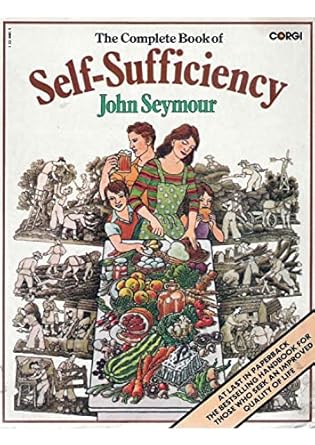
John Seymour’s 1973 book Farming for Self-Sufficiency, which he later expanded in 1976 to The Complete Book of Self-Sufficiency was intended as a practical guide to a sustainable lifestyle. In many ways, although very different, Seymour’s book performed a comparable function to the Whole Earth Catalog in the USA.
CAT was not simply about developing a sustainable and self-sufficient community. It is of course of no consequence if you lead a sustainable lifestyle, but the rest of the world is still hurtling towards an eco-apocalypse. Consequently, one of the aims of CAT was to persuade others of the imperative to respond to the environmental crisis. Morgan-Grenville envisaged a centre:
Where people, ordinary passers-by, might readily perceive the disastrous course on which our civilisation was set and be shown things they, anyone, might do to reduce their impact on the environment (Morgan-Grenville 2001:158).


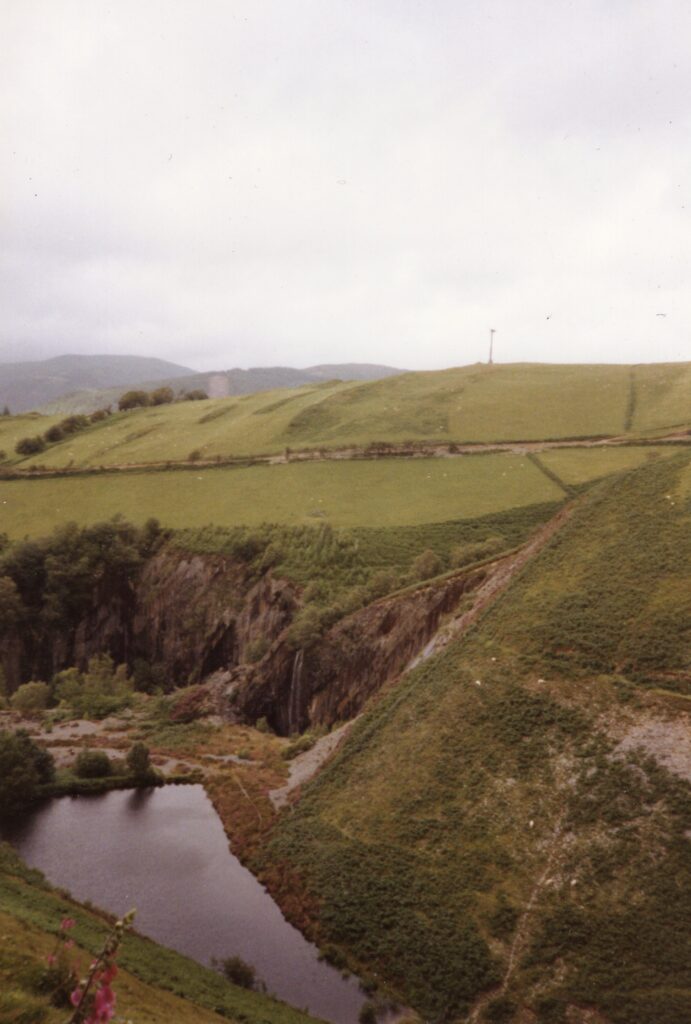
In 1973 Morgan-Grenville identified a disused slate quarry just outside of Machynlleth in mid Wales, which was ideal, and he negotiated leasing it from the landowner. Gradually volunteers began to arrive and in 1975 CAT opened as a visitor centre. Furthermore, it is of no use simply decrying the fact that the world was hurtling towards an eco-apocalypse, but one had to find solutions that could turn around this destructive trajectory.
Consequently, it is possible to identify four interrelating aspects to the early CAT project.
- To raise awareness about the destructive impact of human activity on the environment.
- To identify practical solutions to environmental issues. Practical solutions were primarily focused on renewable energy and organic growing.
- Experimentation to determine which solutions were effective.
- Forming a community, that could demonstrate the possibility of leading a sustainable lifestyle.
What is in a Name?
CAT, like many environmental groups, has a Manichean view of science and technology. On the one hand many environmental problems have been caused by developments in science and technology. On the other hand, it is suggested that a different type of science and technology can provide the solutions to the environmental crisis. Mostly, alternative technology focused on the development of renewable energy sources, such as wind, solar and water.

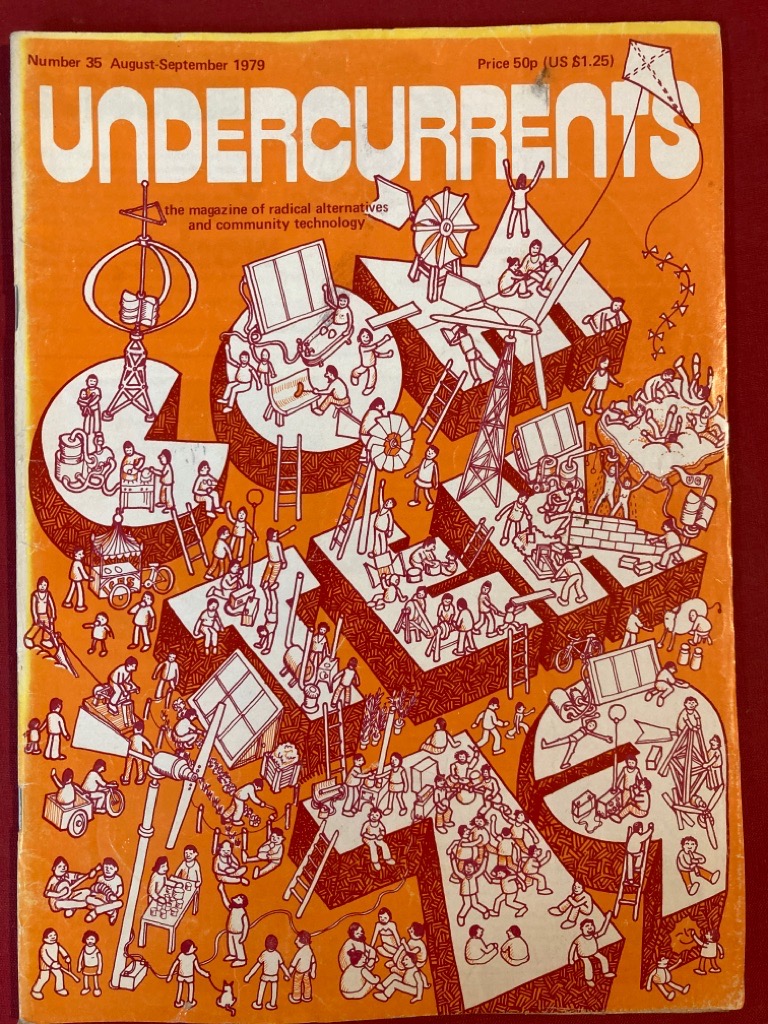
The term alternative technology (AT) is widely attributed to Peter Harper, who joined CAT in the early 1980s. Harper also contributed to the journal Undercurrents, which described itself as ‘a magazine of radical alternatives and community technology’. At the time there were numerous terms, such as radical technology, soft technology, appropriate technology that Peter Harper and Björn Erikson suggest indicate ‘technologies that are designed to satisfy directly human needs’ rather than ‘productivity and profits’ (cited in Jacobs 2023a: 44).
Harper states that the term ‘alternative technology’ was intended to bridge the gulf between the techno-manic mainstream and the charming but ineffectual anti-technological counterculture’ (cited in Jacobs 2023:43). In a later interview Harper stated:
AT is a sort of oxymoron, you know, because the alternative and technology tend to sit in different parts of the brain. So, if you put the two together there is a bit of a frisson. Alternative tended to mean a complete raggle-taggle, no organisation and a completely anarchic situation. Technology offered a bit of a spine stiffening element.
Jacobs 2023a: 43
CAT was not simply about technological solutions, it was also a social experiment in sustainable living. Consequently, the community aspect was regarded as a really important part of early CAT
CAT was also informed by a philosophy, although this was not often explicit. Morgan-Grenville suggested:
[AT] is being seen not only as a technical solution to current problems, but as a philosophical alternative to man’s obsession with material expansion and its inevitable association with economic and social chaos. (cited in Jacobs 2023: 50).
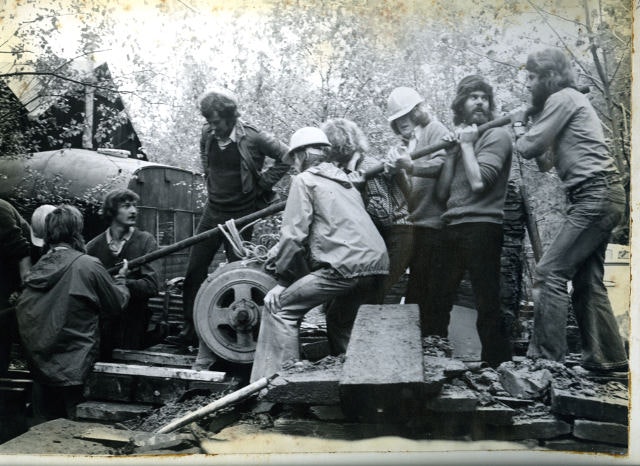
Image from CAT
There were two interrelated aspects to this philosophical alternative: environmental justice and the concept that small is beautiful proposed by the economist E.F. Schumacher.
Environmental Justice
I will be discussing environmental justice in greater detail in a future post, particularly in relation to Murray Bookchin’s idea of the ecological society. In this discussion of CAT, I will briefly explore two interrelated aspects of environmental justice – egalitarianism and what is called deliberative democracy.
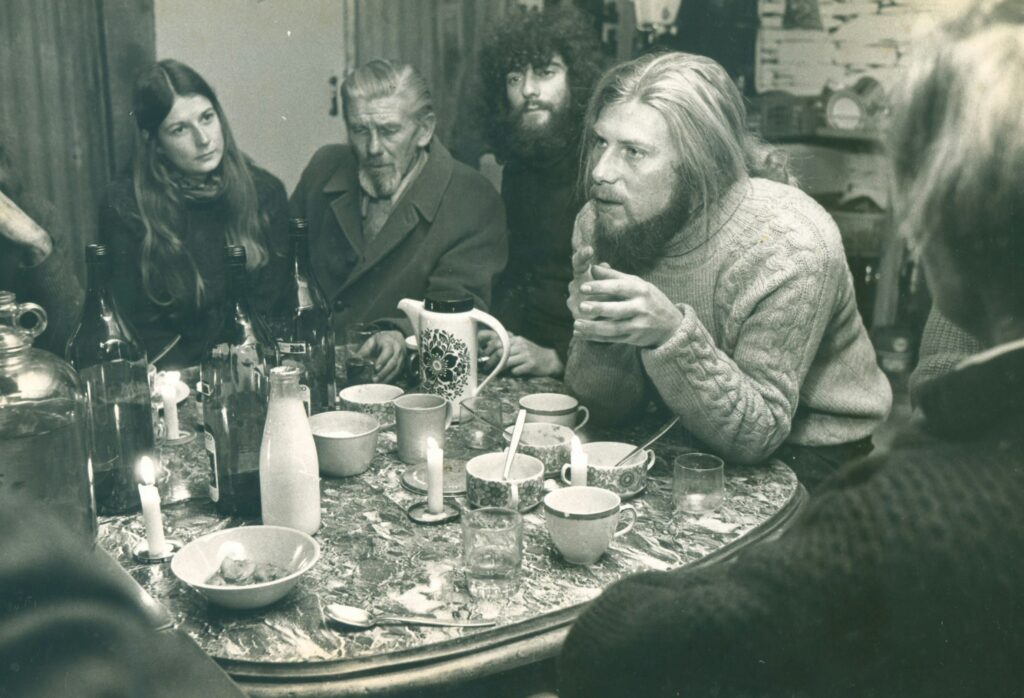
Image from CAT
Whilst CAT was formally a charity, and therefore legally obliged to have a board of trustees, it was effectively run as a cooperative. Egalitarianism at CAT was focused on consensus decision making. The concept of interdependence is inherent in ecological ways of thinking. Cooperative working, rather than competition, is a logical corollary of the idea of interdependence. Competition and hierarchical organisations were also associated with industrialisation, economies of scale and capitalism, which were regarded as prime causes of the environmental destruction. Morgan-Grenville, as we have already seen was somewhat sceptical of authoritarian political structures suggested:
It seemed at the time an intensely exiting idea to create a new environment in which the criteria for decision making would be less commercial and political and more environmental and educational. (cited in Jacobs 2023b).
Bob Todd, who was CAT’s first technical director, makes the link between sustainability even more explicitly:
In my head the two [sustainability and egalitarianism] are coupled in the sense that caring about sustainability is tied up with ethical considerations of fair sharing around the world (cited in Jacobs 2023a: 55).
Over the years CAT experimented with systems that aspired to enable everyone who worked at CAT to have an input into decision making. This often involved long meetings that frequently entailed tedious debates about minutiae. Nonetheless, as one long term member of CAT points out:
From a psychological point of view, it gave the feeling that everybody was a stakeholder, in what we were doing, it kept everybody involved, it kept everybody feeling that they mattered, that they had some contribution to make.
Cited in Jacobs 2023a:112
This attempt to involve everybody in the decision making process can be thought of as a form of deliberative democracy, which involves ‘a commitment to the resolution of problems of collective choice through public reasoning’ (Joshua Cohen 1989 cited in O’Flynn 2022:1). In other words, deliberative democracy is a group activity of individuals who are regarded as equals actively engaging with each other on making decisions to reach a consensus on how to act.
CAT’s experiments with deliberative democracy can be thought of as what Darcy K. Leach calls a prefigurative style of politics:
A belief that movements can only accomplish radical social change if their own tactics, organizational structure, and interpersonal behaviour reflect or “prefigure” the kind of society that they want to bring about (Leach, 2016, p. 42).
Small is Beautiful
The Swiss economist E.F. Schumacher, whose book Small is Beautiful, first published in 1973, clearly articulated many of the ideas that were implicit in the early age of ecology. Joachim Radkau describes Schumacher as ‘one of those rather genial prophets who did not announce the coming apocalypse but aimed to offer hope and pragmatic solutions’ (Radkau 2014: 190). Identifying pragmatic solutions to environmental problems has always been at the core of CAT’s agenda.
Small is Beautiful is a collection of essays which challenge a central idea of modern economics, that ‘more is better’. Schumacher questions the idea that large-scale industrialisation, unlimited economic growth and unbridled wealth are key indicators of success.
Schumacher’s argument is about scale. He states that ‘’today we suffer from an almost universal idolatry of giantism. It is therefore necessary to insist on the virtues of smallness’ (Schumacher 2011: 49).
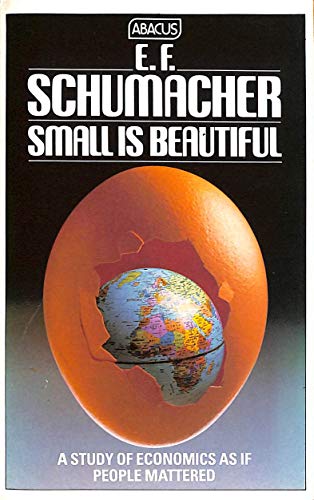

Schumacher argued that large scale technology and economies of scale were inherently detrimental to people’s wellbeing. The subtitle of his book is A Study of Economics as if People Mattered. Schumacher suggests that the solution is:
The evolution of small-scale technology, relatively non-violent technology, “technology with a human face”, so that people have a chance to enjoy themselves while they are working, instead of working solely for their pay packet (Schumacher 2011: 9
CAT could never afford to pay its staff particularly well. One of the most radical aspects of the early CAT was to institute a relatively flat pay structure. Everybody, whether engineer, director or cook got the same salary. The idea was people were paid according to their needs, rather than according to how different roles were valued in wider society. This radical pay structure really contributed to the egalitarian ethos of early CAT as there was a sense that everyone was equally valued
Schumacher argues that ‘small-scale operations, no matter how numerous, are always less likely to be harmful to the natural environment than large-scale ones (Schumacher 2011, p 22).
It is moreover obvious that men organised in small units will take better care of their bit of land or other natural resources than anonymous companies or megalomanic governments.
Schumacher 2011: 23
Schumacher also refers to his ideas as ‘Buddhist Economics’, which he perceives to be ‘very different from the economics of modern materialism’ (Schumacher 2011: 40). He defines Buddhist economics as ‘the systematic study of how to attain given ends with the minimum of needs’ (Shumacher 2011: 42). This is both good for the wellbeing of individuals and the planet.
In the introduction to the Vintage edition, the British environmentalist Jonathon Porritt writes “’Small is Beautiful”! That deceptively simple notion still resonates very powerfully throughout the Green Movement’ (in Schumacher 2011: x). More specifically Witold Rybczynski (1991:6) observes that ‘E.F. Schumacher was undoubtedly the motive force behind the AT Movement’.
The Demise of the Small is Beautiful Ethos
One of the major criticisms of CAT was that it was all very small scale. Whilst it was fine for a small community in a rural setting to live off renewable resources, critics argued that the ideas which CAT advocated were not applicable to urban contexts and could not be upscaled easily. By the early 2000s there were a number of significant changes that rendered the idea of ‘small is beautiful’ less tenable and also put an end to the community and egalitarian experiments to CAT.
There were both internal and external pressures on CAT that forced it to make some radical changes in the way that it was organised. This period was incredibly distressing and traumatic for many of the people who perceived the egalitarian and communal ethos as integral to the CAT project. CAT had got much bigger since I worked there. Staff numbers had grown from about 30 in the early 1980s to over 150, and annual turnover had increased to £4 million. The consensus decision making structure seemed unable to cope with this increase in scale, and CAT tried to find ways to address this, but none of their experiments in changing the decision making process were particularly successful.
Despite the increased turnover, CAT also faced its most severe financial crisis in its history. Ultimately the banks insisted that CAT change its managerial structure. A CEO was appointed, and a more conventional and hierarchical structure was implemented. The community folded and the flat pay structure was abolished.
Perhaps the external pressures on CAT played a more significant role in the transformation of the organisation. There were two interrelated external factors that undermined the small is beautiful approach to tackling environmental issues:
- The realisation that climate change was much more globally devastating than was imagined in the 1980s
- The development of renewable energy technology.

Small scale solutions are no longer regarded as viable in tackling the climate emergency and other environmental challenges. When I was at CAT, alternative technology was very rudimentary. No one really envisaged that there would be mega-watt turbines, or that solar panels would become commonplace. CAT was no longer in a position to compete with large scale research and manufacturing of renewable energy technology. The DIY approach to environmental problems is now regarded as anachronistic. CAT still survives and is doing good work in education and consultancy, but I think that it is no longer informed by a philosophical perspective.
Sources
Centre for Alternative Technology (1995) Crazy Idealists: The CAT Story. Machynlleth. CAT Publications
Harper, P. (2014) Songs of Experience: Four Decades of Successes and Failures at the Centre for Alternative Technology
(unpublished paper).
Jacobs, S. (2023a) Sustainable Living at the Centre for Alternative Technology: Radical Ideas and Practical Solutions. London:
Routledge.
Jacobs, S. (2023b) Egalitarianism and Sustainability at the Centre for Alternative Technology. Journal of Co-operative
Studies. 56(1) 29–34. Available at: https://www.ukscs.coop/pages/journal-of-co-operative-studies-56-1-29-34
Leach, D. K. (2016). When freedom is not an endless meeting: A new look at efficiency in consensus-based decision
making. The Sociological Quarterly, 57(1), 36–70.
Morgan-Grenville, G. (2001) Breaking Free. Bridport: Milton Mill Publishing.
O’Flynn, I. (2021) Deliberative Democracy. Cambridge: Polity Press.
Radkau, J. (2014) The Age of Ecology. Cambridge: Polity.
Rybczynski, W. (1991) Paper Heroes: Appropriate Technology: Panacea or Pipe Dream? London: Penguin.
Schumacher, E.F. (2011) Small is Beautiful. A Study in Economics as if People Mattered. London Vintage.
If you are interested in what CAT current focus is see their website.