
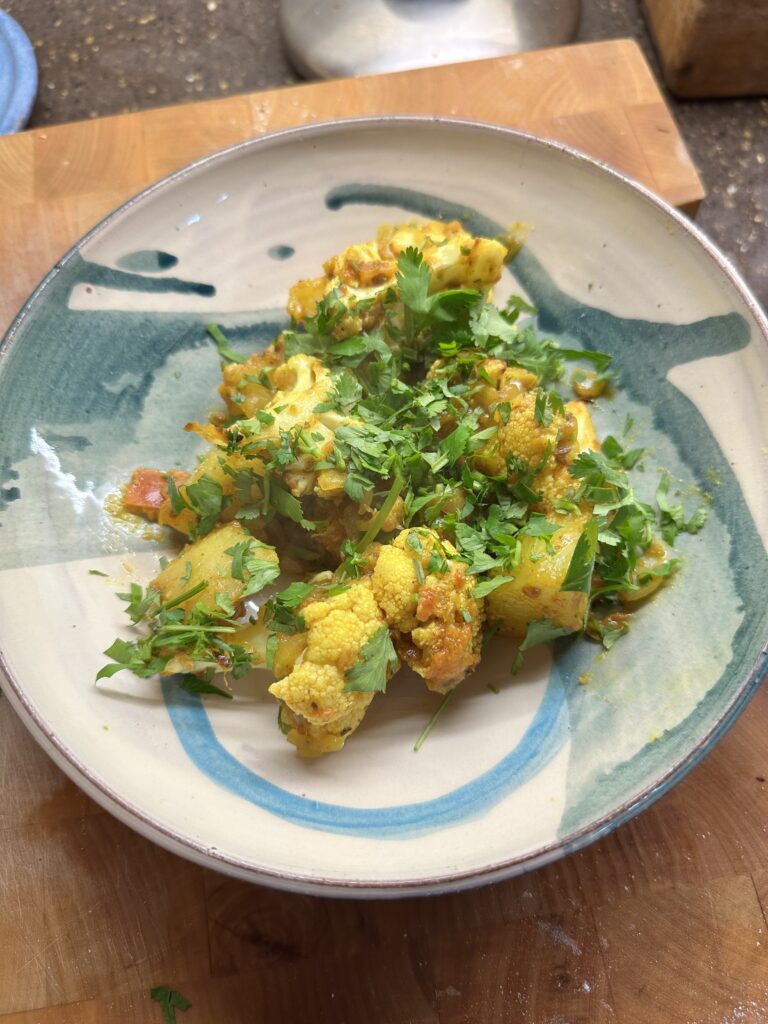
Alu Gobi is a popular north Indian dish, however neither potatoes or cauliflower are indigenous to India. Potatoes, tomatoes and chillies were introduced to India by the Portuguese probably sometime in the sixteenth century. Cauliflowers were probably not introduced to India until the early nineteenth century by the British. Nonetheless alu gobi is a ubiquitous dish that can be found in almost every type of eating establishment, from roadside dhabas to high end restaurants.
There are numerous different versions of this popular dish. I normally make a version of Madhur Jaffrey’s recipe found in her excellent Eastern Vegetarian Cookery. However, I came across this rather unconventional idea of roasting the potatoes and cauliflower. This version is also non-traditional as it includes tomatoes and some spices, such as cinnamon, that are not not usually used in alu gobi.
Ingredients
Method
Notes
1 green chilli
3 large cloves of garlic
20 g fresh ginger
2 Large tomatoes
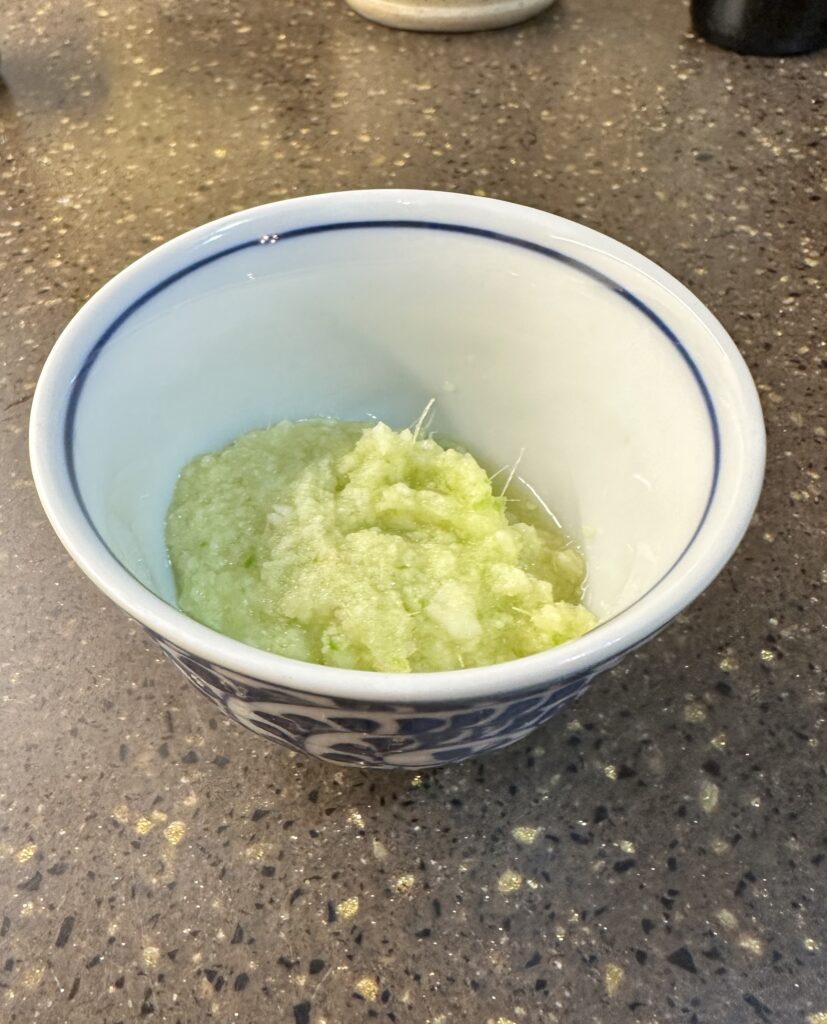
- Blend the chilli, garlic and ginger into a paste
- Preset the oven to 200°C
- Cut a cross in the top of each tomato and cover with boiling water for 2 minutes. Remove the tomato peel and chop finely
If you do not have a small blender then chop the chilli, garlic and ginger as finely as possible.
Remove seeds of the chilli if you want to make a milder dish
2tbs sunflower oil
1.5 inch cinnamon stick
1.5 tsp cumin seeds
1 large onion – diced
- Heat the oil in a wide saucepan
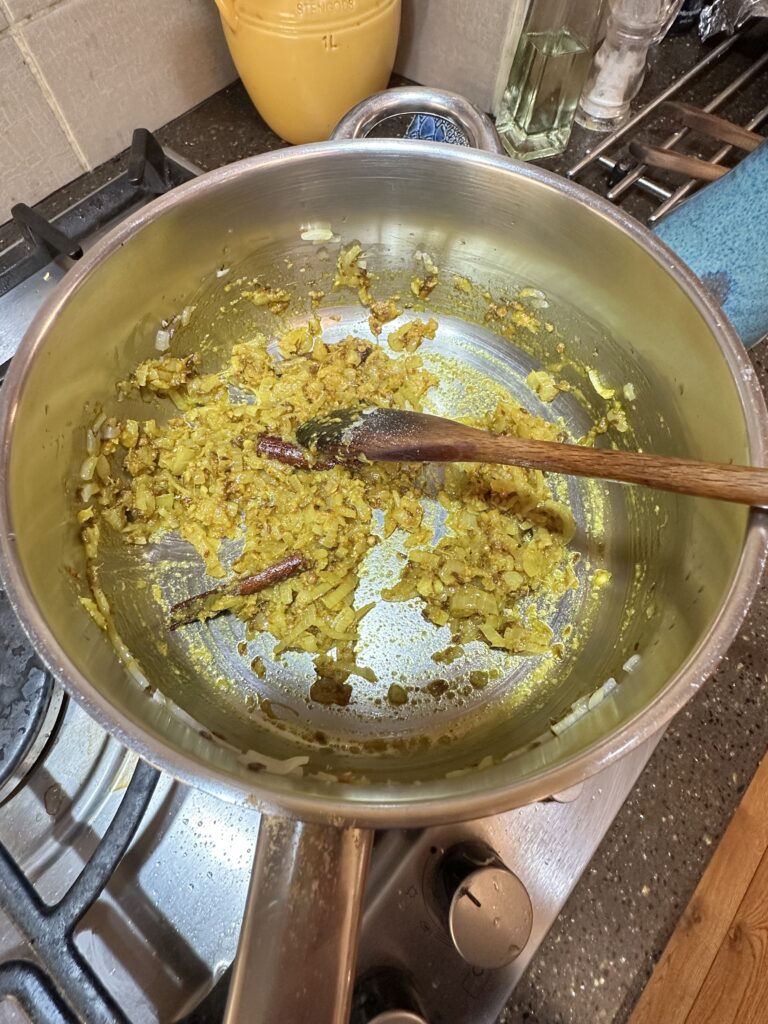
- When hot add the cinnamon stick and cumin seeds and toast for about 1 minute until fragrant
- Add the diced onion with a pinch of salt and cook for about 6 – 8 minutes until just turning gold. Stir from time to time.
- Add the ginger, chilli and garlic paste and cook for a further 2 minutes.
0.5 tsp turmeric
2tsp ground coriander
0.5 tsp Kashmir chilli powder
0.25 asafoetida
1.5 tsp amchur
- Stir in the turmeric, coriander, chilli and asafoetida and cook for another 1 to 2 minutes, stirring frequently.
- Add the chopped tomato and the amchur
- Cover with a lid and cook for about 15 minutes.
- Stir from time-to-time. If your sauce is catching on the bottom of the pan add a splash of water.
Asafoetida (hing in Hindi) is optional. However, I think it is definitely worth adding. You tend to buy it as a powder in the UK. It is derived from a resin. It adds a pleasing pungency to curry dishes, but should be used sparingly. It has a very strong smell and the English word fetid is derived from the term asafoetida.
Kashmir chilli is fairly mild. However leave this out if you want a mild curry, or add more if you want a more fiery dish.
Amchur is dried mango powder and is also optional. However, it adds a pleasing citrus note to the dish.
Do not add too much water, as this should be a fairly dry dish.
450 g potatoes
1 medium size cauliflower
2 tbsp sunflower oil
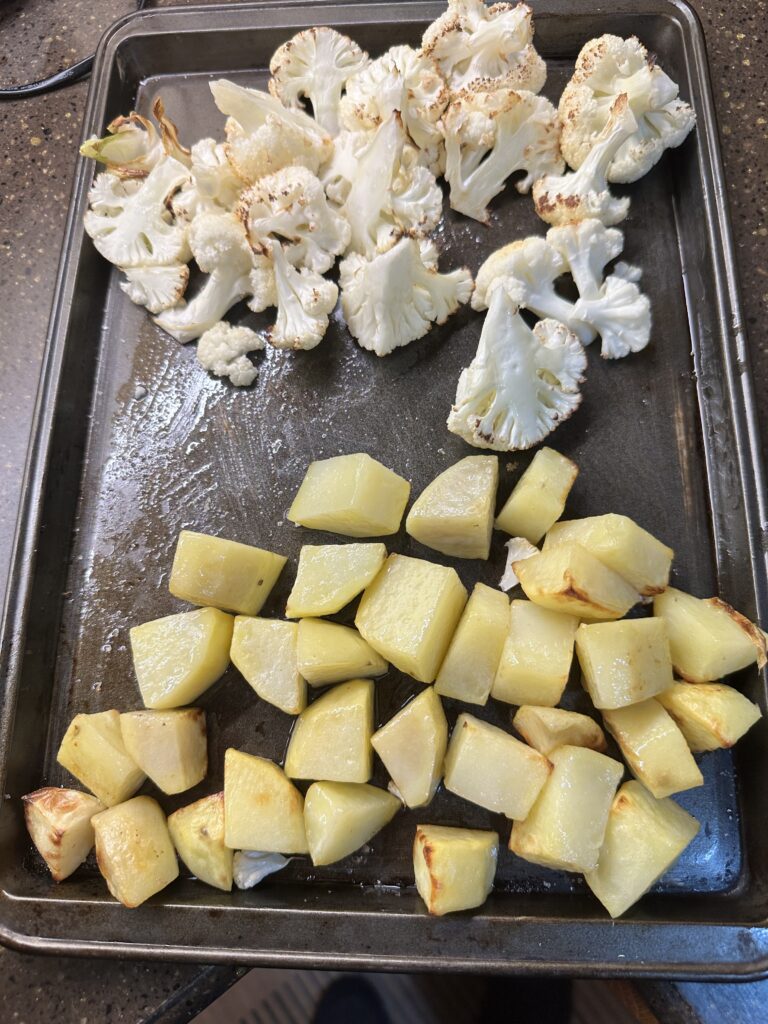
- Peel and cut the potatoes into approximate 1 inch cubes. lay in a single layer in a baking tray sprinkle with some salt and coat with 1tbsp of the oil. Place in the preheated oven and cook for about 20 minutes until turning gold and just cooked.
- Break the cauliflower into bite size florets. Sprinkle with some salt and coat with the remaining 1 tbsp oil. Cook for about 10–12 minutes. Until it takes on some colour and is just cooked.
2 tsp fenugreek leaves (methi)
1 tsp garam masala
0.5 tbs lemon juice
2 tbs fresh coriander
- Make sure that the tomatoes are completely broken down in your sauce
- Crush the fenugreek with your hands and add to the sauce along with the garam masala
- Check the seasoning and then carefully stir in the cooked potatoes and cauliflower and lemon juice. Cover the pot and cook for a further 2–3 minutes
- Garnish with chopped fresh coriander
The fenugreek leaf is optional, but adds another flavour dimension.
Serve with chapatis and/or rice.

Looks gorgeous Steve