

There are three catalysts for this post on Hindu wayside shrines:
- Sorting through my many photographs of India, I realised that I had hundreds of images of these shrines (all photos in this post are mine unless otherwise stated).
- I find these wayside shrines both aesthetically and culturally fascinating.
- Despite the ubiquity of these shrines and the important role that they play in the religious life of many Hindus in India, there is little written about these in the academic literature.
In this post I will discuss whether or not these wayside shrines can be compared contrasted with temples. India has a rich tapestry of diverse sacred spaces and places, not all of which are demarcated by temples or shrines.
Sacred spaces and places
- India as sacred space
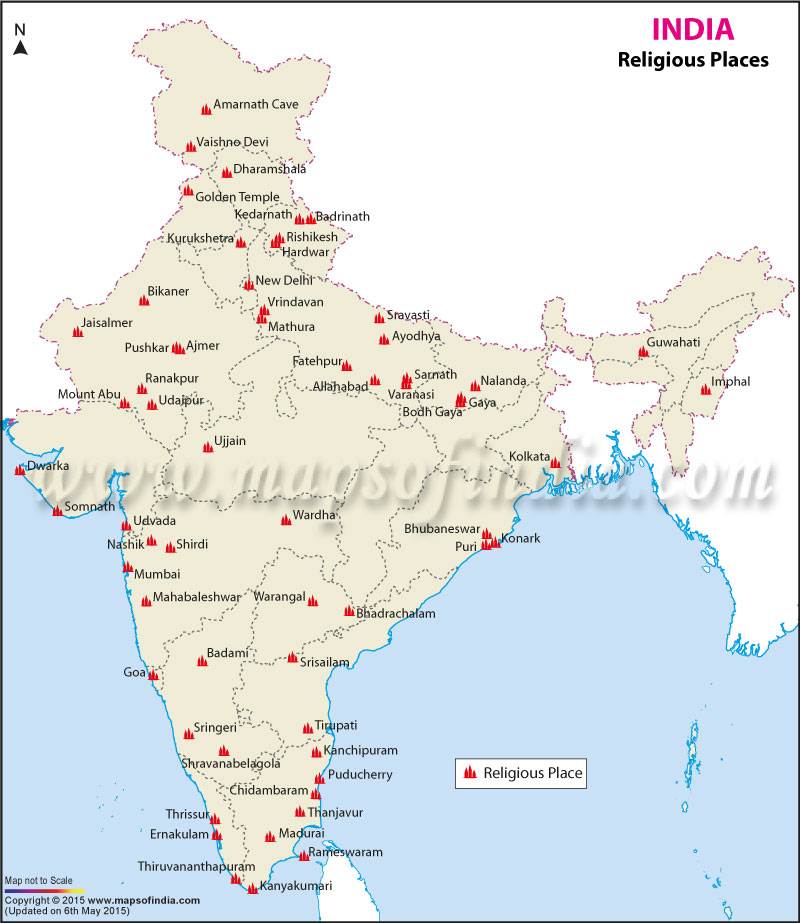
Image from Maps of India
India itself is regarded as sacred. India’s sacredness is indicated by four sites at the cardinal points of the subcontinent – Badrinath in the North, Puri in the East, Rameswaram in the South and Dwarka in the West. Furthermore, India is crisscrossed with a network of sacred places, that constitute a sacred geography, associated with the rich mythological narratives of the Hindu traditions.
- Natural phenomena as sacred
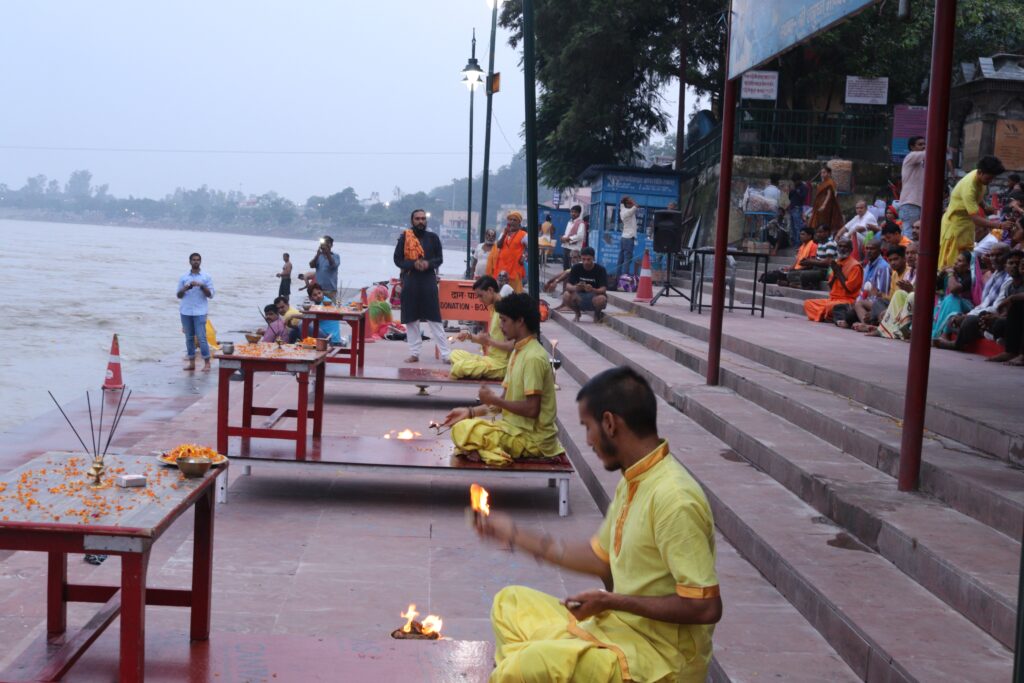
Natural phenomena, such as mountains and rivers, are also regarded as sacred. Perhaps the most well-known is the River Ganges, which is regarded by Hindus as a living goddess Ma Gaṇgā. Every day along Gaṇgā’s banks, from its source in the Himalaya to where it enters the Bay of Bengal, Hindus perform various religious rituals.
- Sacred Regions
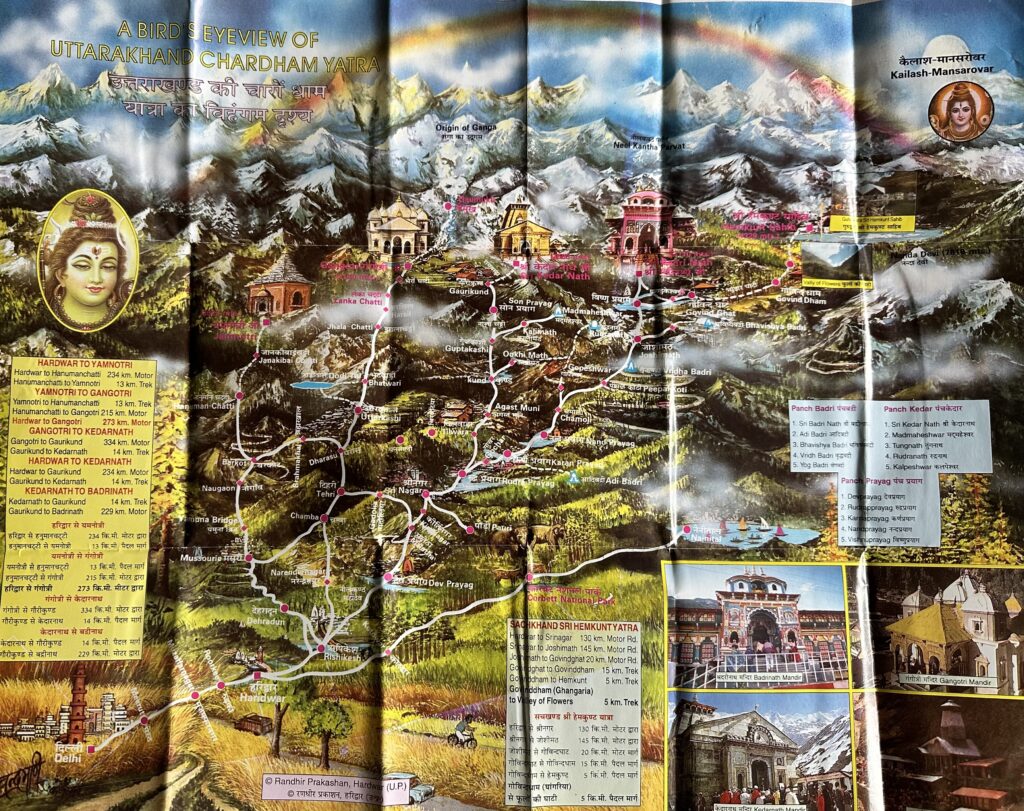
Certain regions are regarded as sacred. For example, the mountainous area above Rishikesh in north India is regarded as especially sacred and is frequently called Dev Bhoomi – The Land of the Gods. A guidebook to the region suggests it is:
The sacred land, where every speck of dust, every pebble, every bush and plant, why everything around is endowed with sanctity (cited in Jacobs 2021, p.49).
- Sacred cities
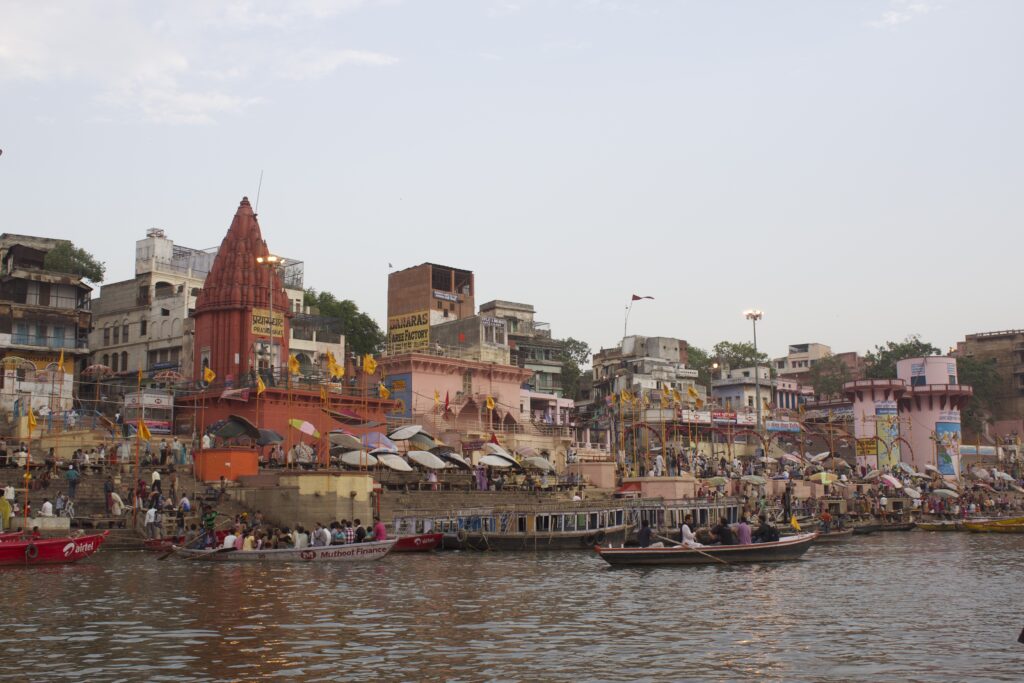
The city of Banāras (also known as Kāshī and Vārānasī) is considered particularly sacred because it is associated with many of the narratives of the deity Śiva and is located on the banks of Gaṇgā. Banāras is an important pilgrimage place, and is considered to be a tirtha, which literally means ‘a ford’ and therefore suggests this is a place where one can cross from a mundane reality to the sacred.
- Temples (also see my post on Sacred Architecture)
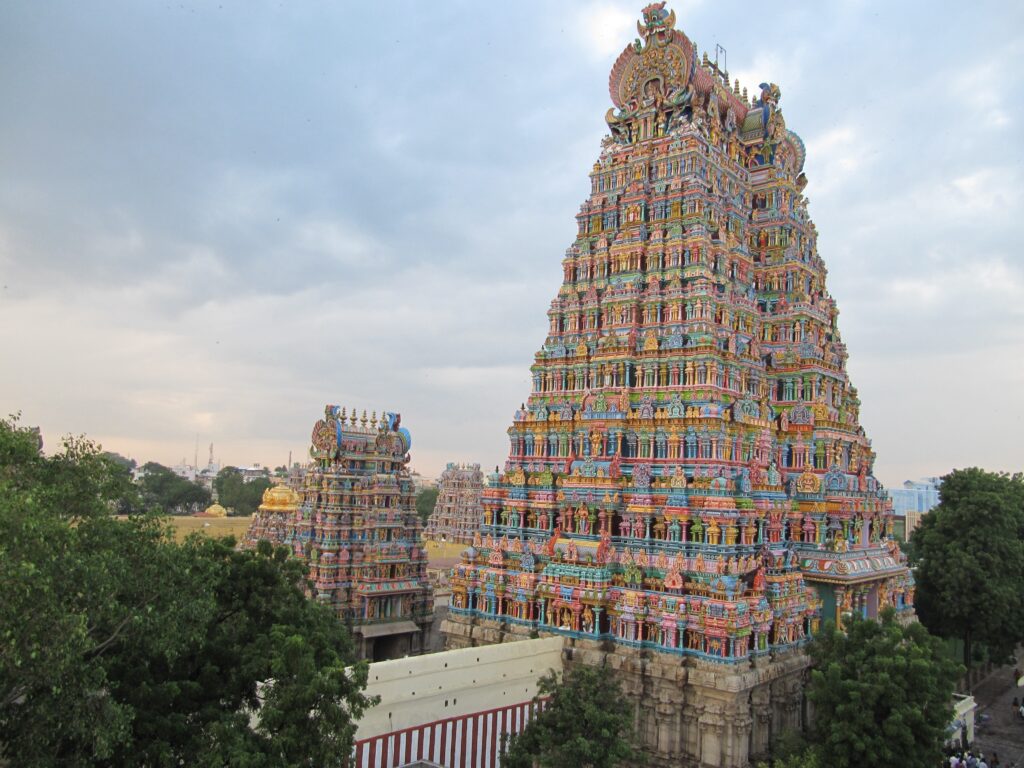
Temples are frequently built on sites that are regarded as sacred. Sometimes, these temples can be vast and ornate edifices, such as the temple in Madurai dedicated to the Goddess Meenakshi (which means ‘Fish-Eyed) who a form of Parvātī, the consort of the Śiva.
These imposing edifices are frequently as much a statement of power as they are sacred sites and pilgrimage destinations. However, other temples, even if they mark an important sacred site associated with a Hindu mythic narrative, are much more modest. Nonetheless, temples are often contrasted with wayside shrines.
Wayside Shrines
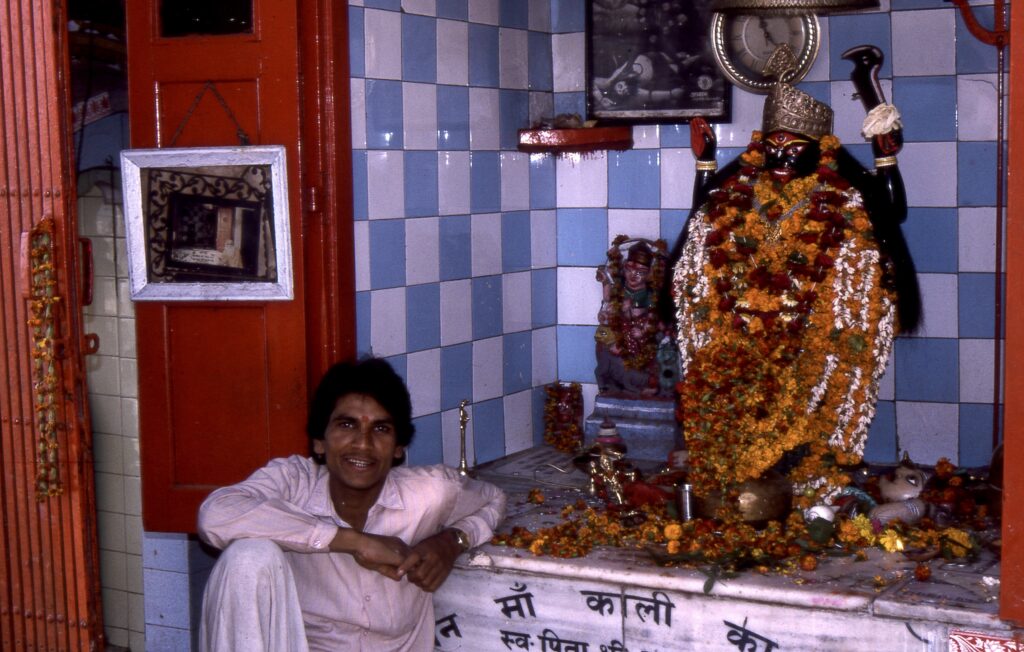
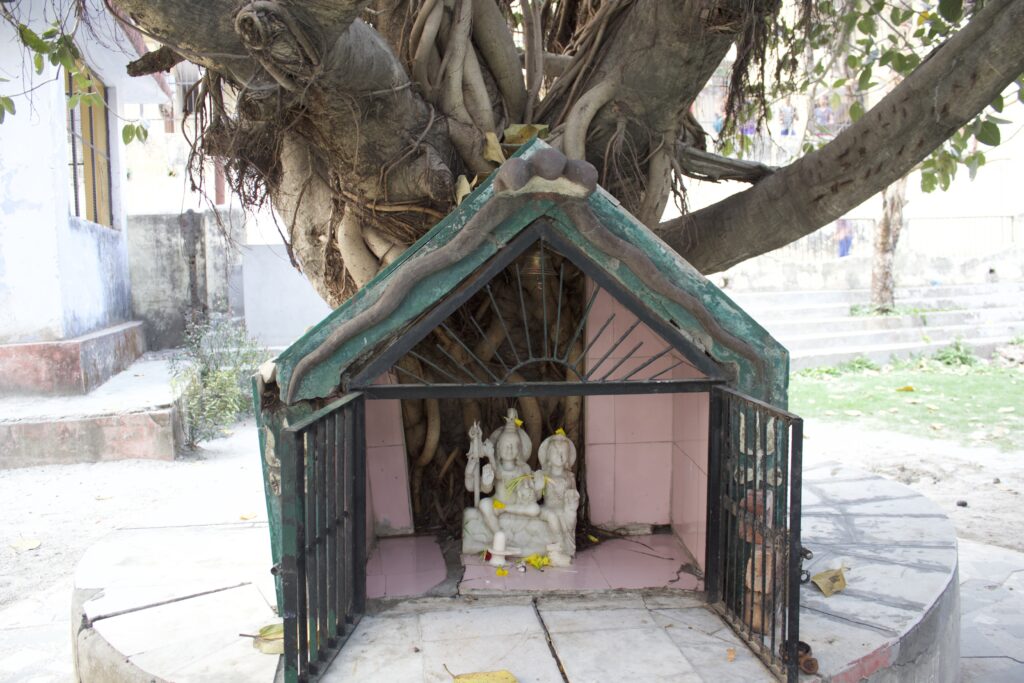
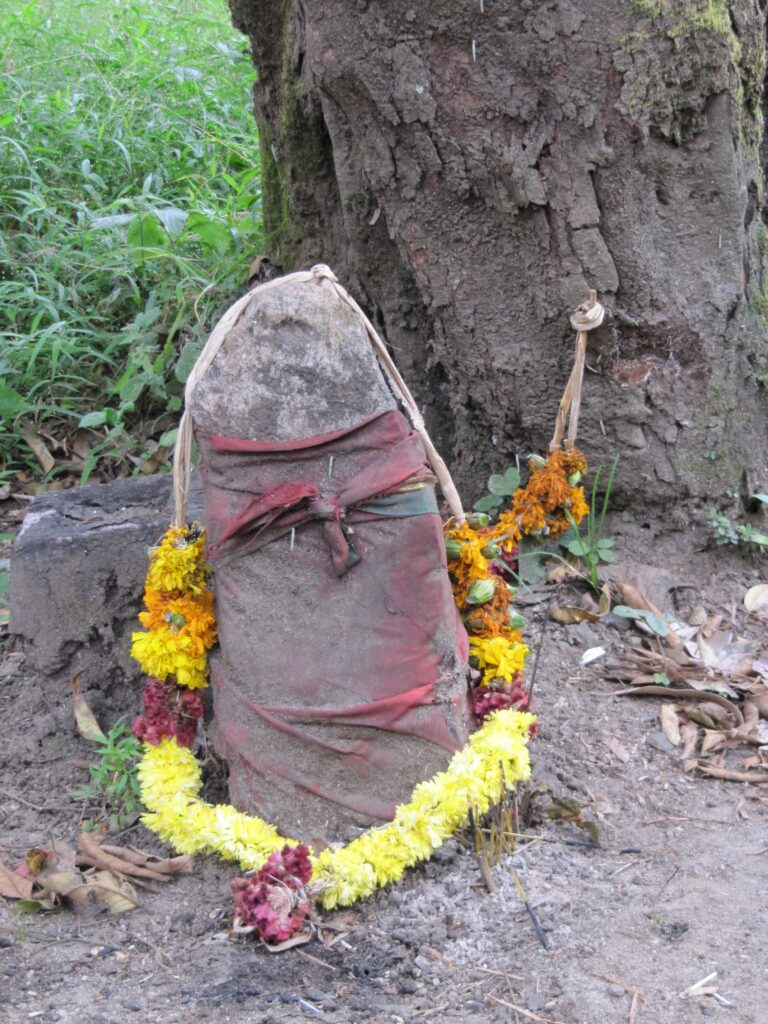
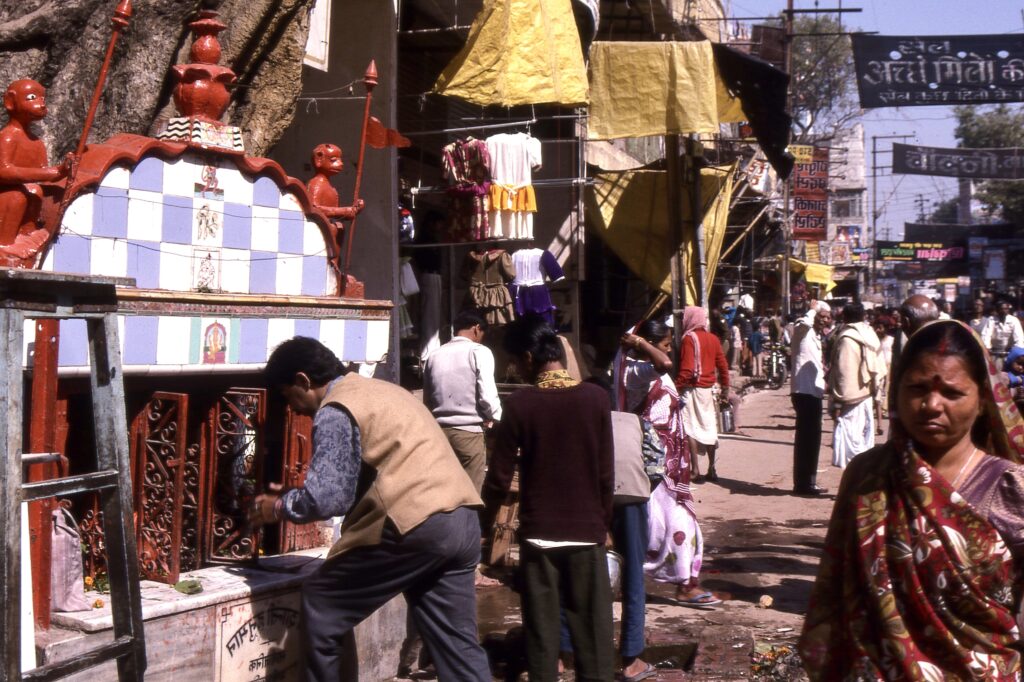
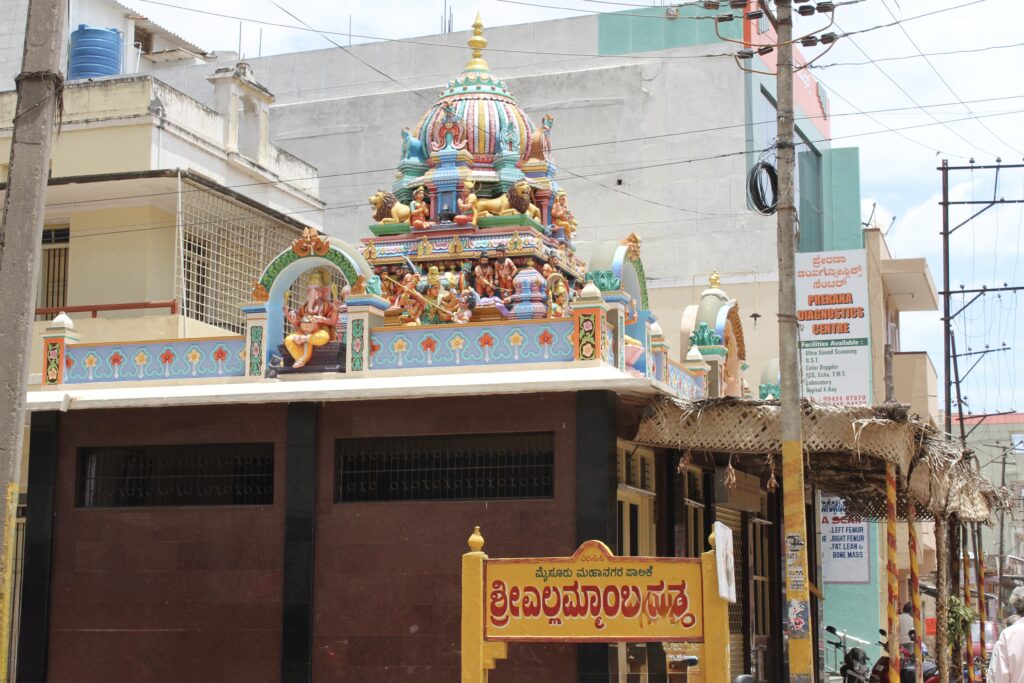
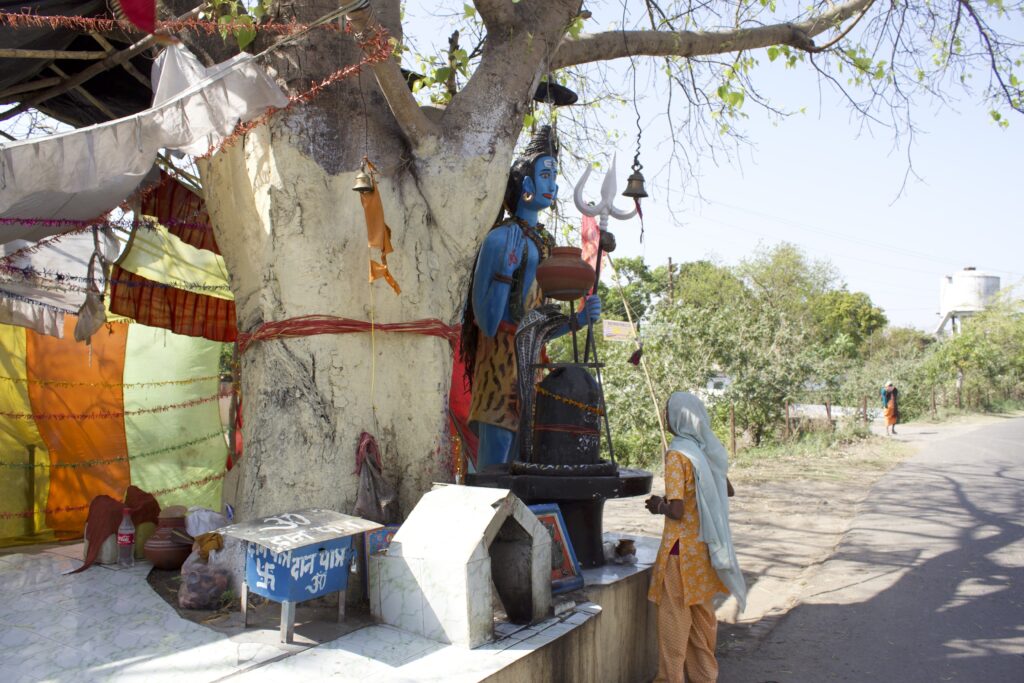
Perhaps even more significant than the large temples are the vast array of wayside shrines that abound in the cities, towns and roadsides of India. One of the most noticeable aspects of these wayside shrines is their incredible diversity.
Wayside shrines vary from simply adorning a rock under a tree to much more elaborate structures.
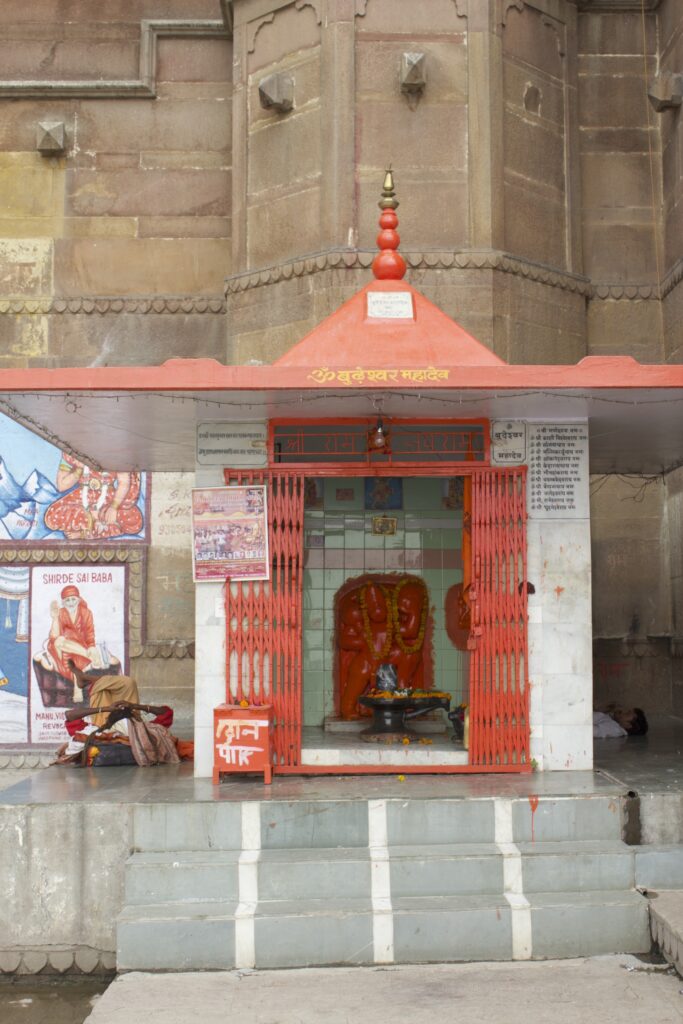
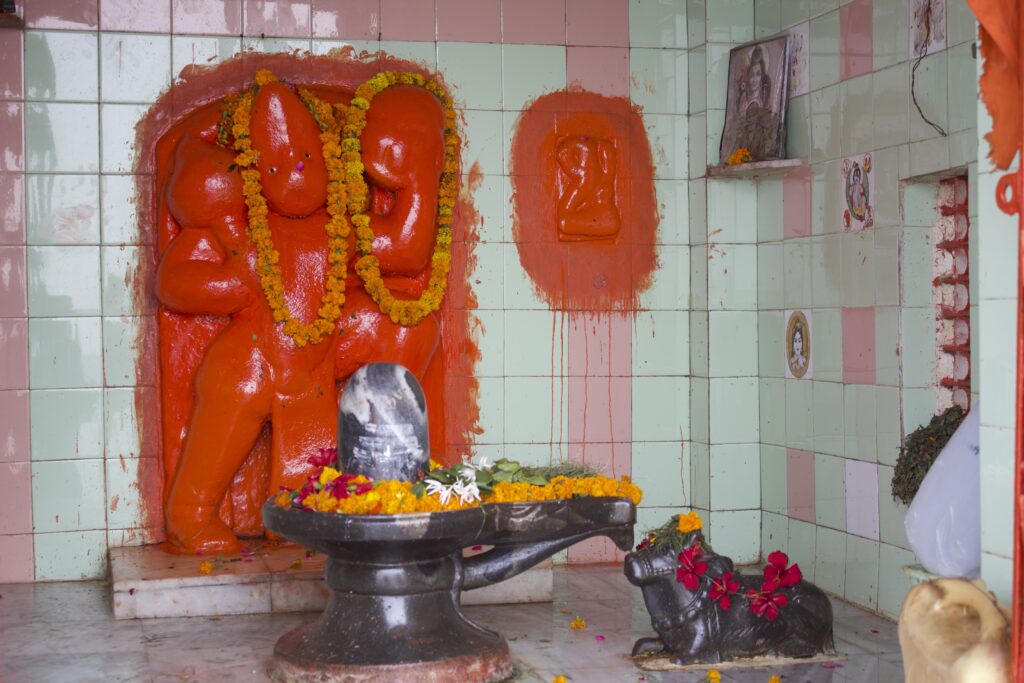
You can find these wayside shrines at busy intersections or in very remote locations
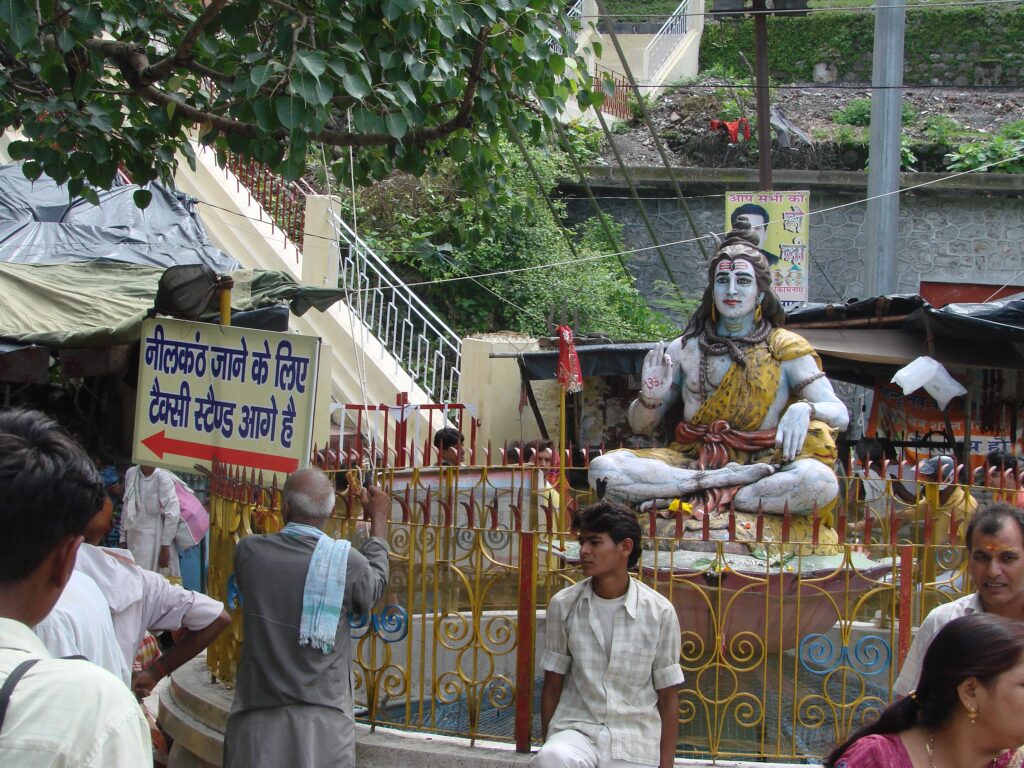
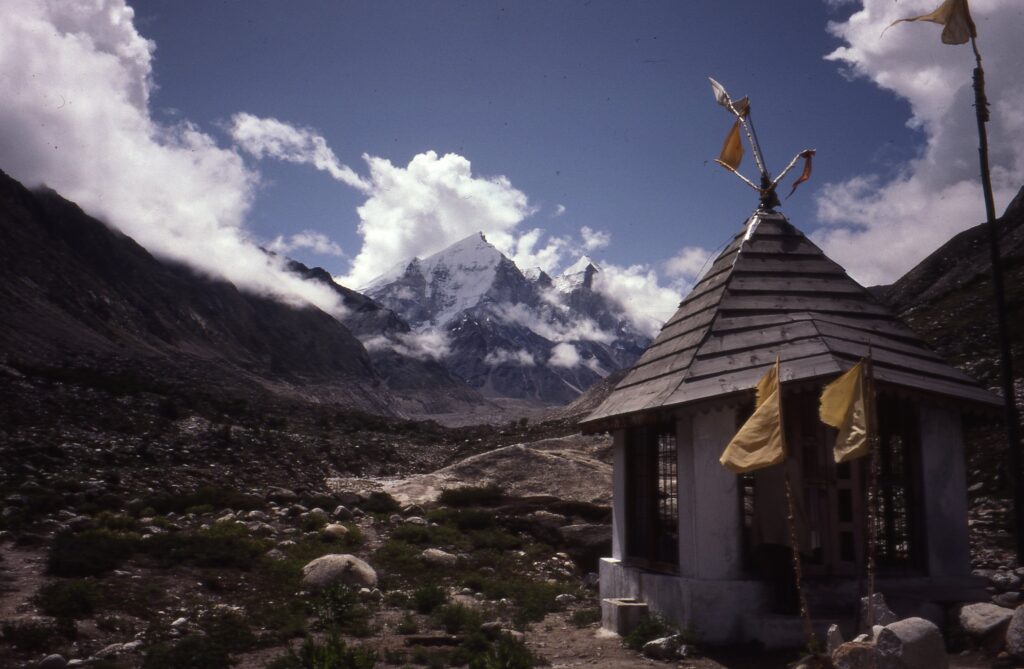
Wayside shrines can be quite large and imposing or small and relatively hidden.
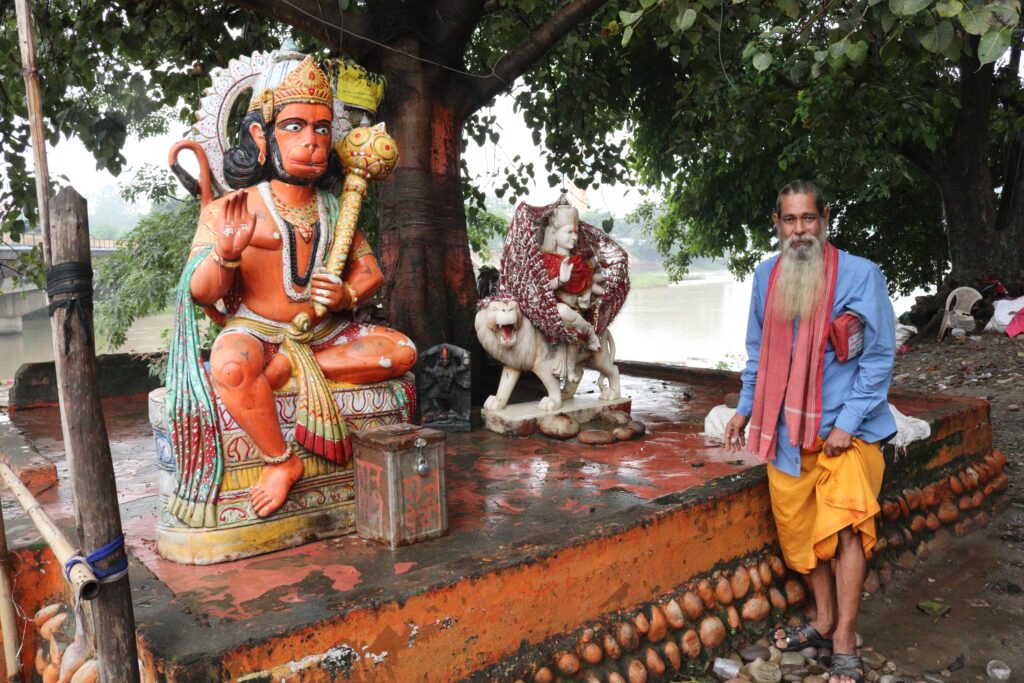

Some wayside shrines are well cared for, whilst others seem neglected.
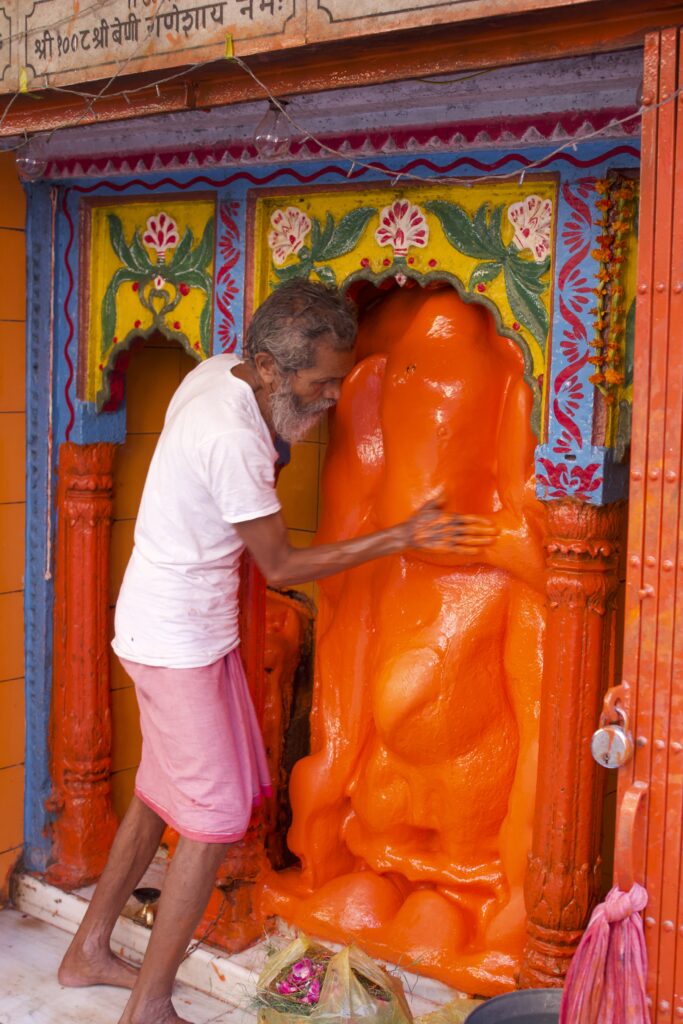
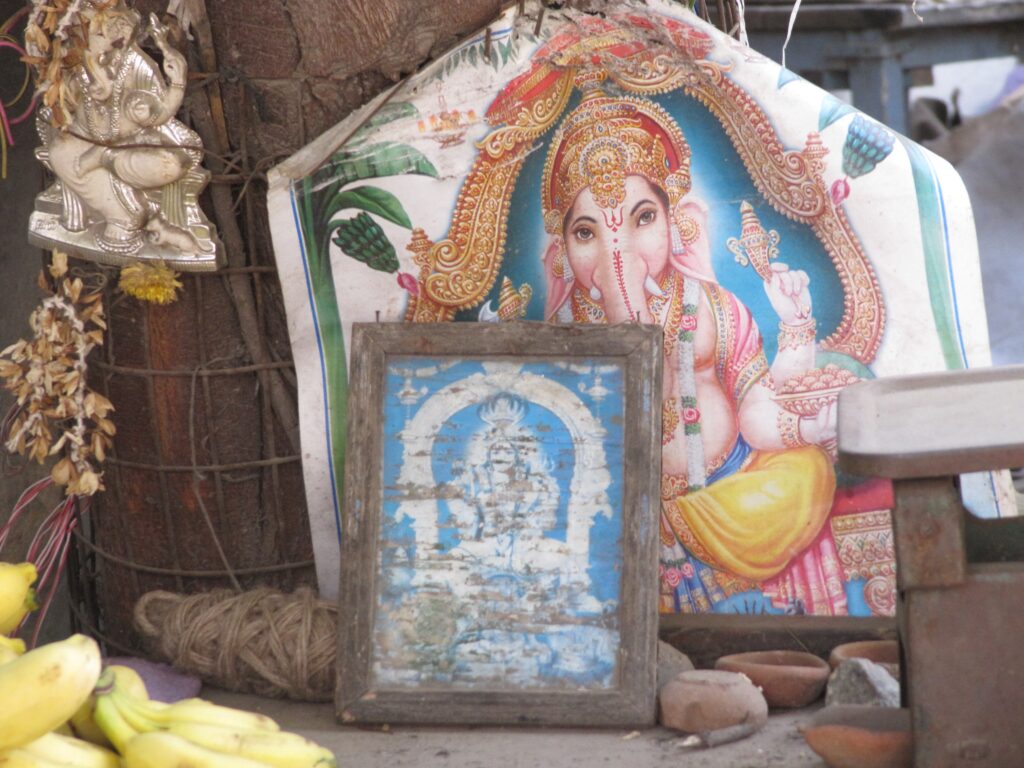
Some wayside shrines have a priest or an ascetic in attendance, whilst others are unattended and are a resource for individual unmediated religious practice.
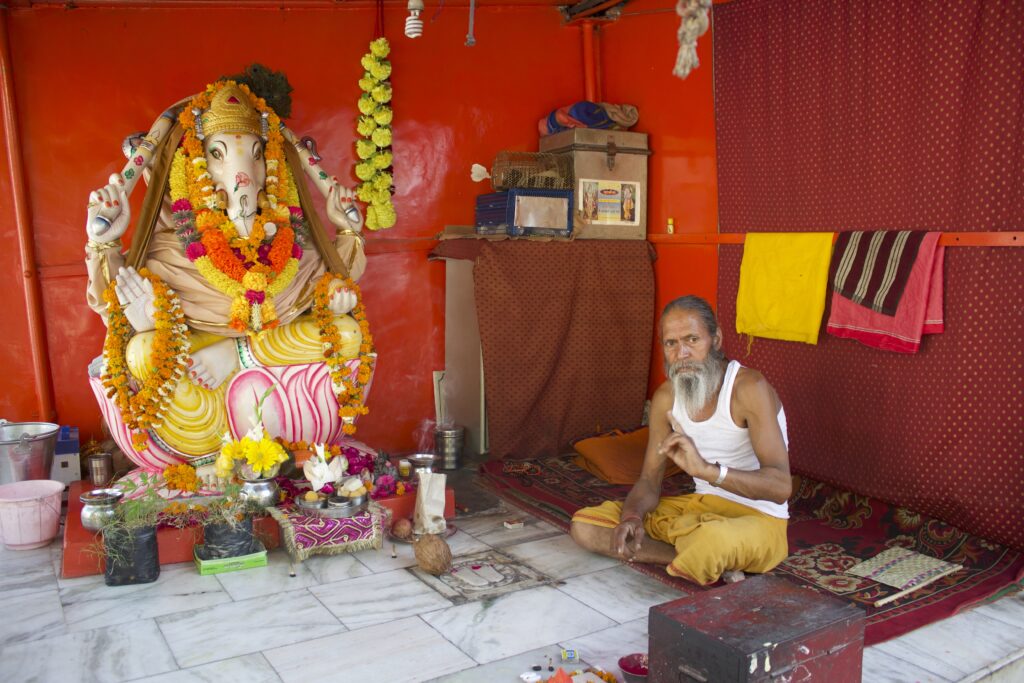
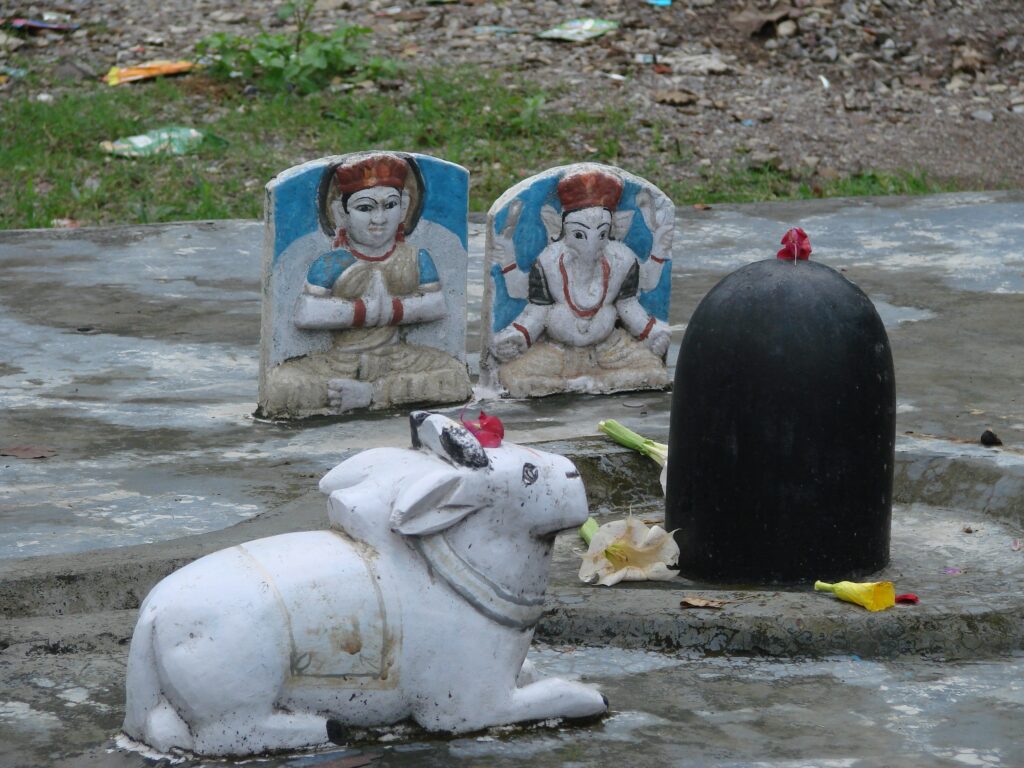
Whilst very little has been written about these wayside shrines, they:
- Are critical aspects in the visual landscape and material culture of the Hindu world.
- Are intrinsic to the everyday religious life of many Hindus.
These wayside shrines are difficult to define and can overlap with other religious sites. For example, some smaller temples might be classified as shrines, and some of the larger wayside shrines can seem like small temples.
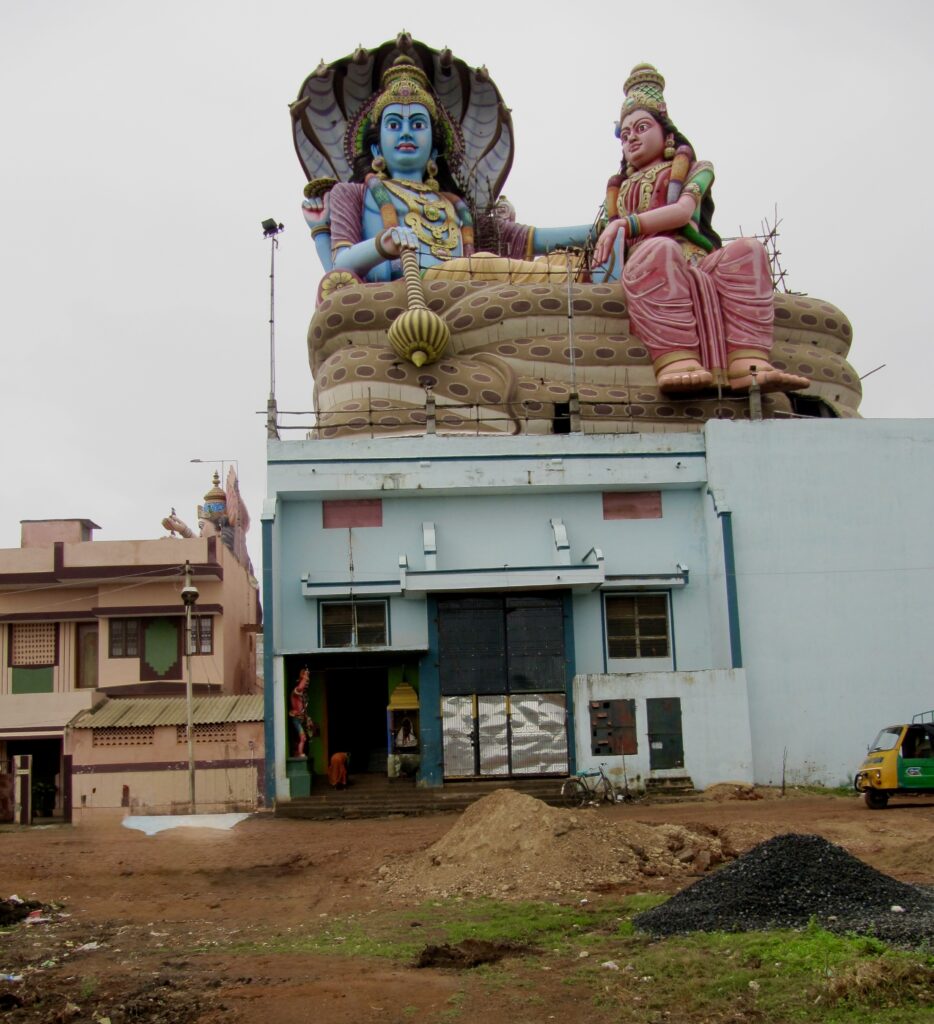
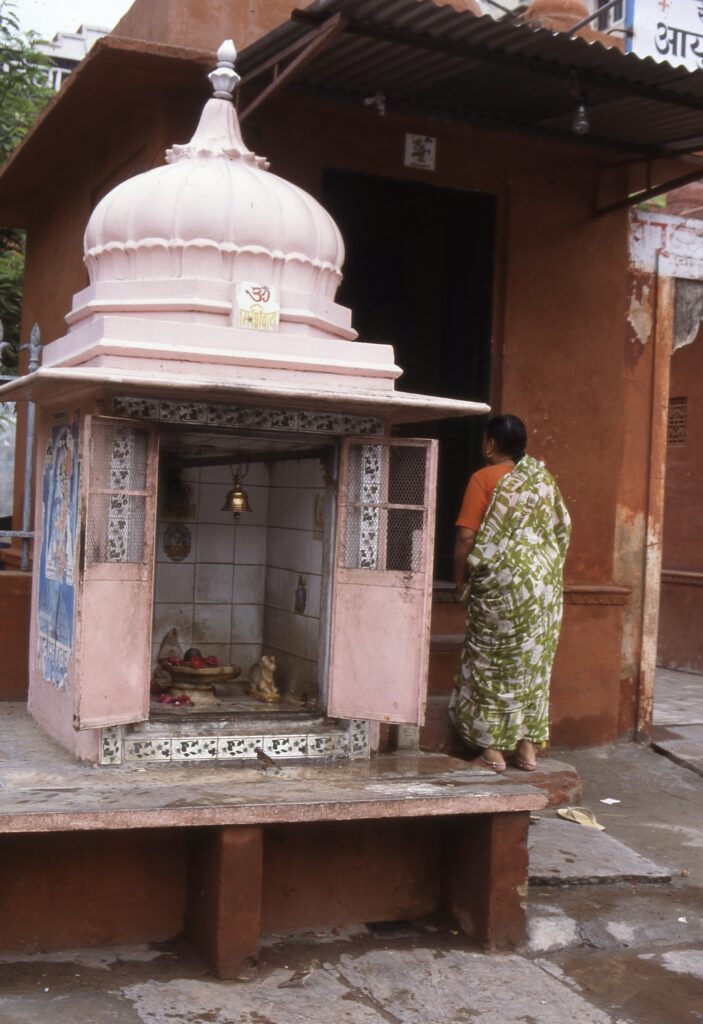
These shrines have been called a number of different terms, for example Priya Mookerjee calls these ‘Pathway Icons’. Other terms include street shrines, pavement shrines and mini temples (Larios and Voix 2018: 3). However, wayside shrines has become the most widely used term to identify these sacred sites. We have to question what is meant by a shrine in the Hindu context and also what is meant by the term wayside.
What is a Shrine?
It is almost impossible to define a shrine, except to suggest that it is a material demarcation of sacred space and a focus for religious activity. Shrines tend to be small and are often differentiated from temples. However, there is no Hindi or Sanskrit term that is equivalent to the English term ‘shrine’. Shrines are generally referred to as mandirs – which means ‘to abide’, suggesting that it is a place where the sacred is considered to reside. Mandir is also the term that is used for a temple. This clearly problematises the distinction between a temple and a shrine. Furthermore, shrines can develop and expand overtime and appear to be small temples.
The term shrine is used to refer to a diverse array of different places of Hindu religiosity.
Domestic Shrines
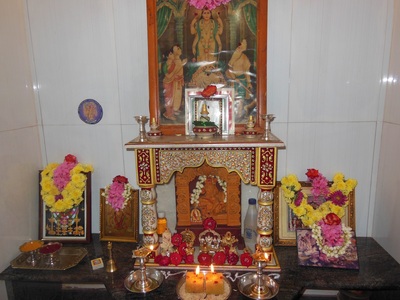
Most Hindus have a shrine in the corner of their house, normally in the kitchen. More wealthy Hindus may have a whole room dedicated to religious rituals. These domestic shrines are an important part of Hindus religious life and are often eclectic, reflecting a family’s inclinations, travels to pilgrimage sites and experiences.
Many cafes, shops and places of business also have small shrines, or at least a framed picture of a deity on the wall. At the very least some incense will be offered to the deity every morning at the start of business.
Village Shrines
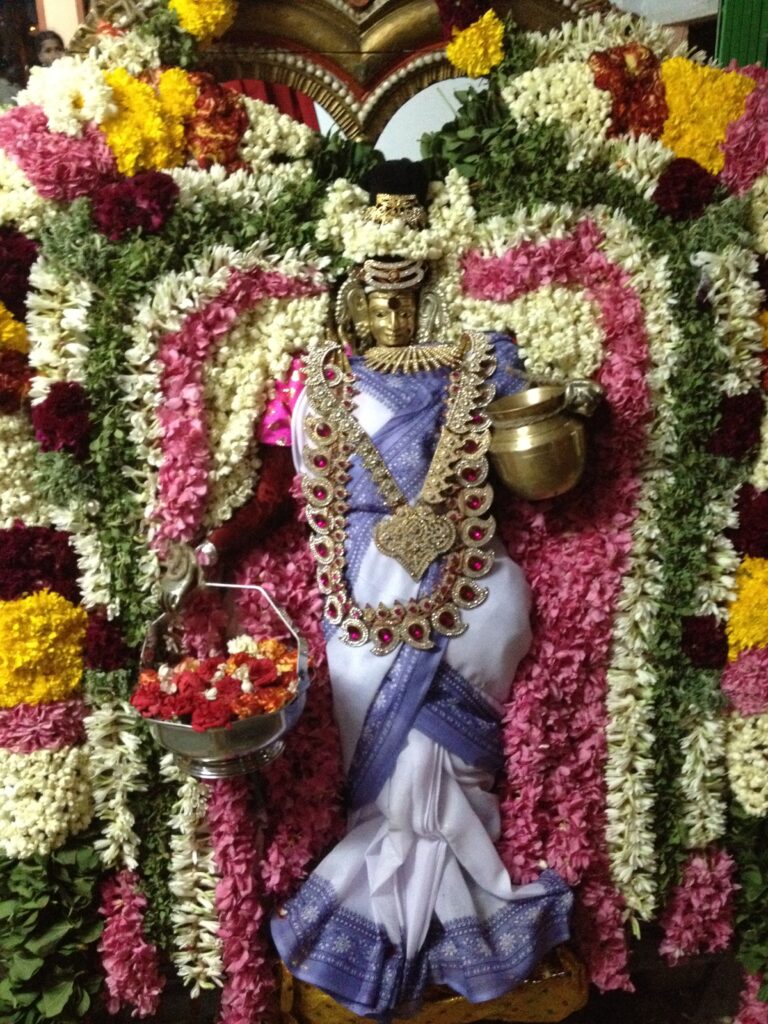
Image from Wikipedia
Indian villages also have shrines. These shrines are dedicated to deities (grāmadevatās – literally ‘village deities) who are often specific to that particular village. These deities are regarded as protecting the village from natural disasters and therefore tend to be located at the edges of the village. Increasingly these parochial deities have become associated with the gods and goddesses, such as Śiva or Devi, of the wider Hindu traditions.
Temple Shrines
Many Hindu temples are dedicated to a single deity. In traditional temple architecture the image (mūrti) of this deity is installed in a central chamber often referred to as the garbha gṛha (womb chamber). However, most of the large temples also have a number of separate shrines dedicated to gods, goddesses and companions that are associated with the central deity. For example, you will often find separate shrines to Pārvatī (Śiva’s consort) and Ganeśa (Śiva’s son) in most temples dedicated to Śiva.

Samādhi shrines

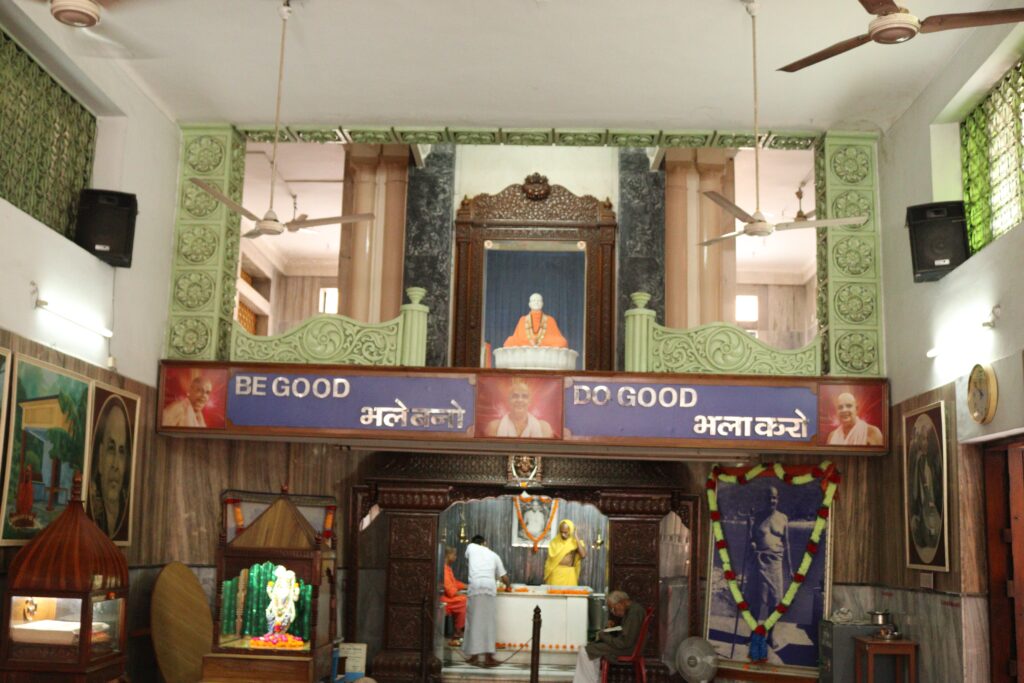
There are shrines to gurus who are thought to have escaped the wheel of transmigration It is believed that the guru who has escaped the wheel of transmigration does not die as such but achieves a transcendental state of being known as samādhi. These gurus, when they leave their physical bodies, are buried, rather than the usual Hindu practice of cremation. A shrine is often built over the place of burial.
For example, Swami Sivananda was buried at his ashram2 in Rishikesh. The building where his tomb is located is known as the Samādhi Hall. The shrine marking the spot in the centre of the Samādhi Hall has a life-size realistic statue of Swami Sivananda in meditation, a visual reminder indicating that Sivananda is spiritually present. The Samādhi Hall is the spiritual heart of the ashram.
Wayside
The term wayside indicates that these shrines are located in public spaces that are easily accessible. They might be on paths, roadsides or on pavements. People pass by these shrines on a daily basis. People may merely give these shrines a passing glance as they drive or walk past them. No matter how brief the glance this is consistent with the important Hindu concept of darśan – which means ‘sacred sight’. For this fleeting moment the devotee both sees and is seen by the deity within the shrine. However, for others these shrines might be the focus of more complex ritual activity.
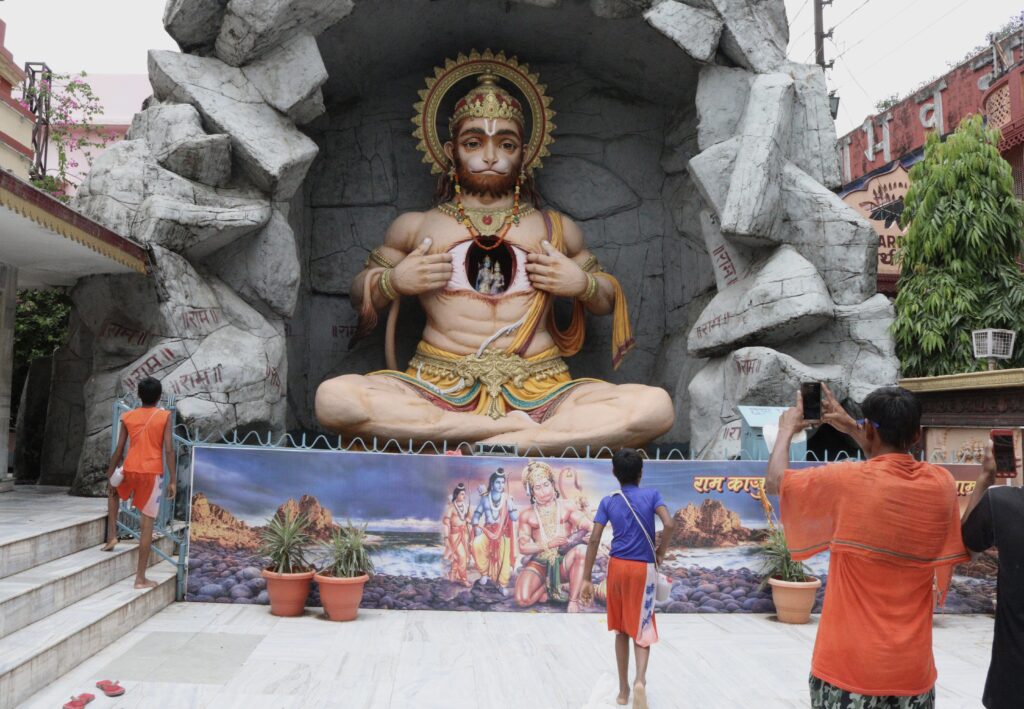
It is not always obvious what constitutes a ‘wayside’. For example, step into the grounds of Parmath Niketan Ashram, just outside of Rishikesh, and you will encounter a plethora of brightly coloured figures of Hindu deities. Whilst the ashram’s gardens are open to the public, these images are not wayside shrines as such, as they are situated on private property. However, the large image of Hanuman, albeit financed by Parmath Niketan, might be considered as a wayside shrine as it is located on a public footpath.
Formal and Informal Traditions
Robert Redfield, in his important book Peasant Society and Culture, uses the terms ‘great’ and ‘little’ traditions to distinguish two styles of religiousness. However, because ‘great’ and ‘little’ are evaluative terms, I prefer to use ‘formal’ and ‘informal’. It could be argued that temples might be considered as the sacred places of the formal traditions, whereas wayside shrines are places of worship of the informal traditions. I argue that a clear dichotomy between these styles of religiosity is difficult to maintain, especially in the Hindu context.
| Formal Traditions | Informal Traditions |
| Orthodox | Heterodox |
| Established institutional forms | Outside established institutions |
| Official religion | Folk religion |
| Hierarchical | Egalitarian |
| Bureaucratised administration | Disorganised |
| Focused on beliefs and texts | Focused on practice |
| Fairly standardised | Diverse |
| Rituals are structured and governed by rules | Rituals tend to be idiosyncratic |
| Philosophical | Magical |
| Have a historical and mythic narrative | Lack a history |
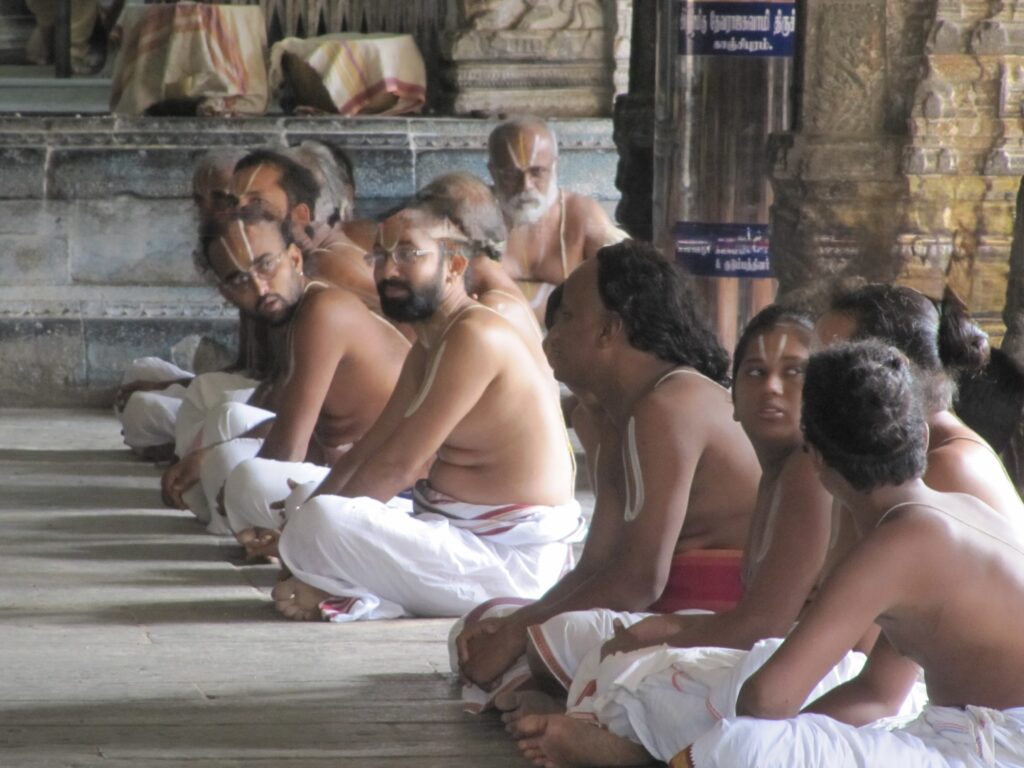
Formal religion?
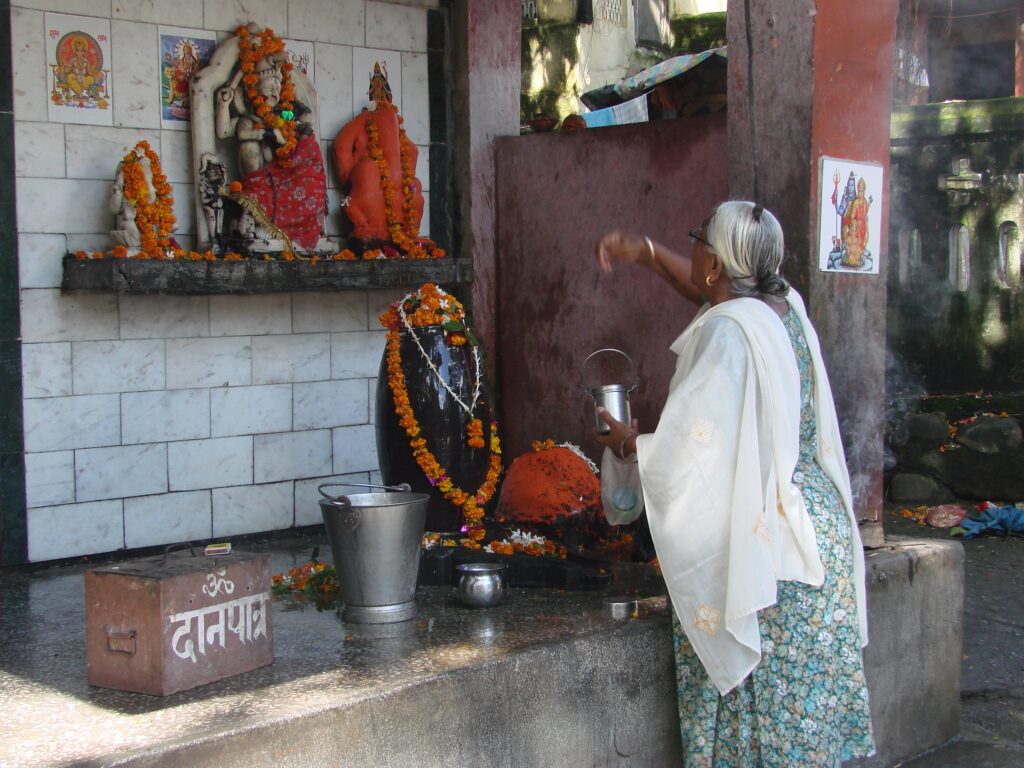
Informal religion?
Redfield observes:
The world view of the little traditions of India is on the whole polytheistic, magical and unphilosophical, while the different strands of the great Vedic traditions3 choose different intellectual and ethical emphases.
Redfield, 1956: pp. 87–8
The two pictures above seem to epitomise the distinction between the formalised modes of religiousness and more informal practices indicated in both my table and the quotation by Redfield. The Brahmin priests will have some knowledge of the Vedic texts, have a religious authority and be associated with the bureaucratised structures of the temple. The woman at the shrine is unlikely to have any knowledge of Sanskrit and is performing her own ritual unmediated by any religious authority.
However, I have placed a question mark at the end of the captions. This is to indicate that the differences between formal and informal traditions are frequently ambiguous.
Informal and formal modes of religiousness interact in complex ways. Informal traditions impact the more formal manifestations of religion, and the formal can influence the informal.
Great and little tradition can be thought of as two currents of thought and action, distinguishable, yet ever flowing into and out of each other.
Redfield 1956: p.72.
For example, the iconography founds in the temples of the formal traditions is often similar.
Images installed in temples tend to be made according to strict conventions that detail number of arms, objects held and proportions, whilst many of the images in wayside shrines tend to be less well defined. Nonetheless, this is not always the case, and you can find roughly carved images in temples and more sophisticated images in shrines.
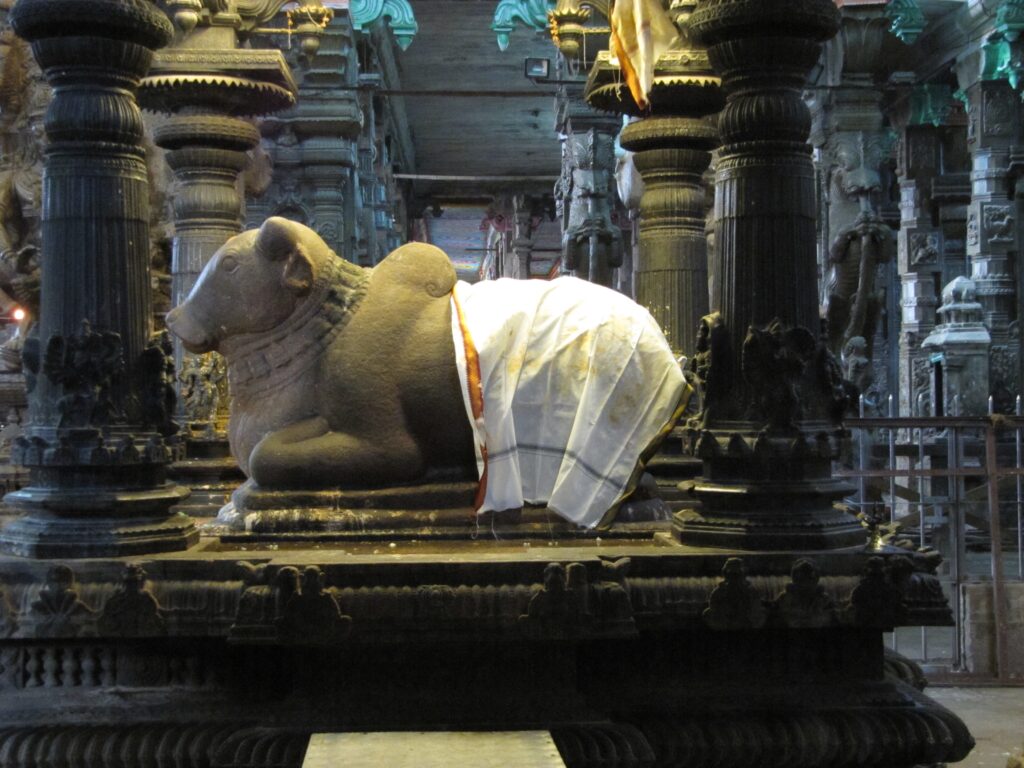
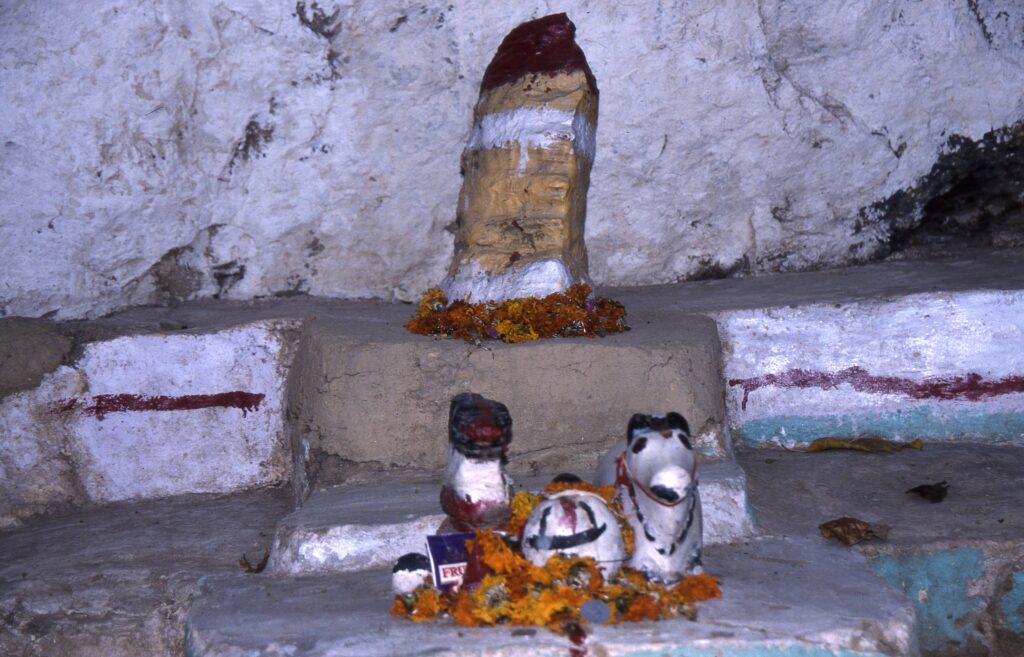

Temples located in sacred places, such as Banāras are not only associated with India’s formal sacred geography but also can be identified in a number of Hindu texts known as the Purāṇas. On the other hand, Ursula Rao suggests that these wayside shrines ‘contribute to crafting an informal religious geography’ (Rao 2023: 192). She suggests that the religion of wayside shrines:
Is the religion in the “minor”, not just because the shrines are mostly small, or started small, but because they are architectonically unspectacular and not part of any narratives of “great religion”. (Rao 2023: 193)
Many temples, particularly in South India are spectacular (see the image of the Meenaksi Temple in Madurai above). They are built in accordance with the prescriptions of the Sanskrit texts, associated with mythic narratives and officiated by brahmin priests.
However many new urban temples are not particularly spectacular or linked into Hindu sacred geography, but simply provide a place of worship for local Hindus.
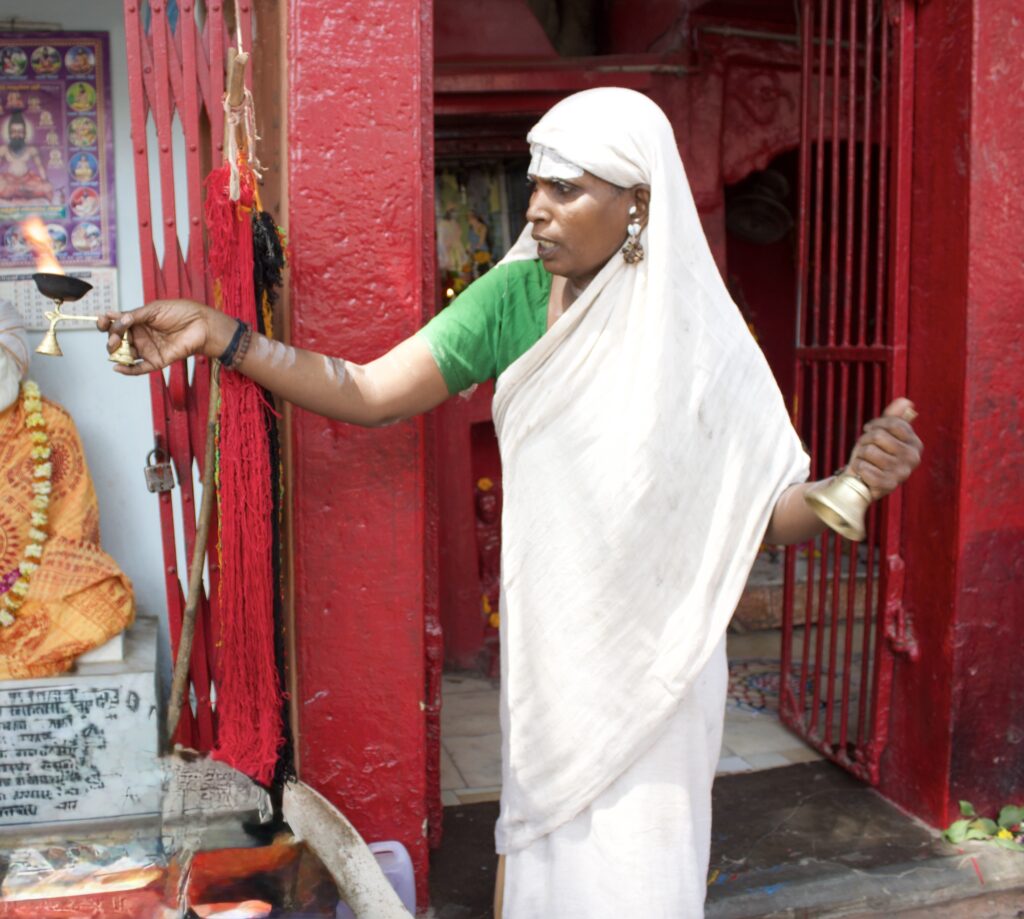
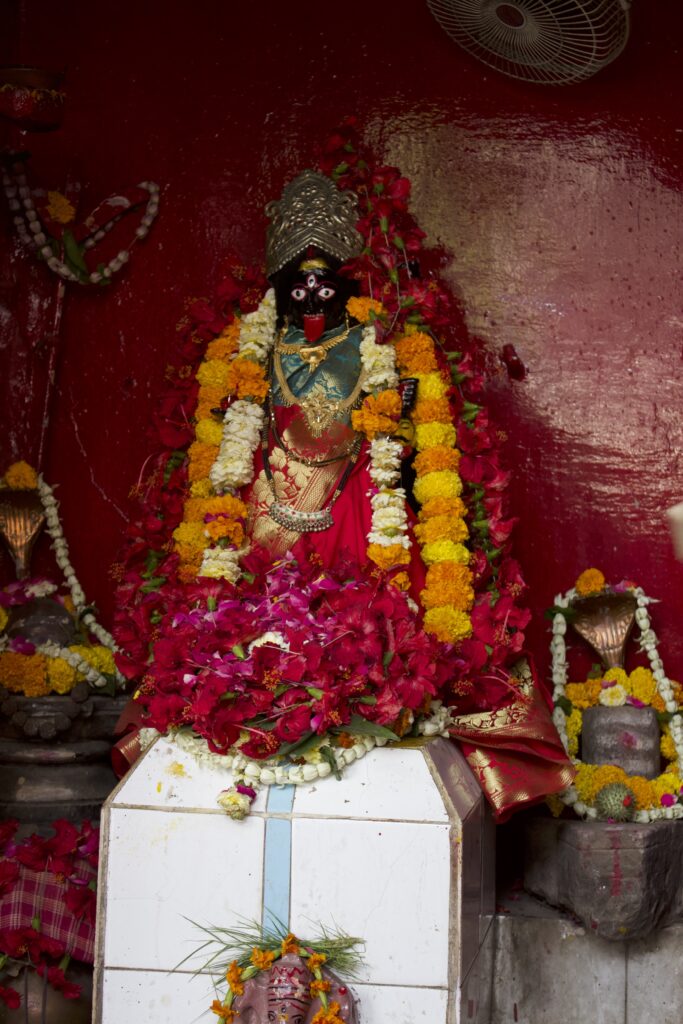
Whilst all temples have officiating priests, this is not necessarily true for wayside shrines. However, some wayside shrines do have an officiating priest/priestess. For example, this female ascetic (Sādhvī) always conducts the rituals in this small Kālī shrine in Banāras. (Also see the image above of the Ganeśa shrine in Rishikesh).
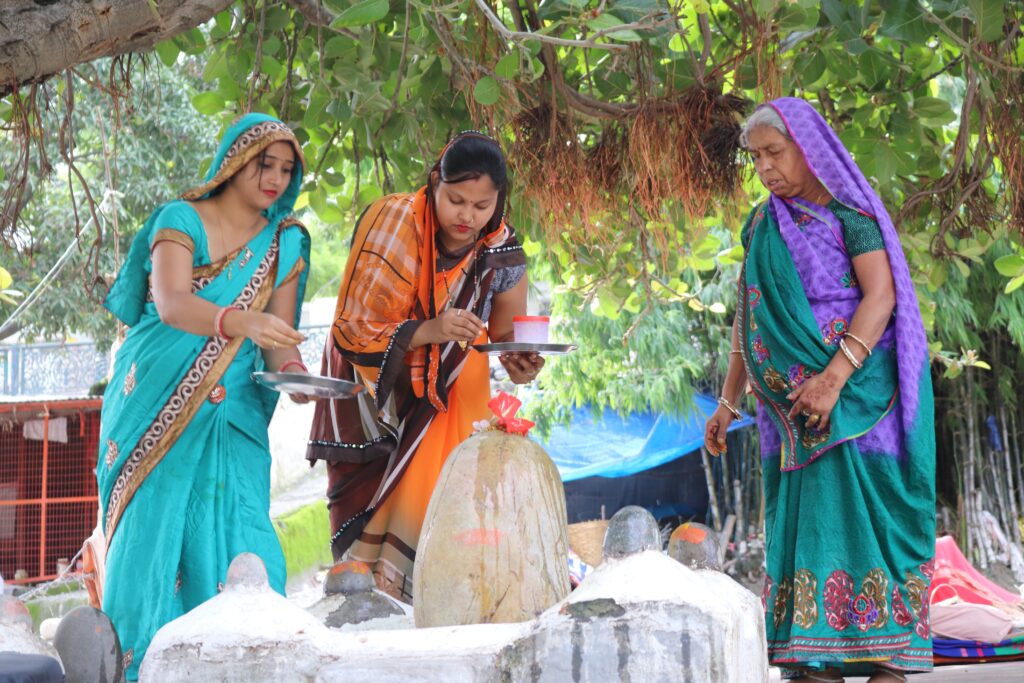
Rituals in the temples can be long and complex, and the rituals performed at shrines can seem quite perfunctory. C.J Fuller describes a very formulaic ritual performed by brahmin priests in the magnificent Minakshi Temple in the southern Indian city of Madurai This ritual known as pūjā involves 16 different stages (Fuller 1992: 64–66). However, pūjās can often be truncated without being perceived as lacking in anyway. The integral core of a pūjā is making an offering to an image in which the deity is believed to reside. It might be as simple as waving some insence or presenting some flowers. Pūjā is also the main ritual that is performed at shrines.
The other intrinsic aspect of Hindu ritual, as I have mentioned above, is darśan, which means ‘sacred sight’ – in which the devotee both sees and is seen by the deity that resides in the image. However, this does not necessarily mean a sustained engagement, even in the larger more formal temples. For example, I once visited the Sri Venkateswara Temple in Tirupati. This is possibly the most important temple in South India. It is certainly the most visited – on an average day 60,000 devotees visit. You wait in these vast halls for your turn to enter the shrine. The wait was over 5 hours. When the doors opened to allow us into the central shrine the excitement was palpable. I was literally pushed through by the pressure of thousands of pilgrims eager to get into the main shrine. I reckon that we were in and out of the main shrine in less than a minute. Nonetheless, the pilgrims were all elated as they had had darśan of Lord Venkateswara.
We can not necessarily make a strong distinction between the ritual activity, style and iconography of wayside shrines and temples. Both temples and wayside shrines are significant aspects in both the symbolic landscape and the everyday religious life of Hindus in India. Consequently, it is not possible to make a clearly distinguish between formal/great and informal/little traditions in the Hindu context.
Sources.
Fuller, C.J. (1992) The Camphor Flame: Popular Hinduism and Society in India. Princeton University Press.
Jacobs, S. (2021) Clouds Drifting Through a Landscape: Glimpses of Rishikesh. In Opinderjit Kaur Takhar and Graham
Harvey (eds.) Religion and Senses of Place. Sheffield: Equinox.
Larios, B. & Voix, R. (2018) Introduction. Wayside Shrines in India: A Defiant Religiosity. South Asia Multidisciplinary Journal
18, pp.1–42.
Mookerjee, P. (1987) Pathway Icons: The Wayside Art of India. London: Thames and Hudson.
Rao, U. (2023) Making Informal Sacred Geographies: Spiritual Presence, Sensual Engagement, and Wayside Shrines in
Urban India. Space and Culture, 26(2) pp. 192–203.
Redfield, R. (1956) Peasant Society and Culture. University of Chicago Press.
- Most of the Hindu deities have a vehicle in the form of an animal. Śiva rides the bull Nandi, and almost invariably an image of Nandi is found facing the liṅga in temples and shrines. ↩︎
- The term ‘ashram’ literally means halting/resting place. Amongst other meanings the term is primarily used to refer to monastic places. Often these ashrams are open to devotees as places of spiritual retreats as well as homes for a monastic community. Many ashrams were founded by gurus, such as Swami Sivananda, and are pilgrimage places for devotees (see my chapter on Rishikesh in Harvey and Takhar). ↩︎
- The Vedic tradition refers to the religious traditions based on a vast corpus of Sanskrit texts ,known as the Vedas, probably composed between about 1,500BCE and 500BCE. These dates are widely debated and different authors vary in their dating of this period. ↩︎
Thanks for this.