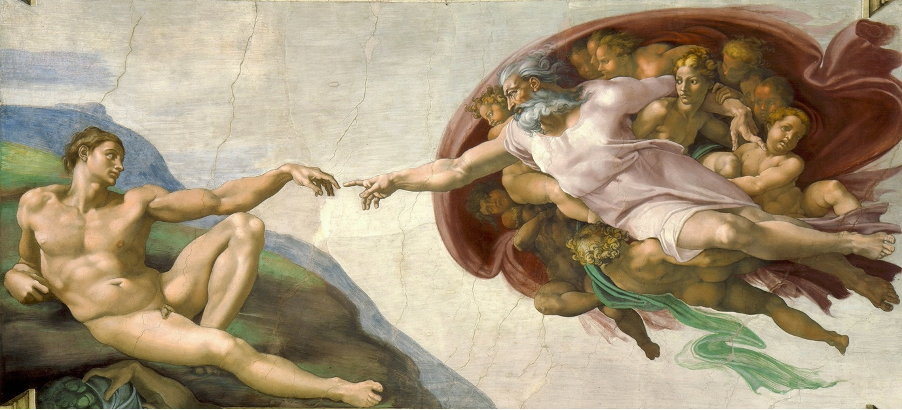
Michelangelo: The Creation of Adam
As I indicated in an earlier post iconoclasm suggests that the sacred can never be visually represented, and any visual depiction of the sacred is regarded as sacrilegious. However, visual images are significant in all religious traditions. In this post I will explore two different approaches to depicting the sacred – the iconic aesthetic and the aniconic aesthetic. Whereas the iconic ascetic utilises figurative images, the aniconic tends towards abstraction.
A Note on Terminology: The Sacred, the Numinous and the Sublime.
As many religious traditions do not use the term ‘god’, I use the term sacred to indicate a transcendent, non-empirical reality that is regarded as the underlying cause of creation and provides existential meaning to believers.
The German theologian Rudolf Otto in his important book The Idea of the Holy, first published in English in 1923, described the sacred (or in his terms the Holy) as ‘wholly other’. By this Otto means that the sacred is transcendent and is inherently different from anything in the phenomenal world. Otto describes any encounter with the sacred as numinous. He characterises the numinous experience as ‘mysterium tremendum’. Mysterium suggests something which is beyond conception or understanding, and tremendum indicates a feeling of awe. In other words, an encounter with the sacred evokes a sense of incomprehensibility and dread.
Otto also suggests that the sacred ‘cannot be expressed by means of anything else’ (Otto 1958: 9). However, the visual arts are a way of expressing a person, thing or idea in a different medium, such as paint or stone. This idea of representing one thing in terms of another is captured by René Magritte’s painting The Treachery of Images (discussed in my post But Is It Art?). However, while a picture of a pipe resembles a pipe and is therefore recognisable, no image can even begin to resemble the sacred.
If the sacred is regarded as transcendent, non-empirical and ineffable, then any form of representation is impossible. The sacred can never be fully captured in any medium– linguistic, musical, or visual.
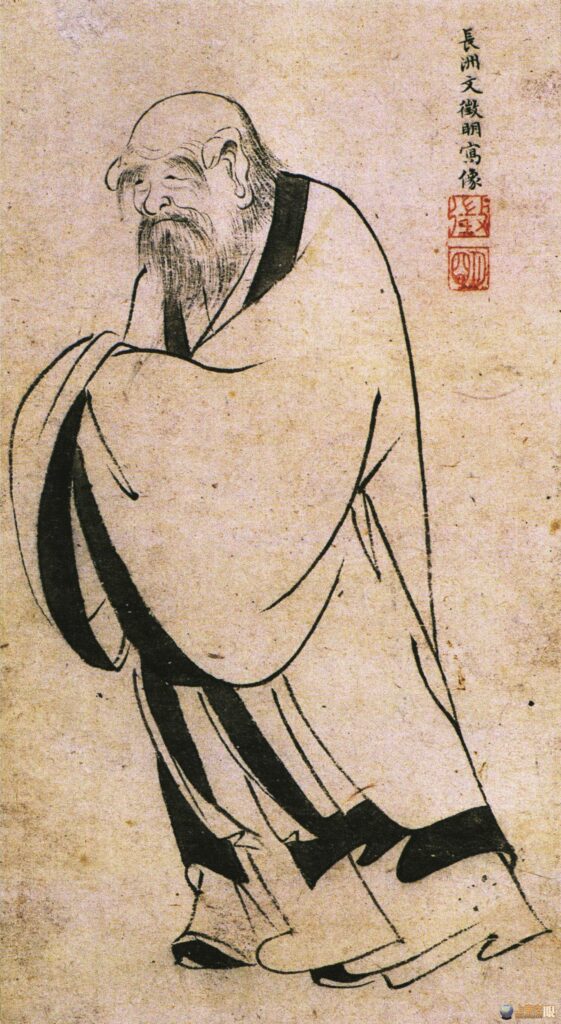
The great Taoist philosopher from the 6th century BCE Laozi (often transliterated as Lao Tzu) in his important text Tao Te Ching indicated in the very first verse:
The Tao that can be told of
Is not the eternal Tao.
Tao, which is often translated as the ‘Way’ is the sacred reality that underlies all creation. Here Laozi suggests, like Otto, that the sacred can never be expressed in any medium. However, writers, musicians and artists from all cultures have utilised a wide variety of techniques to convey a sense of the sacred.
Otto himself suggests that aspects of the sacred can be expressed through art. He observes that through great art we are ‘confronted with the numinous itself’ (Otto 1958: 67). He argues that in the arts ‘the means of expressing the numinous is “the sublime”’ (Otto 1958:65). The concept of the sublime is a theory of art originally proposed by Edmund Burke (1729–1797). The sublime, according to Burke, is the strongest emotional effect that art can evoke and is analogous to terror.
Landscapes: Evoking the Sublime
Otto’s primary example of the sublime is Chinese art from the T’ang and Sung dynasties (8th – 13th century)
These works are to be classed with the profoundest and sublimest of the creations of human art … Many a mystery lies half concealed and half revealed in these pictures. They contain the knowledge and of the ‘nothingness’ and the ‘void’, of the Tao of heaven and earth, which is also the Tao of the human heart.
Otto 1958:67
In this genre of Chinese art the sacred is evoked indirectly through a representation of the landscape.

Xia Gui (1190-1230), Streams and Mountains with a Clear Distant View, detail
https://depts.washington.edu/chinaciv/painting/tptgssla.htm
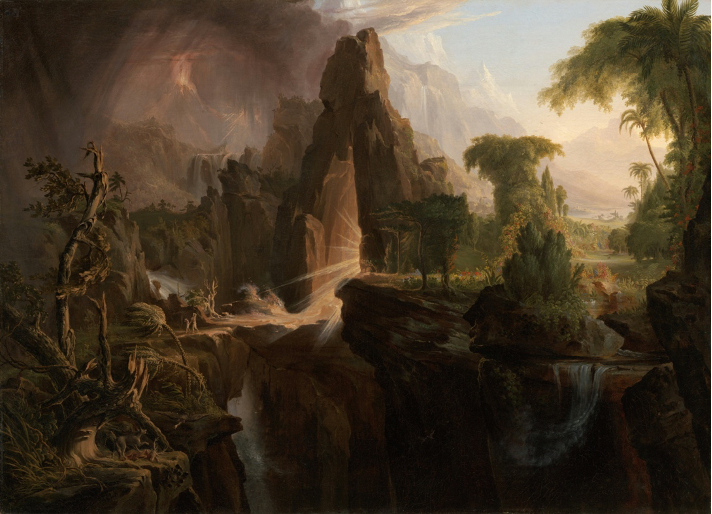

The Chinese Taoist artists were not alone in this perception that landscape painting could evoke the sacred. The Hudson School of artists in the 19th Century, and in particular Thomas Cole (1801–1848), saw a direct correlation between their faith and painting landscapes.
Thomas Cole painted religious themes such as this image of the Expulsion from the Garden of Eden. The representation of the Garden of Eden to the right of the frame is clearly inspired by the American landscape and intends to evoke the sublime.
For Cole there is something sublime about the American landscape itself.
Gazing on the pure creations of the Almighty, he feels a calm religious tone steal through his mind, and when he turns to mingle with his fellow men, the chords have been struck in that sweet communion cease not to vibrate
Thomas Cole Essay on American Scenery 1836)

In other words, Cole suggests that the sacred is revealed through creation, and that an artistic representation of the landscape can also evoke the sacred. He believed that by painting these sublime landscapes he is himself recreating ‘the pure creations of the Almighty’ (Thomas Cole Essay on American Scenery 1836). See also my post on Spirituality, The Sublime and Modern Art.
Aniconic and Iconic Aesthetics
There are two main approaches to representing the sacred in the visual arts: iconic and aniconic. The iconic aesthetic gives a central role to images, and consequently places of worship tend to be replete with imagery. It is the aesthetic that is commonly associated with Orthodox forms of Christianity and Hinduism. The aniconic aesthetic tends to be ambivalent about the use of images, and in particular the use of anthropomorphic representations of the sacred. Aniconism is primarily associated with Judaism, Islam and Protestant forms of Christianity.
This antithesis between the iconic and aniconic aesthetic has reverberated through Western culture well into the present.
Goethals (1990:2)
The Iconic Aesthetic
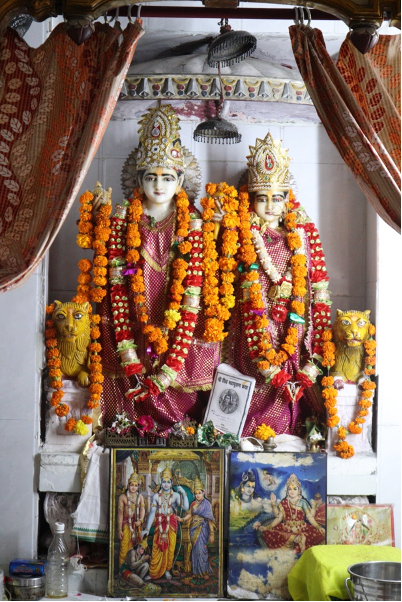
My photograph
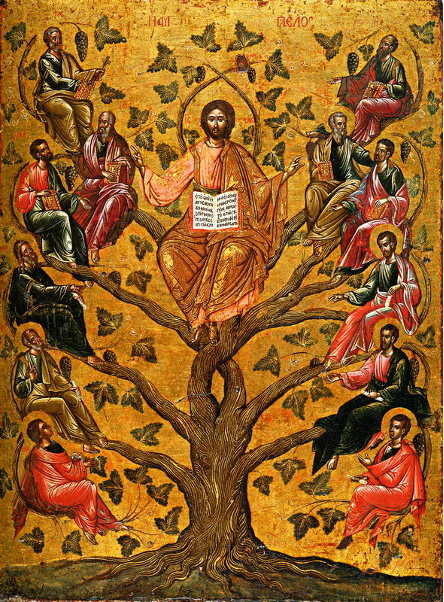
Enter a Christian Orthodox Church or most Hindu Temples and you will encounter an abundance of images. These images may be regarded as icons, which are defined by Graham Howes:
The icon is a symbol which so participates in the reality it symbolises that it is itself worthy of reverence
Howes 2007:6
In her discussion of Eastern Orthodox icons C.A. Tsakiridou, suggests that an icon is much more than a symbol of the sacred but is regarded as sacred itself.
Looking at them [icons] we have a sense that we are in the presence of something actual and alive. There is nothing symbolic about them or suggestive of representation. Instead, they deliver directly what they show, as if they speak it or enunciate it in silence
Tsakiridou 2013: 8
In Hindu devotional traditions, an image of a deity that is installed in a temple is referred to as a mūrti, which translates as ‘form’. Once an image of the deity has been made and is installed in a temple, it is awoken by a ritual of opening the eyes and the chanting of mantras.
Oh Viṣṇu approach this image and wake it up with thy embodiment of knowledge and the divine energies which are concentrated in this one image
Agni Purāṇa cited in Eck 1985: 52)
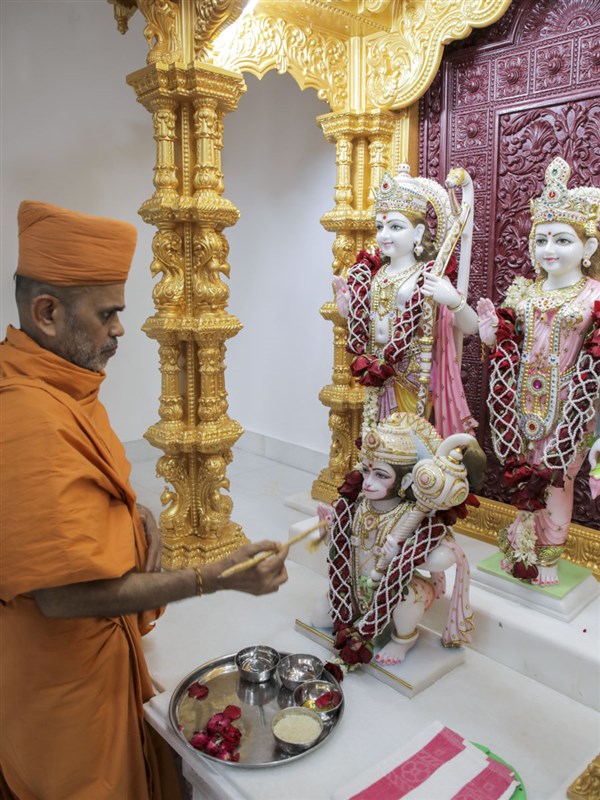
https://www.baps.org/Photos/2019/Murti-Pratishtha-19747.aspx?mid=160486
When a Hindu goes to a temple, they indicate that they are going for darśan, which means ‘sight’. So the devotee not only sees the deity but is also held in the sacred vision of the deity.
I once visited the Venkateswara (Balaji) Temple in Tirumala, South India. This is one of the most visited Hindu temples, and between 60,000 and 80,000 devotees visit this temple every day. I queued for over 5 hours to enter the temple. However, with the press of ardent pilgrims, I was probably only in the temple for a couple of minutes. I was initially rather disappointed, but I quickly realised that the pilgrims were ecstatic as they had had darśan of Venkateswara, and the actual length of time in the temple was not particularly important.
What is very noticeable in Christian art – whether we are referring to Protestant, Catholic or Orthodox forms – God (the Father) per se is rarely depicted. God is after all an invisible presence. Perhaps the most famous visual representation of God the father is Michelangelo’s image at the Sistine Chapel The Creation of Adam. Where God is represented he is almost inevitably depicted as male, elderly and often with a beard. This is perhaps derived from the Genesis verse (1:26) which suggests that man was made in God’s image. However, these few images have deeply influenced the way that God is visualised in the Christian world.
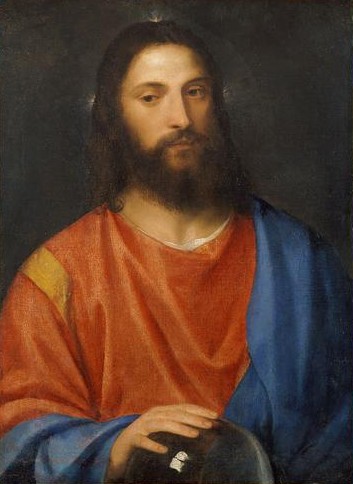
Christianity is replete with images of Jesus. As God took on a human form, it was possible to represent the sacred in the form of Christ. John of Damascus (674–749 CE) suggested:
When He who is bodiless and without form, immeasurable in the boundlessness of His own nature … is found in a body of flesh, then you may draw His image and show it to anyone willing to gaze upon it … I do not worship matter; I worship the Creator of matter who became matter for my sake.
John of Damascus
In other words, God is revealed though the body of Christ, and images of the body of Christ can also reveal God. Here John of Damascus also denies that the representation of the sacred necessarily entails idolatry. However critics of the use of images argue that visual representations of Christ focus too much on his corporeal form and cannot capture divine aspect of his nature.
The Aniconic Aesthetic
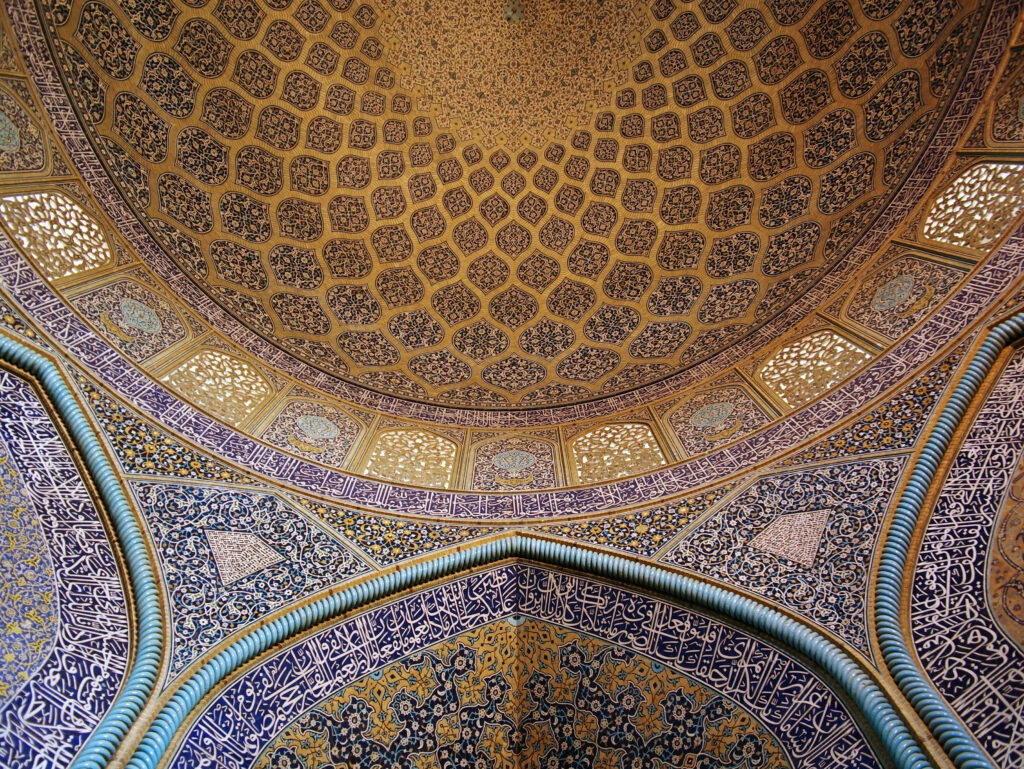
The idea that visual representation can never portray the sacred has led to a different style of aesthetic that can be called aniconism. While scholars debate the precise meaning of the term, I will define aniconism as the belief that the sacred can never be depicted in a figural form, and particularly cannot be conveyed in anthropomorphic (in the form of a human) or theriomorphic (in the form of an animal) ways.
The aniconic develops its own kind of aesthetic, which can be perceived as a kind of abstract beauty. In particular symmetry is associated with the sacred.
A particular type of beauty resulted from this rejection of images and the creation of fitting places for liturgy and contemplation
Goethals 1990: 34
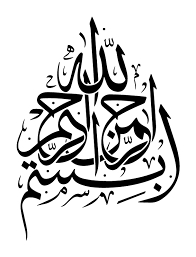
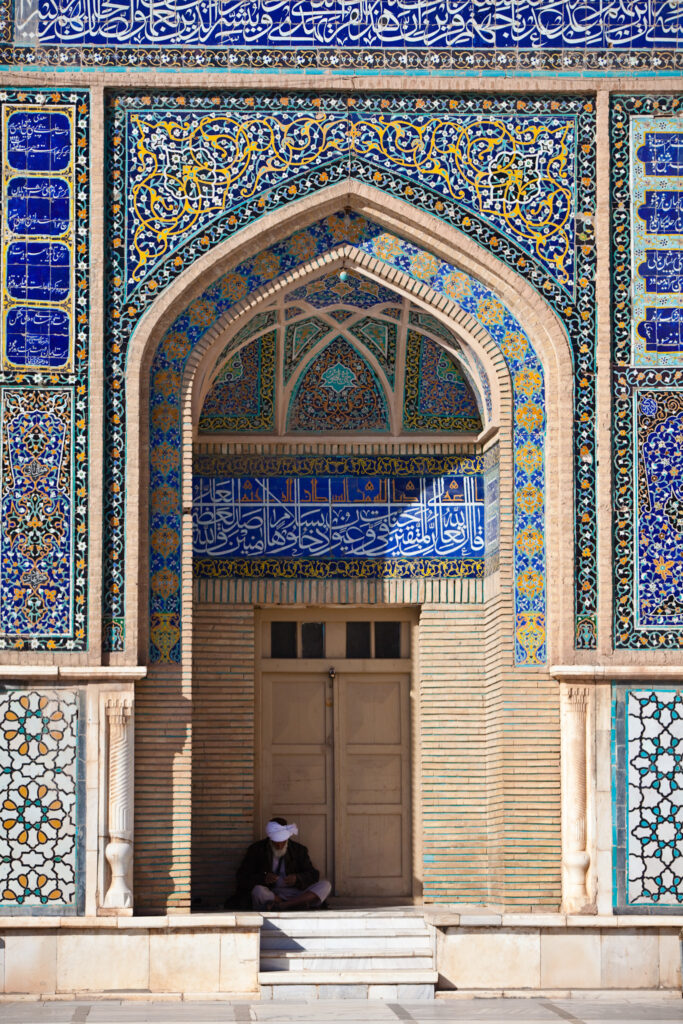
The aniconic aesthetic is most fully developed in Islam, where representational art, and in particular representations of the Prophet are regarded as potentially leading to idolatry. However, mosques can be very beautiful spaces.
Calligraphy and geometrical patterns play a major part in most forms of Islamic art.
While the initial revelation was oral, the Qur’anic text was soon committed to writing and Qur’anic inscriptions very quickly became a key aspect in the ornamentation of buildings, coins, textiles and objects
Graves 2014:313
Not only does the Arabic calligraphy, and in particular the Qur’anic text, develop into a particular way of representing the sacred in Islam, but the aversion towards figurative art led to the use of repeating geometric patterns, often mistakenly referred to as arabesque, which have almost become synonymous with Islamic art.
Geometry and geometric design reveals the harmony of creation.

Although we are used to seeing images of the Buddha, early Buddhist art tended to be aniconic and there were no figurative representations of the Buddha. This absence of representational images is linked to the metaphysical ideas about the Buddha. On achieving enlightenment, the Buddha is not present in the world as such, but has transcended the duality of phenomenal existence, and therefore cannot be depicted.
The teachings Dhamma are sometimes regarded as more significant than the historical Buddha. The first sermon that Buddha preached after his enlightenment is referred to as turning the wheel of Dhamma. Consequently, particularly in early Buddhist art, one the most of the commonly found representations is the Dharmachakra – the Wheel of Teaching, and not the anthropomorphic figure of the Buddha.
Conclusion
While the sacred is regarded as transcendent and ineffable and therefore not possible to be visually represented, all religious traditions have developed what Graham Howes has called ‘the art of the sacred’. The ways and styles of the art of the sacred can tell us much about the theology and metaphysical views of particular religious traditions.
My photograph
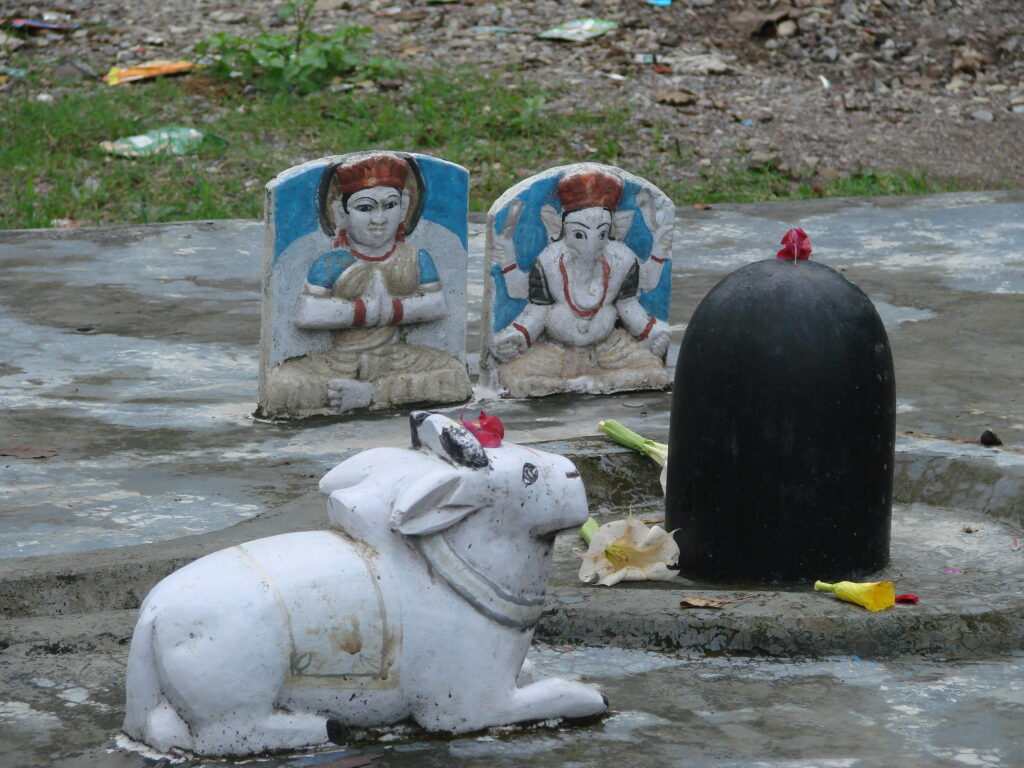
My photograph
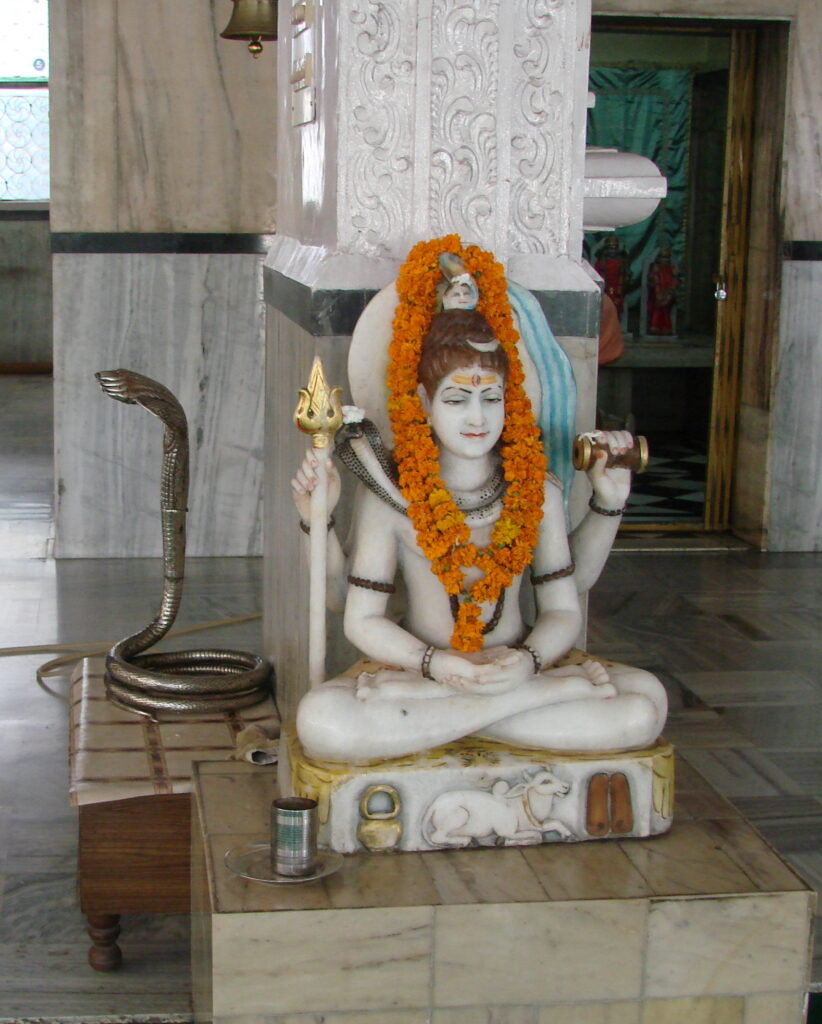
While I have made a distinction between iconic and aniconic aesthetics, the difference is not absolute. Many religious traditions draw on both these modes of representing the sacred. In the photos above we see both the iconic and the aniconic forms of the Hindu deity Śiva. Indeed these are sometimes combined and you can see the face of Śiva represented on his aniconic representation.
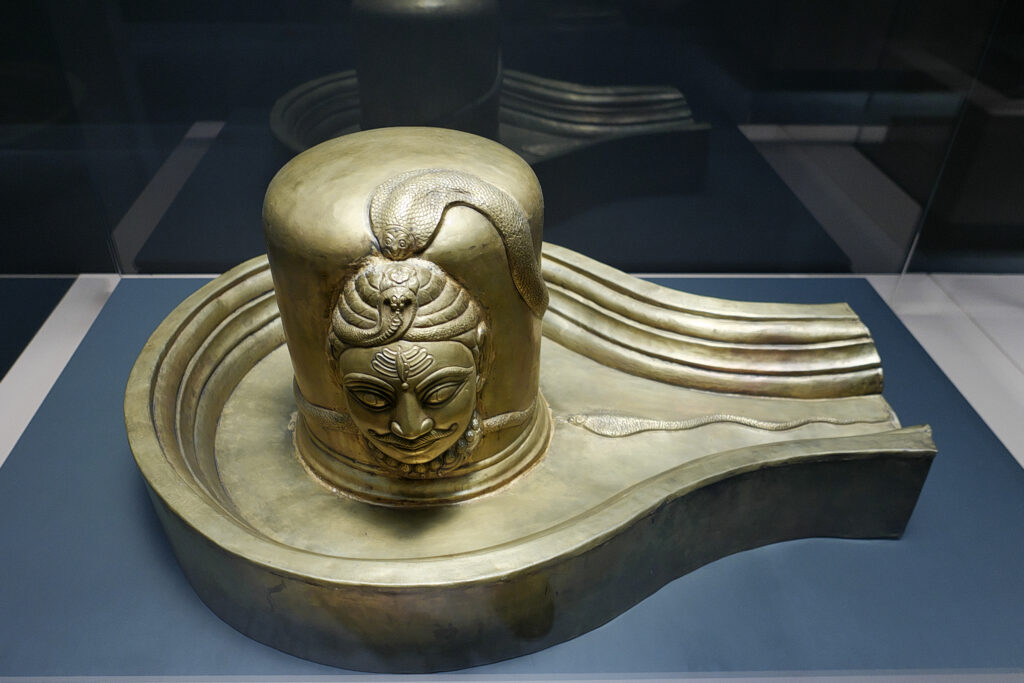
References
Cole, T. (1836) Essay on American Scenery. Available at: https://xroads.virginia.edu/~Hyper/DETOC/hudson/cole.html
Eck, D. (1985) Darśan: Seeing the Divine Image in India. Chambersburg: Anima Books.
Goethals, G (1990) The Electronic Golden Calf: Images, Religion and the Making of Meaning. Cambridge Ma:Cowley
Publications.
Graves, M.S. (2014) Islam and Visual Art. In Brown, F (ed.) The Oxford Handbook of Religion and the Arts. Oxford University
Press.
Howes, G. (2007) The Art of the Sacred: An Introduction to the Aesthetics of Art and Belief. London: I.B. Tauris.
John of Damascus. First Apology Against Those Who Attack the Divine Image. Available at:
http://faculty.washington.edu/miceal/Courses/CompLit280/John_of_Damascus.html
Otto, R. (1958) The Idea of the Holy. Oxford: Oxford University Press.
Tsakiridou, C.A. (2013) Icons in Time, Persons in Eternity: Orthodox Theology and the Aesthetics of the Christian Image.
London: Routledge.