Introduction
In his detailed history of what he calls ‘the age of ecology’ Joachim Radkau argues that there has been a paradigm shift in recent times in our responses to environmental issues. Whilst it is impossible to precisely date when paradigm shifts occur, Radkau argues that this change in attitudes to environmental issues begins around 1970.
Most elements of today’s ‘environmentalism’ have had a long history under various other names … One thing can be stated as once, though: the networking, wide impact and global horizons that developed from 1970 were more or less new
(Radkau 2014: 7).
Radkau suggests that ecology cannot be clearly defined but it has come to define the post 1970s era as ‘as a philosophy of life and source of political legitimacy, as science and as watchword of protest movements’ (Radkau 2014: 8).
No paradigm shift occurs in a vacuum but can be thought of as an accumulation of ideas which overtime coalesce to create a new way of thinking about the world. I have already discussed John Muir, who can be considered one of the major forerunners of the modern environmental movement. In this post, I will briefly explore some other precursors to and context for the age of ecology.
Precursors to the Age of Ecology
Concern about the human impact on the environment has a long history. Plato, for example, was not concerned with the environment per se, but more focused on what constitutes the good society. Nonetheless ideas about environmental sustainability can be identified in his writing. Mark Stone suggests that ‘in Plato’s view just societies are environmentally sustainable’ (Stone 2018: 106). Plato argues, in the Republic, that the civilised society needs to produce enough resources to sustain its citizens. Plato argues that the citizens should not seek excessive luxuries. He suggests that if the citizens demand too many material possessions ‘the territory which was formerly enough to support us will now be too small’ (Plato 373d in Lee 1974: 123), and this would inevitably entail conflict. Whilst Plato suggests that sustainability is a logical corollary of the just society, later commentators like Murray Bookchin (1921–2006) suggest that sustainability is not subsequent to social justice, but inextricably entwined.

Image from Lapham’s Quarterly
Many of the precursors to modern manifestations of environmentalism focused on two aspects – the conservation of natural resources and pollution. Furthermore, these precursors tended to be primarily concerned with local or regional environmental issues.
Conservation
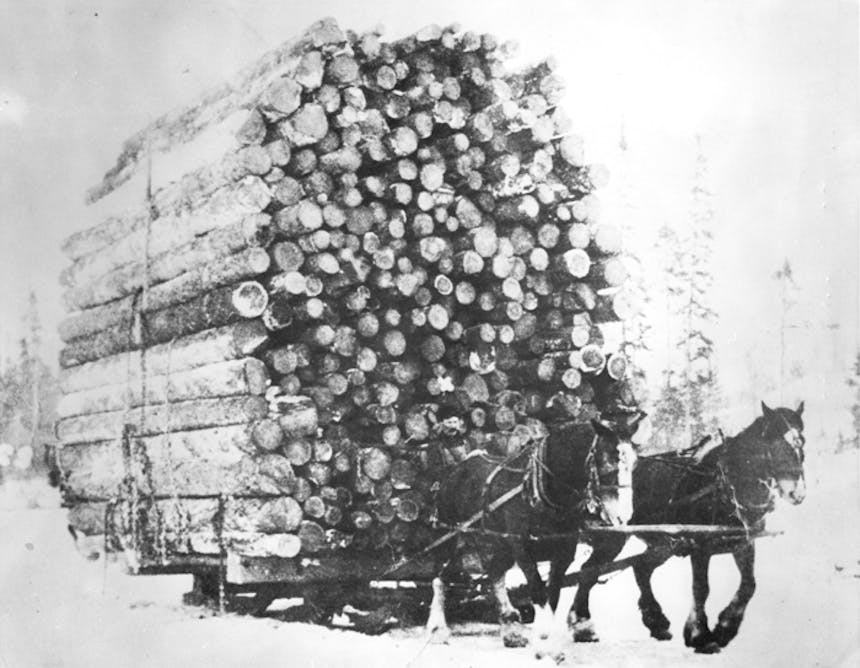
In the late 18th century there was a concern about the depletion of forests in Europe. Wood was a crucial commodity in this early industrial period, and there was a panic about the shortage of wood across Europe. This led to the idea of forest management, rather than uncontrolled destruction. Radkau points out that in Germany ‘around 1800 “sustainability” (Nachhaltigkeit) became a magic word (Radkau 2014:13). However, this was primarily an economic argument about the lack of affordable timber and firewood rather than a concern for environmental degradation.
A little later in the US, Gifford Pinchot made the distinction between wanton felling and the careful management of timber resource (see my post on John Muir). The idea of resource management informs the later concept of what has come to be known as sustainable development.
Pollution
Industrialisation resulted in terrible pollution. B.W. Clapp calls the early industrial period the age of smoke and smells. The industrial revolution was primarily powered by coal. For example, it is difficult to imagine what the air quality was like in Stoke on Trent, the heart of the potteries, which in its heyday had around 4,000 bottle kilns all fired by coal. In addition, much transport was powered by coal and many people cooked and heated their houses by burning coal.

In the middle of the 19th century, the UK Parliament began to legislate to try and improve air quality. For example, the Smoke Nuisance Abatement Act was introduced in 1853 to try and reduce pollution in London. Lord Palmerston, who was then Home Secretary argued that:
A few, perhaps a hundred gentlemen connected with the different furnaces in London, who wished to make two million of their fellow inhabitants swallow the smoke which they could not themselves consume and who thereby helped to deface all our architectural monuments, and to impose the greatest inconvenience and injury upon the lower classes.
(cited in Clapp 1994: 33)
These early concerns about conservation of natural resources and the pollution created by industrialisation were primarily practical, and there was no serious philosophical consideration of the issues.
Romantic Poets and the Transcendentalists
The romantic poets in Britain and the Transcendentalists in the USA can be thought of as developing an embryonic environmental philosophy. Both the romantic poets and the Transcendentalists were literary, philosophical and spiritual movements that were reactions against their perception of the stifling mundanity of urbanisation and industrialisation. Both groups also represented nature in spiritual terms.

Image from Wikipedia
Ralph Pite (1996) suggests that the romantics poets in Britain, such as William Wordsworth (1770 – 1850), can be seen as espousing an ecological point of view. For example, Wordsworth wrote in his autobiographical poem The Prelude:
The passions that build up our human soul;
Not with the mean and vulgar works of Man;
But with high objects, with enduring things,
With life and nature; purifying thus
Wordsworth believed that salvation lay through engagement with the natural world, and not through human artifices.
Similarly, the Transcendentalist Henry David Thoreau (1817 – 1862), In his 1862 essay Walking, writes:
Hope and the future for me are not in lawns and cultivated fields, not in towns and cities, but in the impervious and quaking swamp ….
Thoreau 2014:27
I enter a swamp as a sacred place, a sanctum sanctorum. There is the strength, the marrow, of Nature
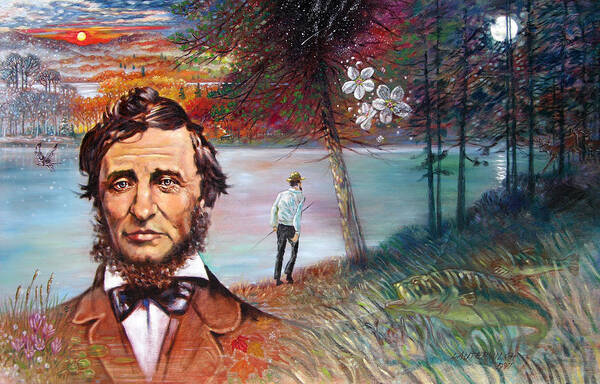
Image from Fine Art America
Radkau calls these early ideas as environmentalism before the environmental movement, which really begins in the late 1960s/ early 1970s.
The Context for the Emergence of the Environmental Movement.
There were four significant factors that created the context for environmentalism to coalesce into an environmental movement. These factors are:
- Misgivings about science, technology and industrialisation.
- The perception of planet earth as a single place
- The counterculture.
- Environmental science and writing.
Misgivings About Science, Technology and Industrialisation.

There has long been an ambivalence about science, technology and industrialisation. On the one hand there is no doubt that science, technology and industrialisation has bought many benefits, but they also have had many harmful repercussions. Post World War II there were numerous high-profile incidences widely that challenged any faith in the unalloyed benefits of science. The most obvious was the proliferation of nuclear weapons that could potentially destroy the world, and this created an ambivalence about nuclear power.
To give just two further examples:
- Thalidomide was a drug developed in the mid 1950s and prescribed for anxiety. It was also given to pregnant women for morning sickness. Thalidomide was prescribed in 46 countries around the world. However, thalidomide caused severe birth defects, which affected over 10,000 births. This was one of the first instances which it was recognised that scientific fallibility had global consequences.
- In 1967 the oil tanker the Torrey Canyon hit the rocks off the coast of Cornwall and spilt 10,000 tons of crude oil, which polluted the beaches and sea. Phil Macnaghten and John Urry suggest that this environmental disaster was ‘a symbolic landmark event in the emergence of the UK environmental discourse’ (Macnaghtan and Urry 1998: 49).
Only One Planet Earth!
The idea that we inhabit a single planet was visually represented in 1968 with William Anders’ photograph Earthrise, taken whilst orbiting the moon in Apollo 8. John Hannigan suggests:
The single most effective environmental message of the century was totally inadvertent: the 1969 [sic] view from the moon of a fragile spaceship earth’. (cited in Garrard 2023: 188)
Perhaps even more significant was the photograph of planet earth released by NASA in 1972, that is widely referred to as the Blue Marble. This iconic photograph, which is reputed to be the most reproduced photograph ever, not only emphasised the idea of earth as a single place, but also conveyed the idea of the vulnerability, beauty and preciousness of the planet in the featureless vastness of space. This period saw the prominence of metaphors such as ‘spaceship earth’; ‘a global village’; ‘lifeboat earth’, that emphasised the singularity and precariousness of, and mutual responsibility for our planetary home.

Image from Wikimedia

The Counterculture
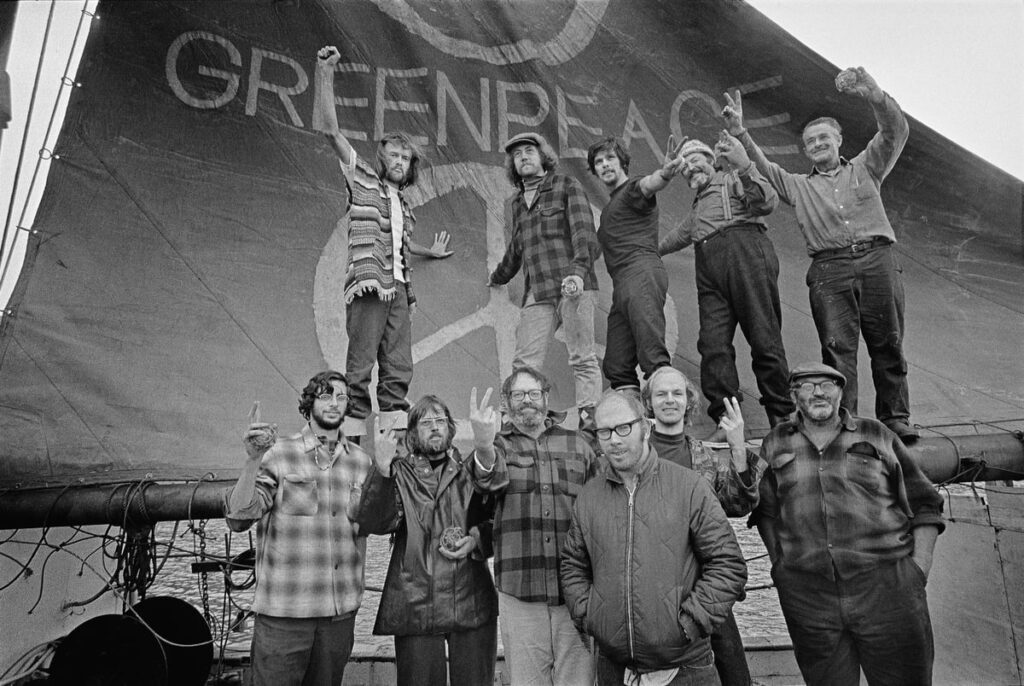
Image from Greenpeace
Frank Zelko, in his history of Greenpeace observes ‘the new Greenpeace-inspired environmentalists wore tie dyed tea shirts and long hair’ which was in stark contrast to the conservationist style of the Sierra Club hikers of ‘corduroys and cardigans’ (Zelko 2013: 5).
Counterculture generally refers to any group that challenges the mores and values of mainstream society. The counterculture more specifically refers to the dissenting movement of the 1960s. The 1960s counterculture predominantly involved young people who are often referred to as hippies. The hippies shared many common values and tried to find alternative ways of life that were often in opposition to the lifestyle of their parents. Theodore Roszak, who is largely credited with coining the term counterculture, suggested that
The environmental movement would surely have never gotten beyond its conservationist orientation if there had not been those who were willing to ponder the limits of urban industrial society’ (Roszak 1995: xxvii).
‘
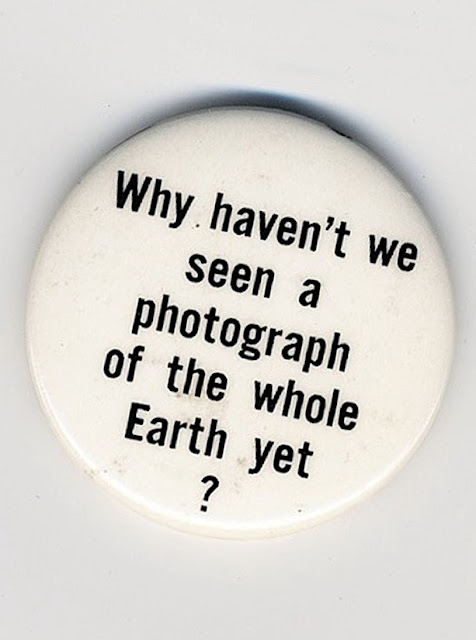
Perhaps, the most important individual for the embryonic environmental movement from the counterculture was Stewart Brand, who was largely responsible for NASA releasing photographs of planet Earth from space. Brand suggests that whilst on LSD he came to the realisation ‘that seeing an image of Earth from space would change a lot of things’ (Brand cited in Kirk 2007: 40). In 1966 Brand distributed small badges with the legend ‘why haven’t we seen a photograph of the whole Earth yet?’. This, according to legend, encouraged NASA to release images of earth from space into the public domain.
In 1968 Brand published the first Whole Earth Catalog, which appropriately had one of the first photographs of Earth from space to enter the public domain. The Whole Earth Catalog described itself as ‘an evaluation and access device’ (Whole Earth Catalog 1968). The Catalog printed regular editions until May 1971, and then was published sporadically until its 30th Anniversary in 1998. The Whole Earth Catalog is a cornucopia of ideas, reviews of books and products aimed at helping people become more self-sufficient. Underlying the advocacy for a more self-sufficient lifestyle was a critique of industrialisation, urbanisation, economies of scale and a concern to safeguard the planet.
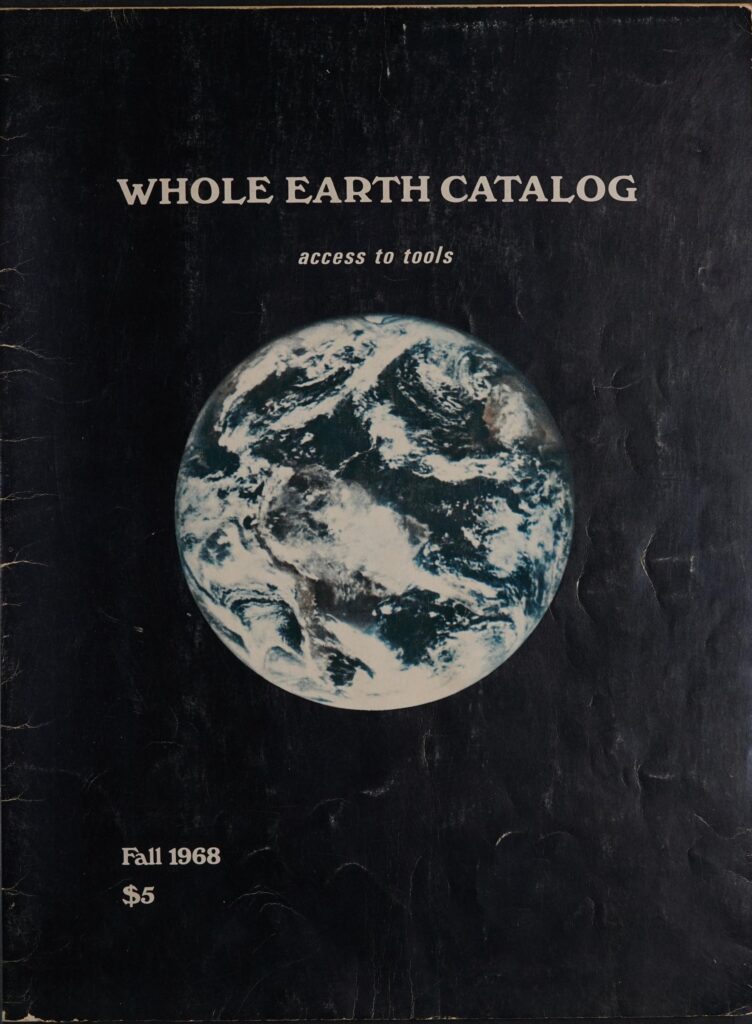
The ecological sensibility conveyed through the Whole Earth captured a new alchemy of environmental concern, small-scale technological enthusiasm, design research, alternative lifestyles, and business savvy that created a model of environmental advocacy.
(Kirk 2007: 2)
Environmental concerns and science
Concern for the environment was not simply a romantic and countercultural ideal but, from the 1960s onwards, scientific research and publications were increasingly confirming the destructive nature of human activity on the planet. Furthermore, the idea of the environment as a network of mutually interdependent biotic and abiotic relationships was being developed in the new science of ecology.
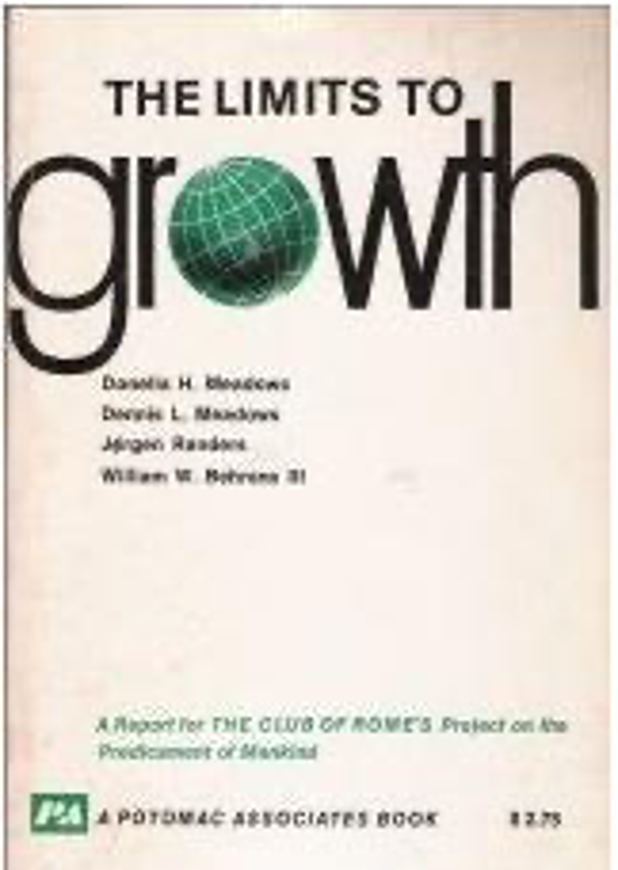
There were two seminal texts, that almost everyone in the embryonic environmental movement refer to as inspirational: Rachel Carson’s book Silent Spring first published in 1962 and Limits to Growth published in 1972.
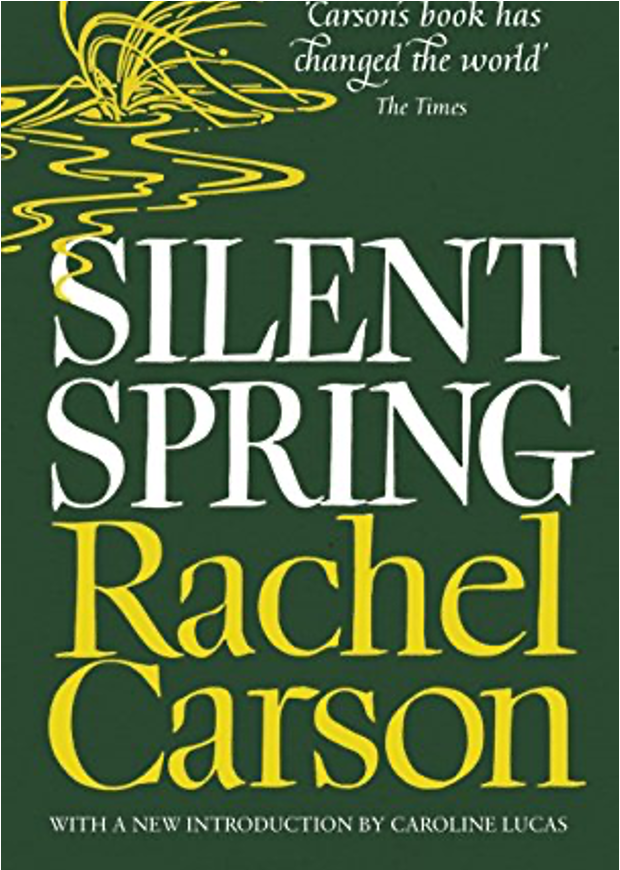
Rachel Carson was a well-respected marine biologist. Her book Silent Spring is a vision of how chemical fertilisers and pesticides, particularly DDT, were poisoning the landscape. Carson begins her book with what she calls ‘A Fable for Tomorrow’. In this short section she describes an idyllic rural scene.
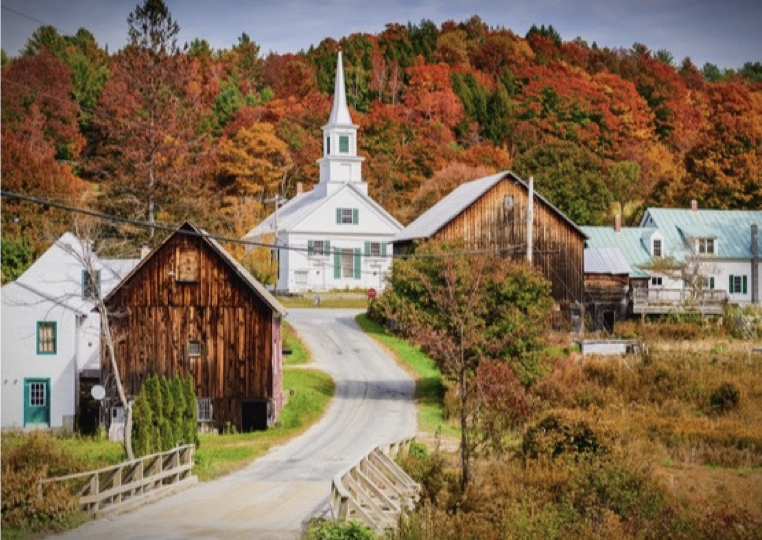

There was a town in the heart of America where all life seemed to live in harmony with its surroundings. The town lay in the midst of a checkerboard of prosperous farms with fields of grain and hillsides of orchards where, in spring, white clouds of bloom drifted above green fields.
Carson 2000: 21
However, this rural idyll is silenced when:
A strange blight crept over the area and everything began to change. Some evil spell had settled on the community: mysterious maladies swept the flocks of chickens; the cattle and sheep sickened and died. Everywhere was a shadow of death.
Carson 2000:21
Carson states that this blight was not a natural disaster but bought about by the people themselves. Carson points out that the town is fictitious and her graphic description of the catastrophic blight did not occur in a single place. However she observes that all different aspects of her account have occurred somewhere. The rest of the book is an explanation of how the landscape is being poisoned by chemicals.
Carson clearly draws on her knowledge and experience as a scientist, yet at the same time Silent Spring is not intended for the scientific community. Her language, as the short opening demonstrates, is not the conventional idiom of scientific reports. In fact, the scientific community, especially those working for the agrochemical industry, were highly critical of Carson’s book, suggesting that it was unscientific because the language was too emotional. However, it is precisely because of her emotive idiom that the book became a best seller and was so influential. The journalist Tim Radford indicated that:
If you had to choose one text by one person as the cornerstone of the conservation movement, the signal for politically savvy environmental activism, and the beacon of worldwide lay awareness of ecological systems, Silent Spring would be most people’s clear choice (Radford 2011).
Silent Spring was persuasive as it draws on two tropes that are embedded in American culture – the pastoral and the apocalyptic. It looks back at a time of rural abundance evoked by the idea of the pastoral. However, Silent Spring was also powerful because the description of destruction that was caused by an invisible force seemed analogous to fears of the cataclysm that is caused by radioactive fallout. Carson’s description of the death of nature was consistent with ‘the more sinister image of science that lurked in the popular imagination’ (Killingsworth and Palmer 1996: 27).
The Limits to Growth is a report that was written by a group of scientists from MIT. This report was sponsored by The Club of Rome, ‘a group of thirty individuals from ten countries’ who gathered together to discuss ‘the present and future predicament of man’. (Meadows et al 1972: 23)
The Limits to Growth was one of the first uses of computer modelling. The report looked at the interaction between five global factors:
- Rapid population growth
- Agricultural production
- Depletion of non-renewable resources
- Accelerating industrialisation
- Deteriorating environment
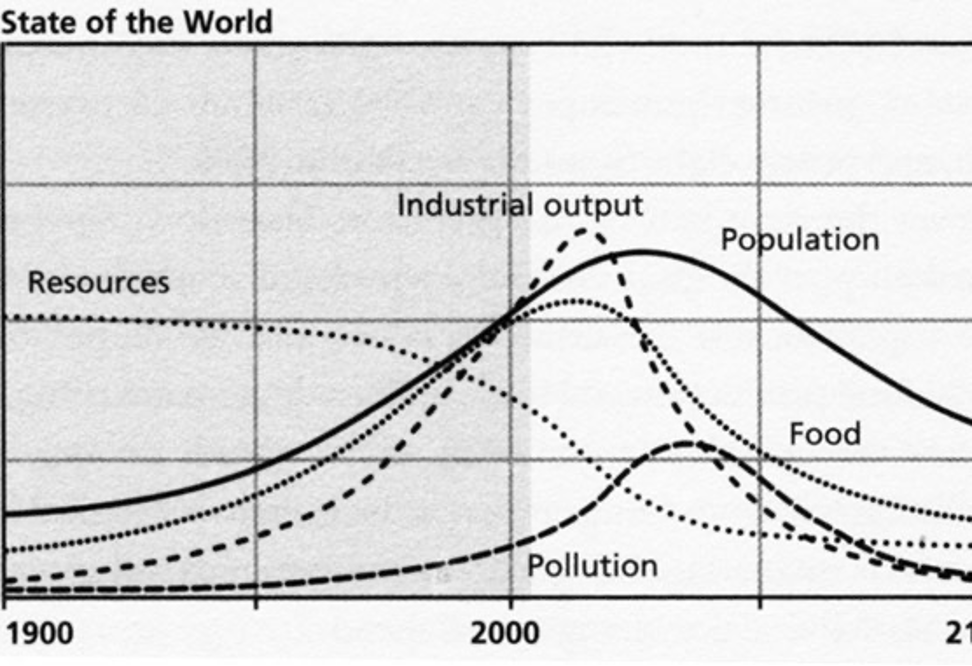
They concluded that if the current trends in these 5 factors continued ‘the limits to growth on this planet will be reached within the next one hundred years’, and this would be catastrophic for all humanity and the planet. However:
It is possible to alter these growth trends and to establish a condition of ecological and economic stability that is sustainable far into the future
Meadows et al 1972: 23–24
The rhetorical style of The Limits to Growth is very different to that of Silent Spring. The Limits to Growth utilises a more conventional scientific idiom than Silent Spring. It uses less emotive language and is replete with quantitative data, figures and graphs. Nonetheless, it did reach a fairly wide readership, and in its own way made a very significant contribution to the embryonic environmental movement.
The Age of Ecology
On April 22, 1970, about 20 million people across the US took to the streets to demonstrate their concern for the environmental destruction caused by human action. This has now become an international event. With some justification the Earth Day web site proclaims: ‘Every year on April 22, Earth Day marks the anniversary of the birth of the modern environmental movement’.


Friends of the Earth (FoE) was founded in 1969 by David Brower, who had been a member of the Sierra Club. It quickly became an international network of affiliated groups. The UK branch of FoE was founded in 1971 and came to prominence when it dumped 1,500 non-returnable bottles outside the HQ of Schweppes. In 1971, the embryonic Greenpeace set sail in an old fishing boat to try and halt the US from testing nuclear weapons on Amchitka Island off the coast of Alaska.
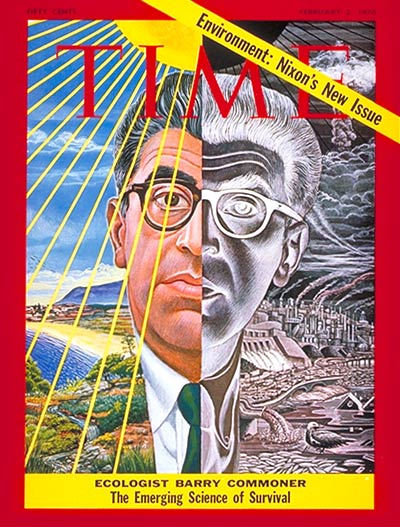
In 1969 the Royal Commission on Environmental Pollution was constituted to advise the UK Government on environmental issues. In 1970 the Environmental Protection Agency (EPA) was founded in the US. Also in 1970 Barry Commoner, an ecologist and environmentalist, appeared on the cover of Time, which reported that ‘the national concern over the environment has reached an unprecedented level of intensity’ (cited in Franz 2001). Perhaps the most significant point, that demonstrates the coalescence of environmental concerns into an identifiable environmental movement was the1972 UN Conference on the Human Environment held in Stockholm, which produced a declaration about the global nature of environmental issues:
The protection environment and improvement of the human is a major issue which affects the well-being of peoples and economic development throughout the world.
Environmental issues were now on the agenda at individual, local, regional, national and international levels, and therefore can be considered not merely a collection of disparate concerns but an environmental movement. However it is important to stress that this global environmental movement is not a homogenous phenomenon, but manifests in a diversity of ways and is not underpinned by any unified philosophical perspective.
Sources
Carson, R. (2000) Silent Spring. London: Penguin Classics.
Clapp, B.W. (1994) An Environmental History of Britain Since the Industrial Revolution. London: Longman.
Franz, E.H (2001) Ecology, Values and Policy. Bioscience 51(6) 469–474. Available at
https://academic.oup.com/bioscience/article/51/6/469/240645?login=false
Garrard, G. (2023) Ecocriticism. London: Routledge.
Killingsworth, M.J. & Palmer, J.S. (1996) The Apocalyptic Narrative: From Silent Spring to Global Warming. In Herndl, C.G.
& Brown, S.C. (Eds.) Green Culture: Environmental Rhetoric in Contemporary America. Maddison: University of Wisconsin
Press.
Kirk, A.G. (2007) Counterculture Green: The Whole Earth Catalog and American Environmentalism. Lawrence: University of
Kansas Press.
Lee, D (trans) (1974) Plato: The Republic. London: Penguin.
Magnaghten, P. and Urry, J. (1998) Contested Natures. London: Sage.
Meadows, Donella H., Meadows Dennis L., Randers, Jørgen and Behrens III, William W. (1972) The Limits to Growth. New
York Universe Books.
Pepper, D. (1996) Modern Environmentalism: An Introduction. London: Routledge.
Radford, T. (2011) Silent Spring by Rachel Carson. The Guardian. (30 September) available at
https://www.theguardian.com/science/2011/sep/30/silent-spring-rachel-carson-review
Radkau, J. (2014) The Age of Ecology. Cambridge: Polity Press.
Roszak, T. (1995) The Making of a Counter Culture. Berkley: University of California Press.
Stone, M. (2018) Plato, Environmental Sustainability, and Social Justice. Athens Journal of Humanities and Arts. 5(1) 105–
118.
Thoreau, H.D. (2014) Walking. In Bohannon, R (ed) Religion and the Environments: A Reader in Religion, Nature and Ecology.
London: Bloomsbury.
United Nations (1972) Stockholm Declaration and Action Plan for the Human Environment. Available at
https://www.un.org/en/conferences/environment/stockholm1972.
Whole Earth Catalog (1968) Available at
https://monoskop.org/images/0/09/Brand_Stewart_Whole_Earth_Catalog_Fall_1968.pdf.
Zelko, F. (2013) Make It a Greenpeace. Oxford: Oxford University Press.