In this post I will be addressing the issue of whether animals have rights. This issue is primarily about the extent of our ethical responsibilities. It is a companion piece to my post on vegetarianism. However, before discussing animal rights I will briefly say something about human rights.
Human Rights
The idea of universal human rights is relatively recent. The most obvious precursors to the idea of universal human rights are The American Declaration of Independence of 1776 and Thomas Paine’s important treatise The Rights of Man, published in 1791.
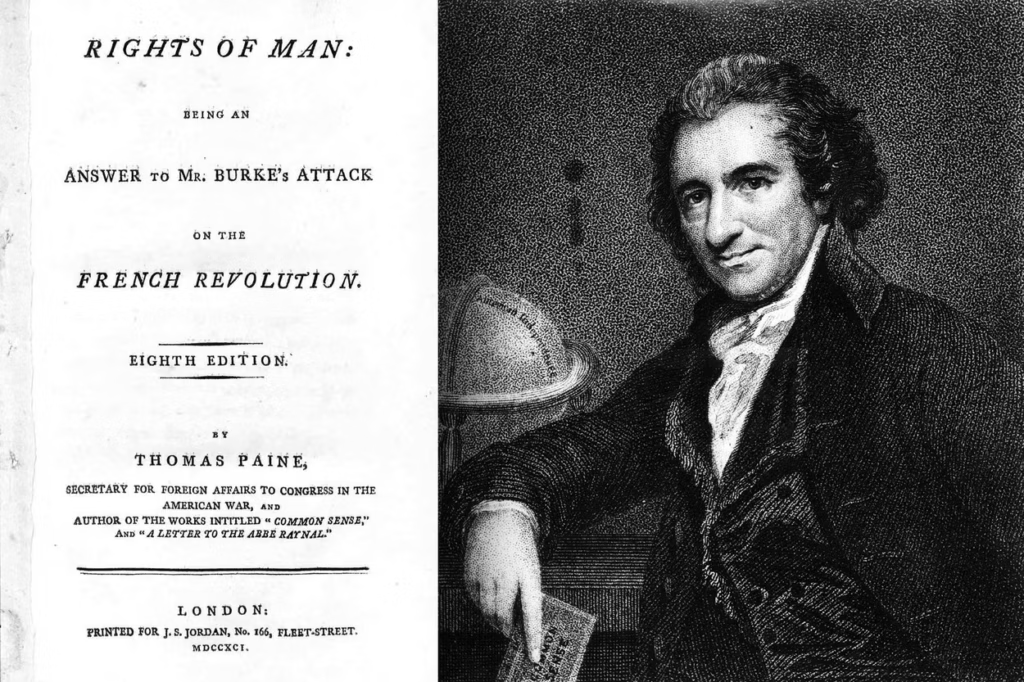
We hold these truths to be self-evident, that all men are created equal; that they are endowed by their Creator with certain unalienable rights; that among these are life, liberty and the pursuit of liberty.
The American Declaration of Independence cited in Clapham 2015: 9
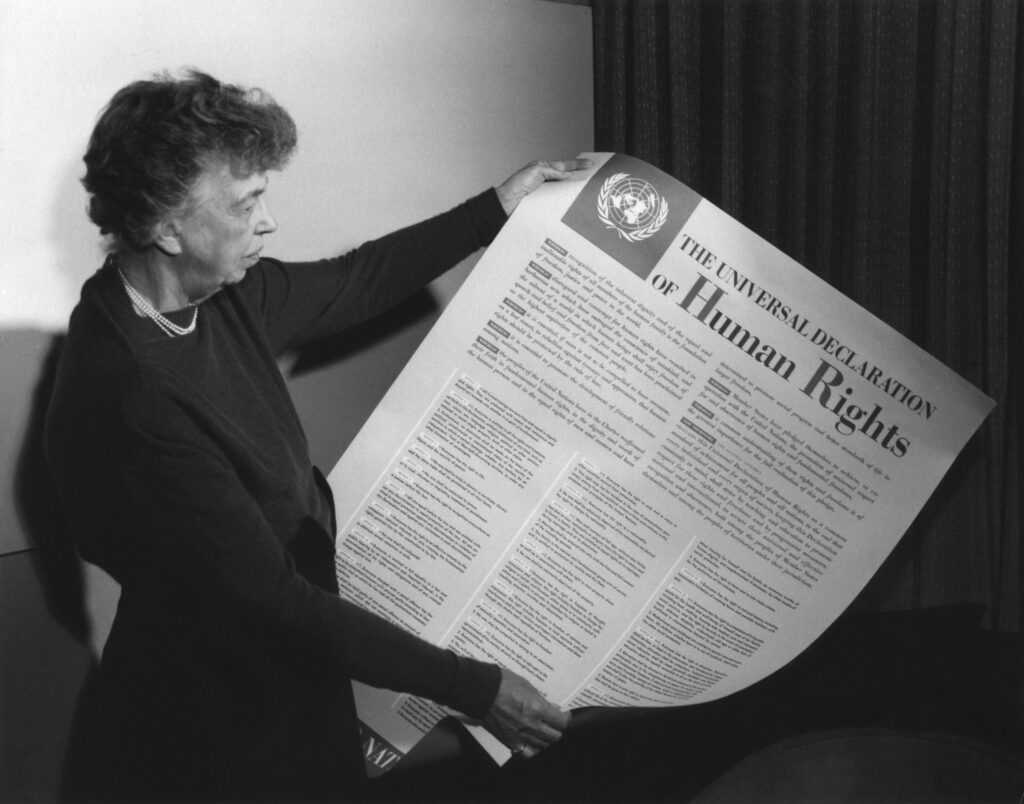
Image from Wikipedia
However, it is not until the Universal Declaration of Human Rights1 produced by the United Nations in 1948 that human rights were acknowledged as a universal concept applicable to all humanity. Article 1 of the Universal Declaration states:
All human beings are born free and equal in dignity and rights. They are endowed with reason and conscience and should act towards each other in a spirit of brotherhood.
Cited in Clapham 2015: p.186
The Universal Declaration of Human Rights assumes:
- All humans share essential characteristics that defines their humanity.
- These essential characteristics differentiates humans from all non-human beings.
Human Exceptionalism
This perception that humans are inherently unique and different from all other animals is sometimes referred to as human exceptionalism. Consequently, it is sometimes thought that only humans have moral standing and therefore have rights. This idea of human exceptionalism can be identified in the Judeo-Christian traditions. In Genesis it states:
Then God said: “Let us make man in our image, in our likeness, and let them rule over the fish of the sea and the birds of the air, over the livestock, over all the earth, and over all the creatures that move along the ground. (Genesis 1:26).
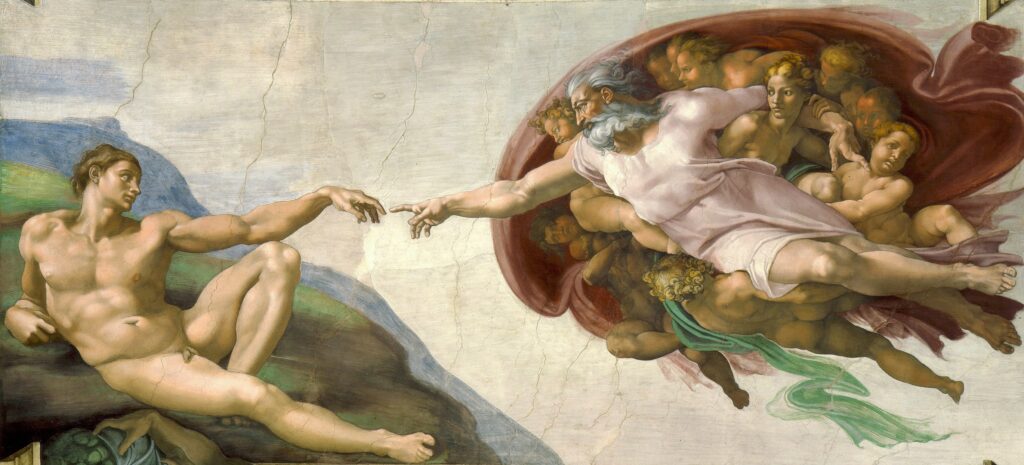
Image from Wikipedia
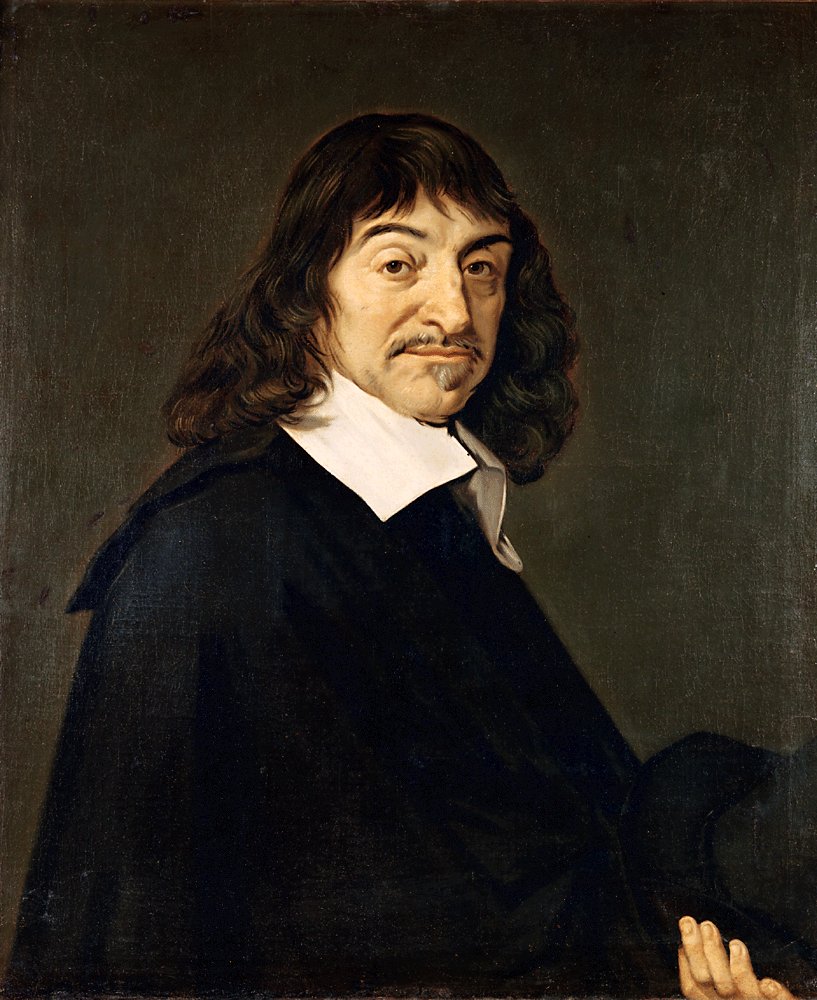
Perhaps the notion of human exceptionalism is most striking in the ideas of the Enlightenment philosopher René Descartes (1596–1650). Descartes posited a dualistic philosophy suggesting that matter and spirit are inherently disparate and incommensurable phenomena. He argued that consciousness cannot originate in matter but can only derive from spirit. Descartes asserted that only humans had souls and therefore consciousness. Animals are therefore not conscious and do not feel pain or experience suffering.
Some animals clearly appear to feel pain. However, Descartes suggested that this response is purely reflexive. If, for example, someone kicks a dog it might well cower and yelp, which seems synonymous with how a human would respond to being kicked. However, Descartes suggests the dog’s response is automatic and reflexive, and not because it experiences pain. Animals, he suggests, are like organic machines. (Also see my post on vegetarianism)
This Cartesian view is most clearly expressed by the French thinker Nicholas Malebranche (1638–1715).
Thus in animals there is neither intelligence nor souls as ordinarily meant. They eat without pleasure, cry without pain, grow without knowing it; they desire nothing, fear nothing, know nothing; and if they act in a manner that demonstrates intelligence, it is because God, having made them in order to preserve them, made their bodies in such a way that they mechanically avoid what is capable of destroying them.
Cited in James 2015: 12
However, intuitively most people perceive that animals do have moral status. For example, most people do not gratuitously kick a dog, starve a horse or torture a cat. This suggests that instinctively we consider that most animals have an inherent value, rather than a purely instrumental value. This intuition is mostly expressed through a concern about needless cruelty towards animals.
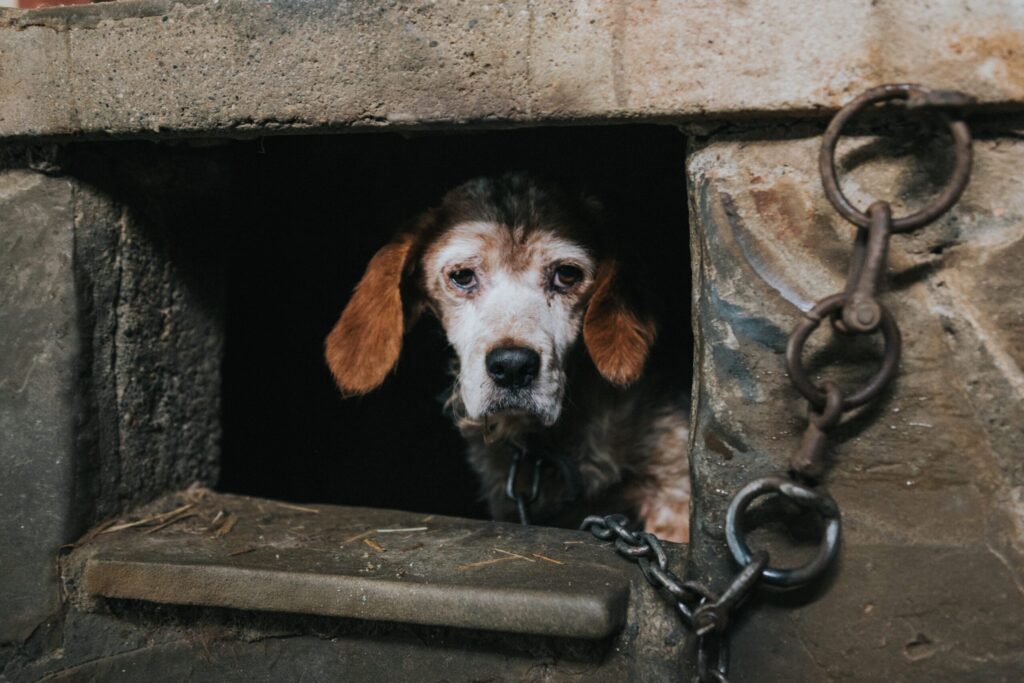
Animal Cruelty
The concern that animals should not be needlessly treated cruelly and are therefore considered as having an inherent value is demonstrated through:
- The founding of organisations such as the Royal Society for the Prevention of Cruelty to Animals (RSPCA) which was founded in 1824. People for Ethical Treatment of Animals (PETA), founded in 1980 states:
Like humans, other animals are capable of suffering and have interests in leading their own lives; therefore, they are not ours to use – for experimentation, food, clothing, entertainment or any other reason. (PETA UK 2025)
- Legislation prohibiting cruelty to animals. The first law in the UK to make it illegal to maltreat animals was The Protection of Animal Act 1911, – which makes it an offence:
To cruelly beat, kick, ill-treat, over-ride, over-drive, over-load, torture, infuriate, or terrify any animal …. permit any unnecessary suffering to be so caused to any animal.
UK Government 1911
This legislation has now been superseded by the Animal Welfare Act 2006. Both the earlier 1911 legislation and the more recent 2006 Act indicate that it is illegal to cause unnecessary suffering to an animal.
More specific legislation has also been passed in the UK such as the 1998 Act that prohibited the use of animals in testing soaps and cosmetics on animals and the 2004 Hunting Act that prevents hunting wild animals with dogs.
This raises two significant points – what constitutes an animal and what is unnecessary.
Who and What Has Moral Status?
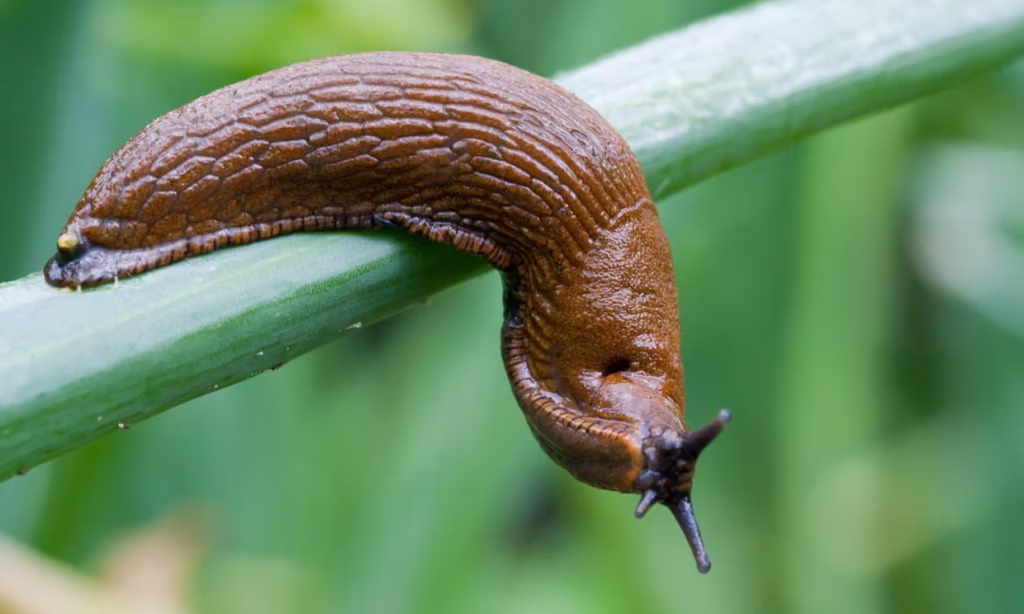
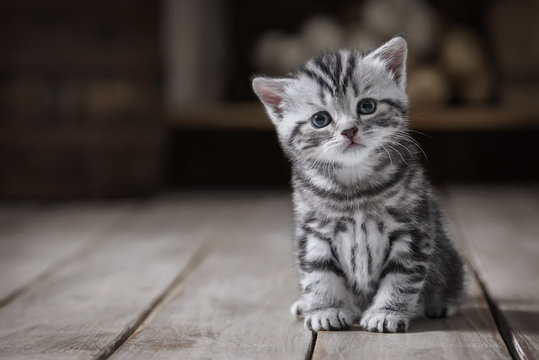
The extension of an ethical concern to animals raises the question of what animals have moral status. Clearly, non-human animals are very diverse. Should amoebas, slugs, chickens, dogs and horses all be given equal moral status? There are three approaches to addressing the incredible diversity of animals.
- The Cartesian view, discussed above, which suggests that only humans have moral status.
- The universalist view proposes that all living beings have moral status.
- The hierarchical view suggests a sliding scale view of moral status. This is based on the perception that it is unlikely that animals such as amoebas and slugs have feelings, and it is improbable that they have a sense of self with a remembered past and an awareness of future possibilities, whereas vertebrates such as cute kittens probably experience pain in a similar way to humans.
Intuitively we tend to think that there is a sliding scale of moral status. The sliding scale suggests that we have a greater ethical responsibility to other humans than to animals. However, some animals, such as cats and horses have a greater moral standing than others, such as slugs and amoebas. Animals tend to be perceived as having a greater moral worth than plants or inanimate objects such as rocks.
The Great Chain of Being
This hierarchical perception of moral standing is based on what has been called the ‘Great Chain of Being’, which has influenced Western thinking for millennia. Although you can trace its origins back to the classical world, the idea of a great chain of being is most fully articulated in Christian thought. This theological view suggests that creation has a hierarchical structure, with God at the apex, and then in descending order: angels, humans, animals plants and inanimate objects.
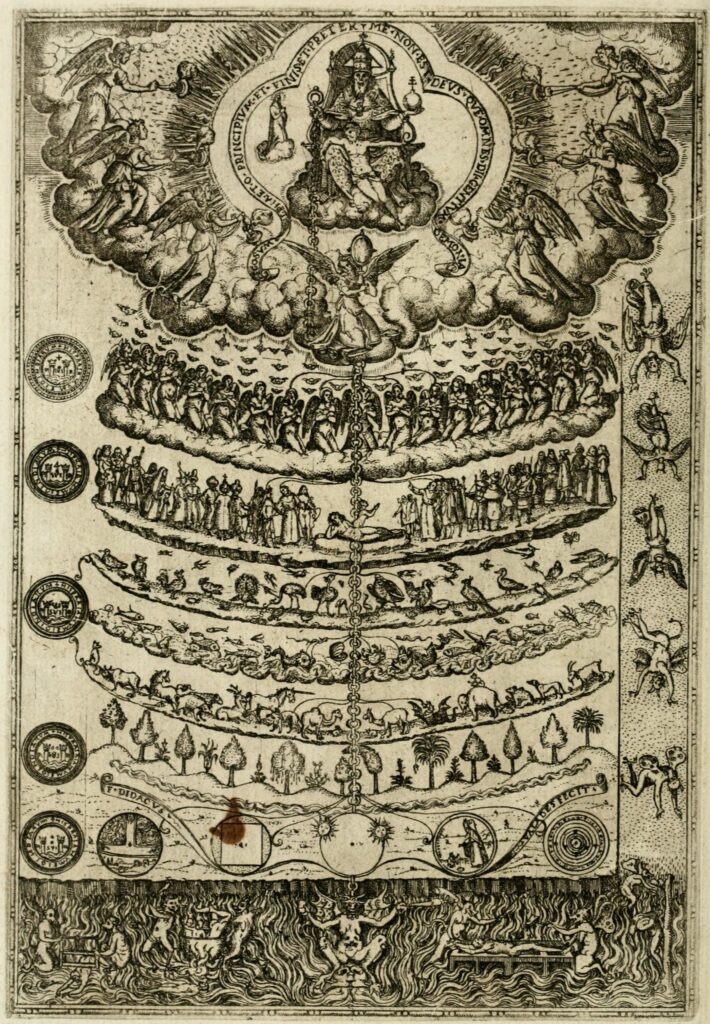
Image from Wikipedia
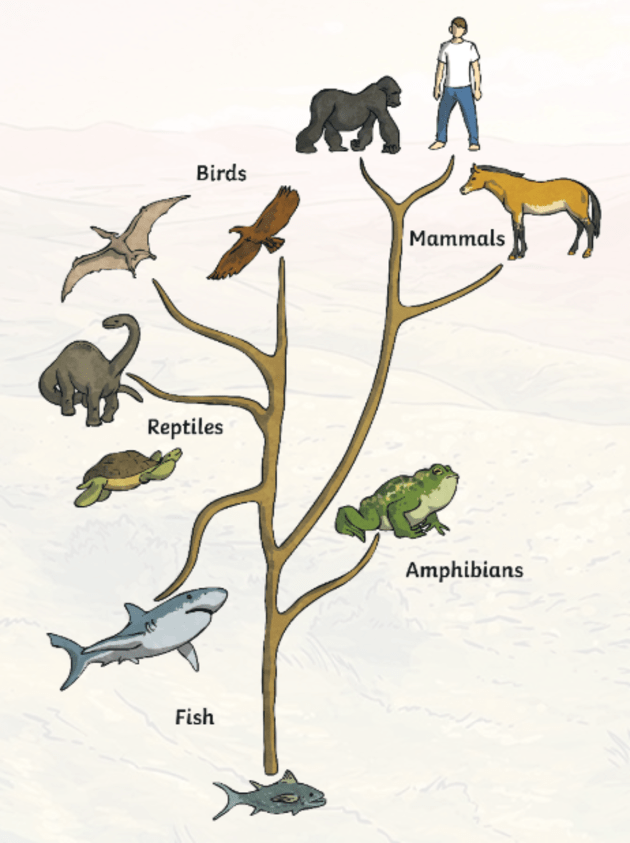
Image from Twnkl
Evolutionary theory seems to support this hierarchal order as it suggests that beings evolve from the simple to more complex organisms. This idea of evolution as development can seem to imply that complex organisms are superior to simpler beings. Although the theory of evolution leaves out the transcendental stages of the theological idea of a great chain of being, both posit that humans are the culmination of creation. For example, Sean Nea points out that the strident atheist Richard Dawkins’ list of chapters in his book about evolution The Ancestor’s Tale, published in 2004, is not that different from the medieval theologian’s ranking of beings.
Dawkins regenerates the chain because species that are more closely related to us are more similar as well, and such similarity was an important criterion in determining the rankings in the classical chain.
Nea 2005: 429
Sentience
In this section I will reiterate and expand on some of the arguments posed by Peter Singer which I discussed briefly in my post on vegetarianism. The implication, in both the theological and evolutionary discourses, is that the more similar an organism is to being human, the greater moral standing it has. We seem to base our ethical evaluations on how close or distant a being is to us. We seem naturally to feel a greater ethical responsibility to those closest to us than to distant others. The Chinese philosopher Confucius (c. 551–479 BCE) and some more recent philosophers have argued that if we fail to care for those nearest to us, then it is improbable that we will feel any ethical concern for distant others.
The question is what criteria are being used to indicate similarity. The philosopher and advocate for animal rights Peter Singer, suggests that the criterion for determining similarity is what he terms sentience. For Singer, sentience is the capacity to suffer and experience enjoyment.
If a being suffers there can be no justification for refusing to take that suffering into consideration (Singer 2015:8).
Singer draws on the ideas of the philosopher Jeremy Bentham (1748–1832). Bentham argued that ‘the question is not, Can they reason? Nor can they talk? but, Can they suffer? (cited in Singer 2015: 7). Intuitively we think that this is right. A very young infant or someone who has had a major stroke, may not be able to reason or talk, but we would agree that they can suffer and therefore must have moral standing.

There are two indicators that allude to the capacity for an organism to suffer, and therefore in Singer’s terms sentient.
- All vertebrates and possibly some invertebrates seem to possess the physiological make up that would enable them to feel pain.
- Many animals, particularly mammals respond to both physiological and psychological pain in a way that is analogous to the way that humans respond. For example, if you confine a dog in a small dark space, it will display signs of distress and anxiety that are very similar to how a human would react.

Of course, analogous responses and a similar physiology does not necessarily mean an animal feels pain in the same way as humans. After all, if a person accidentally hits their thumb with a hammer, not only will they yell out but will be able to express in language how much they are hurting. However, Singer suggests that:
When it comes to the expression of feelings and emotions language is less important than nonlinguistic modes of communication such as a cheering pat on the back, an exuberant embrace, a clasp of hands, and so on. (Singer 2015:14)
Singer concludes that if an animal has a similar physiology and behaves in a similar way to how humans respond to physical or psychological harm then in all probability, they feel pain in the same way that we do. Therefore, these animals have an interest in avoiding harms and seeking out pleasure. Consequently, these creatures are sentient and must be included in our moral sphere.
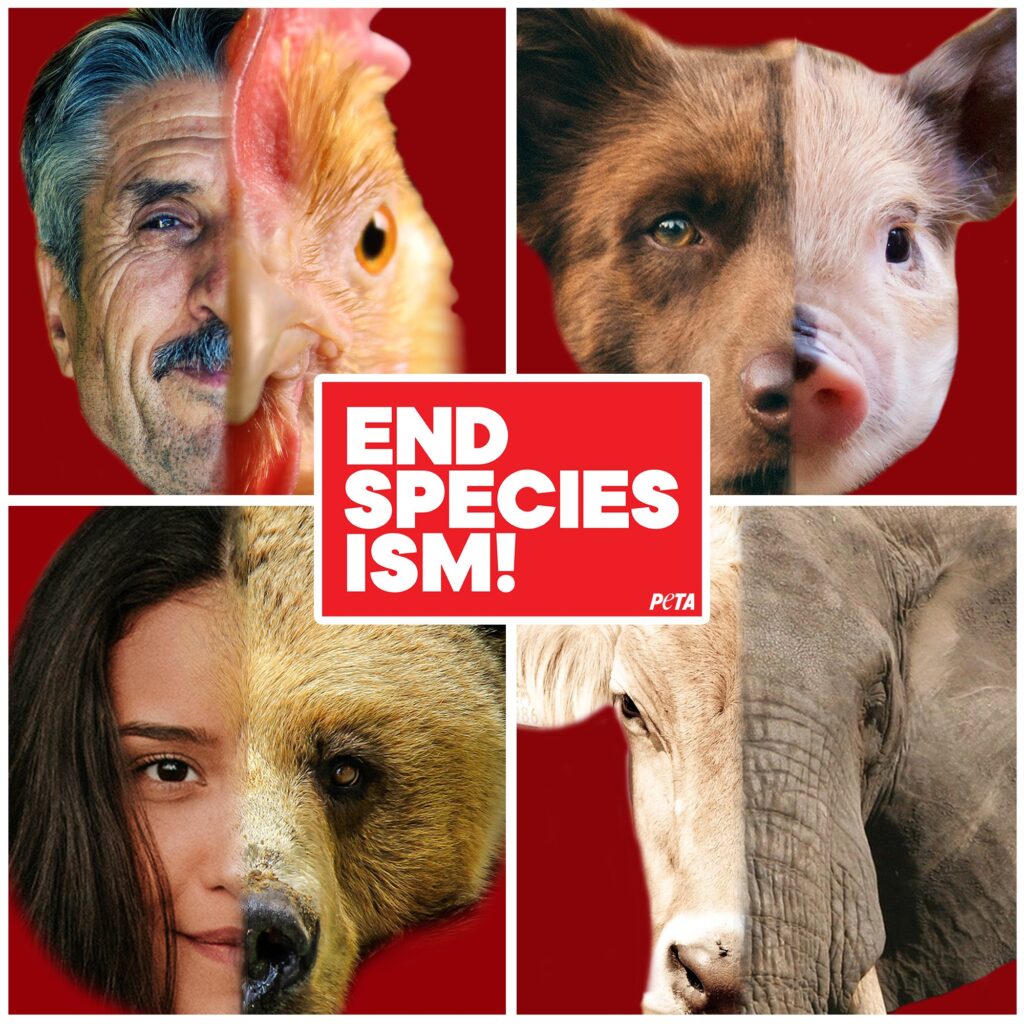
Singer argues that failure to include all sentient animals in our moral consideration is a form of speciesism. Speciesism is a form of prejudice akin to racism and sexism. PETA states:
Speciesism” is the misguided belief that humans are superior to all other animal species.
This belief is a tool, a supremacist line of reasoning, used to defend violence against other living, feeling beings for human desires.
The Universal Declaration of Human Rights declares that all humans are equal, and therefore must be treated equally, irrespective of ethnicity, gender, sexuality or disability Consequently, to deny any human moral standing is inherently prejudicial. Singer and PETA extend this idea to include all sentient beings.

In 2011 two animal activists drew up a Declaration of Animal Rights which states:
We hold these truths to be self-evident, that all beings are created equal, and have a right to Life, Liberty and the pursuit of their Happiness.
Singer argues that because all sentient beings have moral standing, this does not entail that they should be treated the same. Again, intuitively this makes sense. We do not necessarily treat all people the same. People are diverse and can have different needs. Children, the elderly and the disabled might require different things to lead a rich and fulfilled life. The important thing is that all sentient beings are given equal moral consideration.
The basic principle of equality does not require equal or identical treatment; it requires equal consideration. Equal consideration for different beings may lead to different treatment and different rights.
Singer 2015: 2.
There is much to admire in Singer’s argument. However, there are two problems with his overall thesis.
- It is not obvious where the boundary lies between sentience and non-sentience
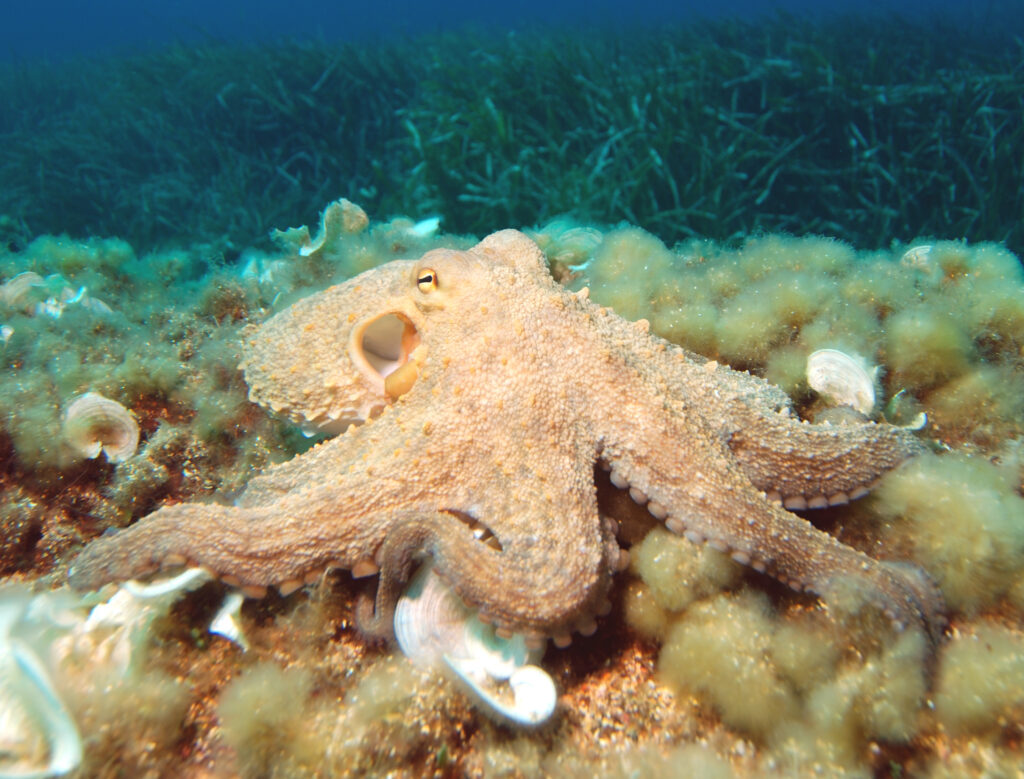

It is not obvious where the boundary lies between sentience and non-sentience. For example, an octopus is a type of mollusc and is therefore related to slugs etc. However, although an octopus has a very different physiology to humans and does not respond to pain in an analogous way to vertebrates, it does show signs of sentience. For example, it has been demonstrated that an octopus can open a screw top jar. https://www.youtube.com/watch?v=9kuAiuXezIU
Not only the higher mammals, but also other organisms are thought that they might have something akin to sentience. For example, Peter Wohlleben has argued in his bestselling publication The Secret Life of Trees (2017) that trees can communicate, have a social life and memories, and can experience pain . If this is so then we have to seriously reconsider our relationship with trees.
Consequently, although a being has a very different physiology and no recognisable response to pain, does not mean that they do not have the capacity to suffer and experience pleasure
- Utilitarianism
Singer’s argument is based on the ethical philosophy known as Utilitarianism, which is a consequentialist view of right and wrong. In other words, it judges the consequences of one’s actions. The actions that bring about the maximum pleasure/happiness and the minimise pain/unhappiness are judged to be ethical. This has come to be known as the greatest happiness principle.
The greatest happiness principle seems to suggest that we have to quantify the intangible qualities of pain and pleasure.The Utilitarian philosopher James Bentham (1709–1794) proposed a formula, which he called the hedonic calculus, which included estimating variables such as the intensity and duration of pain and pleasure.
One of the most common, albeit rather simplistic, criticisms that is levelled against the Utilitarian approach to ethics is that the pleasure of the many could be based on the suffering of a few. For example, if in a class of 20 students, one student is forced to run errands for everyone, then 19 students’ happiness is the outcome of one student being exploited, but in the calculus there is an overall increase in pleasure in the class.
Meat eaters for example, could argue that they derive much pleasure from eating meat. As long as the meat is free range then overall, there has been little in the way of harm to the cow, but much pleasure derived by many people who enjoyed the meat.

Is It Necessary?
Singer has a number of rejoinders to eating free range meat. Singer’s primary argument is that if all humans have a right to life, so too do non-human sentient animals. However, Singer also marshals another argument about the necessity of inflicting pain on non-human animals. He asserts that the protein from dead animals is totally unnecessary in the human diet, and humans can live healthy lives on purely plant-based foods.2
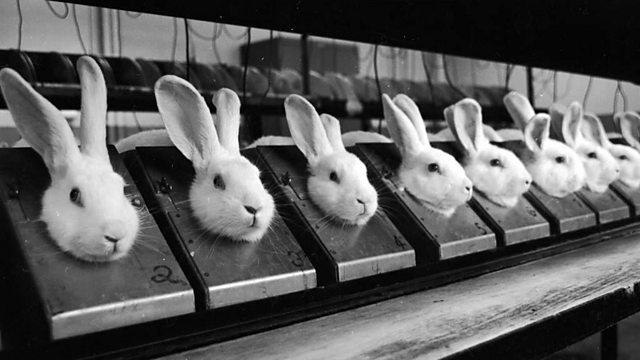
Perhaps more significant is the use of animals in experiments. It is clear that testing whether animals have negative reactions to the development of cosmetics is totally unnecessary. However it is possible to argue that animal testing has contributed to the development of life saving medicines and ensured that they are safe for human use. After some very graphic descriptions of horrendously cruel treatment of animals in laboratories, Singer concludes:
Among the tens of millions of experiments performed, only a few can possibly be regarded as contributing to important medical research (Singer 2015: 40)
This seems to suggest that at least some animal experimentation is acceptable. Professor Colin Blakemore in a discussion of animal rights on the Radio 4 programme In Our Time3, argues that almost all medical advances, such as the development of antibiotics, has depended on animal experiments. Interestingly he uses a utilitarian argument to justify some animal experimentation.
However, Singer, drawing on the idea of speciesism, suggests that all animal experimentation is unethical. Just as we would not condone any experimentation on a human who is of a different ethnicity, gender, sexuality or ability, we can never justify subjecting non-human animals to laboratory experiments.
Conclusion.
The issue of animal rights is fraught, and there are no clear criteria for determining what non-human animals should have rights. As I mentioned in an earlier post the Aristotelian idea of flourishing can be a useful way of thinking about our ethical responsibility to non-human beings. However, I think that moving from a biocentric to an ecocentric view, which considers the interconnectedness of all beings is a more fruitful way of thinking about our ethical responsibility (See my post Introduction to Philosophy, Religion and Ethics of the Environment) . I will be discussing this more fully in a future post.
- Note that the American Declaration of Independence and Thomas Paine use the gender specific ‘man’ as having rights, whereas the UN Declaration extends rights to all humans. However, it is interesting that this clause of the UN Declaration on Human Rights still uses the term ‘brotherhood’. ↩︎
- Although, there is some evidence that a few people’s metabolism does necessitate eating meat. There are also some parts of the globe, such as Tibet, where it is almost impossible to grow plant crops that would supply all a person’s nutritional needs. ↩︎
- https://www.bbc.co.uk/sounds/play/p00545f8 ↩︎
Sources
Clapham, A. (2015) Human Rights: A Very Short Introduction. Oxford University Press.
James, S.P. (2015) Environmental Philosophy: An Introduction. Cambridge: Polity.
Nea, S. (2005) The Great Chain of Being. In Nature 435(26), p.429
PETA UK (2025) About PETA. Available at https://www.peta.org.uk/about.
Singer, P. (2015) Animal Liberation. London: Bodley Head.
UK Government (1911) The Protection of Animals Act 1911. Available at https://www.legislation.gov.uk/ukpga/Geo5/1-2/27
Wohlleben, P. (2017) The Secret Lives of Trees: What They Feel: How They Communicate. London: William Collins